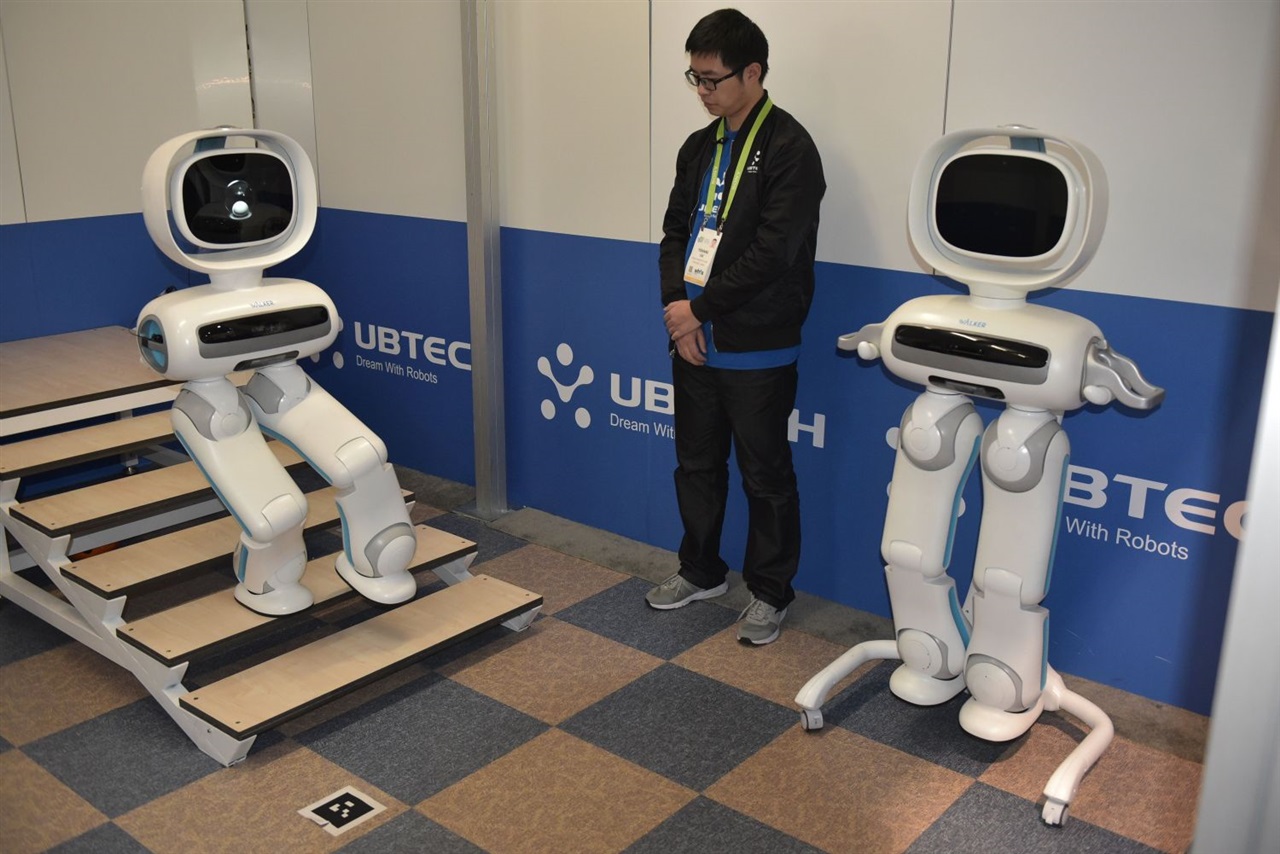
YITA, a Chinese robot hardware startup founded this year, raised more than RMB 100 million across seed and seed-plus rounds. The notable detail is not the amount but the investor roster: alongside Matrix Partners China, CCB International and SenseTime-affiliated capital, the round included Galbot and Fourier, two companies that build robots themselves.
When robot developers write checks into an upstream hardware supplier, the strategic intent is supply-chain capture, not financial return. The humanoid race has exposed a hard constraint: actuators, joints, force sensors and drivetrains remain scarce, expensive and often imported. By seeding a component maker early, Galbot and Fourier are effectively treating hardware supply the way carmakers once treated battery cells, securing priority access and shaping the roadmap before volume arrives. This mirrors the vertical-integration playbook China ran in EVs and solar, where control of the component stack, not the finished product, ultimately decided who scaled profitably. For global players, the signal is that China is compressing the humanoid supply chain domestically while Western and Japanese developers still depend on fragmented, higher-cost sourcing.
For Japan, this cuts close to a historic strength. Japanese firms have long dominated the precision components that humanoids need, harmonic reducers, servo motors, force-torque sensors, where names like Harmonic Drive, Yaskawa and FANUC set the global benchmark. A Chinese ecosystem that funds and standardizes its own hardware layer threatens to erode that moat from below, first on price, then on iteration speed, exactly as happened in consumer electronics and displays. The risk is not losing a single order but being designed out of the next-generation reference architecture entirely.
For Japanese SIers and manufacturers, the implication is twofold. First, procurement teams should expect Chinese humanoid component bundles to arrive faster and cheaper than expected, pressuring any domestic integration business that assumes a sustained parts-cost advantage. Second, there is an opening: Japan's edge in reliability, functional safety and factory-floor integration still matters where humanoids meet regulated industrial settings. The winning move for local players is to pivot from selling discrete precision parts toward owning the validated, safety-certified subsystems and deployment know-how that Chinese newcomers cannot yet replicate. RPA and automation vendors watching this space should read it as a reminder that physical automation is now attracting the same capital intensity and ecosystem land-grab that software automation saw a decade ago.
The near-term takeaway for executives: watch which humanoid developers are quietly buying into their own suppliers. That pattern, more than any single product demo, reveals who is building a durable cost structure versus who is merely assembling parts.