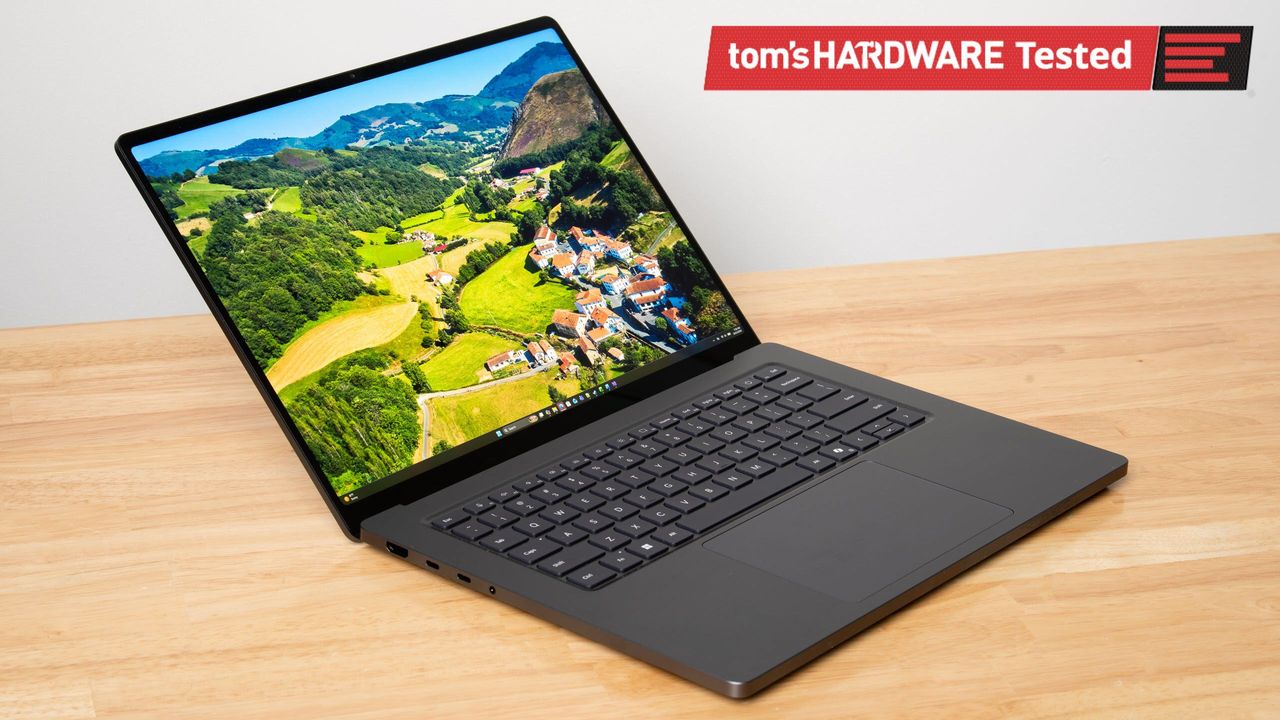
Nvidia placing an RTX Spark superchip inside Microsoft's Surface Laptop Ultra, running Windows on Arm, marks its first serious move into client silicon. Testing against Apple and AMD shows it excels at on-device AI but stumbles on gaming.
The strategic signal matters more than any single benchmark. For years the AI PC narrative belonged to NPUs bolted onto x86 chips. Nvidia is reframing the device as a scaled-down inference node, the same logic that made it dominant in the datacenter now pushed to the endpoint. Pair this with Qualcomm's Snapdragon X2 gaining Linux support and refreshing Surface, and the picture is clear: the Intel-AMD duopoly over Windows hardware is cracking, and Arm is the wedge. The gaming weakness is not a footnote. It exposes the unfinished Arm software story, where emulation overhead and missing native binaries still define the ceiling. Engadget's read is instructive here, that the chip's value may land with mainstream Windows users through responsiveness and efficiency, not only AI power users. That broadens the addressable market but also raises the compatibility bar.
For the broader industry, this accelerates a split between workloads that run locally and those that stay in the cloud. If capable inference silicon ships in laptops, agentic assistants, coding copilots, and private model inference can run without a round trip, reshaping cost structures for software vendors who assumed metered cloud GPU as the default.
For Japan, the implications are concrete. Enterprise fleet procurement here is conservative and standardized on x86 Windows, so any Arm transition lands first as a validation burden on SIers. Expect large integrators to face months of application-compatibility testing, legacy in-house tooling that assumes x86, and driver and peripheral certification before approving these machines. That friction is billable work, and the firms that build Arm-native migration playbooks early will capture it. On the upside, strong local inference aligns tightly with Japanese corporate caution around data residency and sending sensitive data to foreign cloud regions. On-device models give regulated sectors like finance and manufacturing a path to AI adoption without the sovereignty debate. RPA vendors and their large Japanese install base should watch closely, as desktop automation augmented by local language models could leapfrag today's brittle screen-scraping scripts. Development teams, meanwhile, need to confirm their toolchains, container images, and CI pipelines run cleanly on Arm before this hardware reaches their desks.
The likely near-term outcome is not a stampede off x86 but a widening beachhead, with 2026 procurement cycles forcing Japanese IT leaders to decide whether Arm-based AI PCs are a pilot or a plan.




