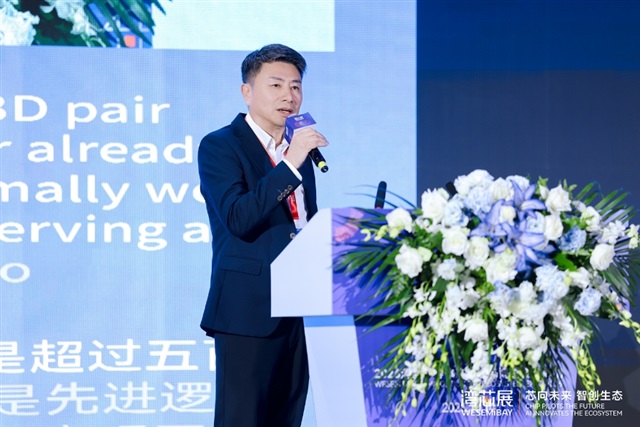
AMEC, long known mainly for plasma etch, is committing roughly US$1.94 billion to develop 102 new tool models and move into deposition, advanced packaging, and inspection within three to five years. The strategic message is bigger than any single product line: China is treating semiconductor equipment self-sufficiency as a national project, and it is now attacking the mid-to-high end rather than settling for commodity tiers.
The global read is straightforward. Export controls were designed to deny China leading-edge tools, but they have also handed domestic champions a captive market and a political mandate to fill every gap. A broad portfolio play across etch, deposition, and inspection is how a single-category vendor becomes a platform vendor. Even if AMEC's tools trail the leaders by a node or two, 'good enough plus heavily subsidized plus politically favored' is a potent combination inside China. The competitive risk to incumbents is not immediate displacement at the bleeding edge; it is steady erosion of the mature-node and packaging segments that generate the recurring revenue funding everyone's R&D.
For Japan, this is the part that deserves attention, because Japanese suppliers are more exposed to China than almost anyone. Tokyo Electron in deposition and etch, Screen in cleaning, Lasertec in inspection, Advantest in test, and DISCO in dicing and grinding all derive a large share of sales from Chinese fabs. AMEC's roadmap maps almost directly onto those franchises. The near-term dynamic is paradoxical: Chinese fabs are still buying Japanese tools aggressively to build capacity before local substitutes mature, inflating today's order books. The medium-term dynamic is substitution, and the revenue that looks strong now is partly a pull-forward of demand that domestic vendors intend to capture.
Japanese equipment makers should therefore treat current China strength as a window, not a trend, and reallocate toward defensible moats: EUV-adjacent precision, high-NA readiness, and service-and-materials lock-in that is hard to clone. For Japanese SIers and enterprise IT buyers, the second-order effect matters too. A bifurcated equipment supply chain means divergent toolsets, process recipes, and data standards across Chinese and allied fabs, which complicates any manufacturing, MES, or RPA integration work spanning both ecosystems. Teams building traceability, yield-analytics, or supply-chain software should assume two parallel hardware stacks and design for that fragmentation now rather than retrofitting later.




