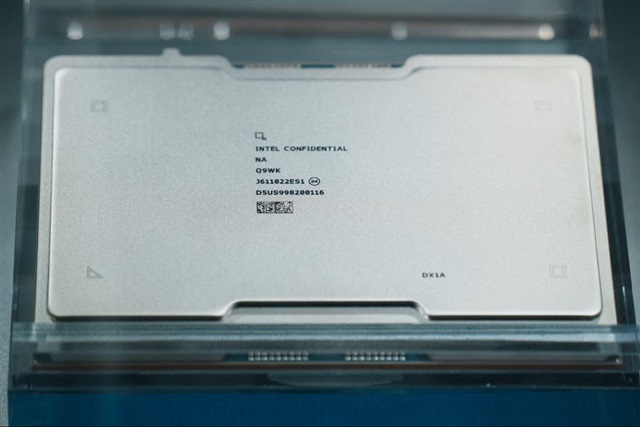
Intel has started installing equipment at its Fab 62 line in Arizona while construction continues in Ohio, framing the move against firming demand for AI data center processors. The timing matters more than the milestone itself.
These moves land in the same week that recovering demand signals are emerging across the industry, and together they mark a turn in the cycle. For Intel specifically, physical tooling is the point of no return: capital that was theoretical during the delays is now committed steel and EUV lithography. The strategic question is no longer whether Intel can build capacity, but whether it can fill it. A leading-edge fab is only valuable with committed foundry customers, and Intel's external order book remains thin relative to TSMC. Expect the next 18 months to hinge on whether AI CPU volume and a handful of anchor foundry clients can absorb Arizona's output before depreciation costs crush margins.
The wider read is that the chip downturn is lifting unevenly. Advanced logic tied to AI compute is recovering first, pulling tool makers, substrate suppliers, and advanced packaging vendors with it. This is a capacity-led recovery concentrated at the high end, not a broad return to the pandemic-era boom.
For Japan, the supply-chain exposure is the real story. Japanese equipment and materials players sit directly in Intel's and the broader industry's build path, from photoresist and specialty chemicals to inspection, deposition, and packaging substrates. A credible US capacity expansion is a demand tailwind for these firms, and it reinforces Japan's pivot from chip buyer to indispensable upstream supplier, a position Rapidus and the Kumamoto cluster are built to extend.
For Japanese enterprises and SIers, the implication is downstream and slower-moving. Cheaper, more plentiful AI compute eventually lowers the cost of inference-heavy workloads that SIers are now embedding into client systems. But the near-term risk is procurement volatility: as hyperscalers lock up leading-edge supply, Japanese firms building private AI infrastructure may face allocation pressure and longer lead times on accelerators. Procurement and capacity planning, not model selection, will be the binding constraint for local AI deployment through the next cycle.




