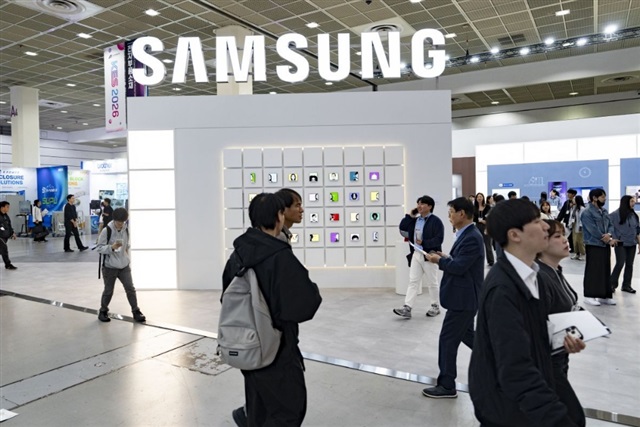
Samsung is restructuring its memory research organization and performance-pay model to speed next-generation DRAM and NAND, pulling researchers and production teams closer and tightening retention of scarce engineers.
Read strategically, this is less about org charts than about catching up. The AI buildout has turned high-bandwidth memory into the most profitable corner of the chip industry, and Samsung has spent the cycle trailing a rival that moved first on HBM qualification for the dominant AI accelerator roadmap. Collapsing the distance between lab and fab is a classic move when the problem is cycle time: the company that converts a process breakthrough into yielding product fastest captures the pricing window before it closes. The parallel signal from the broader chip tape—stronger demand guidance out of the analog and embedded segment—suggests the recovery is broadening beyond AI memory into industrial and automotive silicon, which raises the stakes on who has the engineering bandwidth to serve both at once.
The incentive overhaul is the more revealing detail. Memory is now a talent-constrained business, not just a capital-constrained one. Process architects and yield engineers are being courted globally, and compensation structures that reward long production cycles poorly are a direct retention risk. How Samsung reweights pay toward research outcomes will set a benchmark that SK Hynix, Micron and every fab operator will have to answer.
For Japan, the read-through is immediate. Kioxia sits squarely in the NAND fight this acceleration targets, and a faster Samsung roadmap compresses the window for Japanese NAND to differentiate on cost or specialty applications. But the larger Japanese exposure is upstream: Tokyo Electron, Advantest, Disco, Lasertec, plus materials leaders in photoresist and silicon wafers, all benefit directly when leading-edge memory R&D intensifies. A Samsung sprint toward next-gen DRAM and advanced packaging pulls demand for test, etch and inspection tools—a tailwind for Japan's equipment and materials complex and, indirectly, for Rapidus's leading-edge ambitions.
The quieter lesson is organizational, and it lands on Japanese enterprises and SIers. Samsung is admitting that proximity between R&D and operations, plus pay tied to outcomes, beats functional silos when speed is the constraint. Japanese IT organizations wrestling with chronic engineer shortages and seniority-based compensation should treat this as a live case study: retention now hinges on rewarding delivery and shortening the loop between design and production, not on headcount or tenure.




