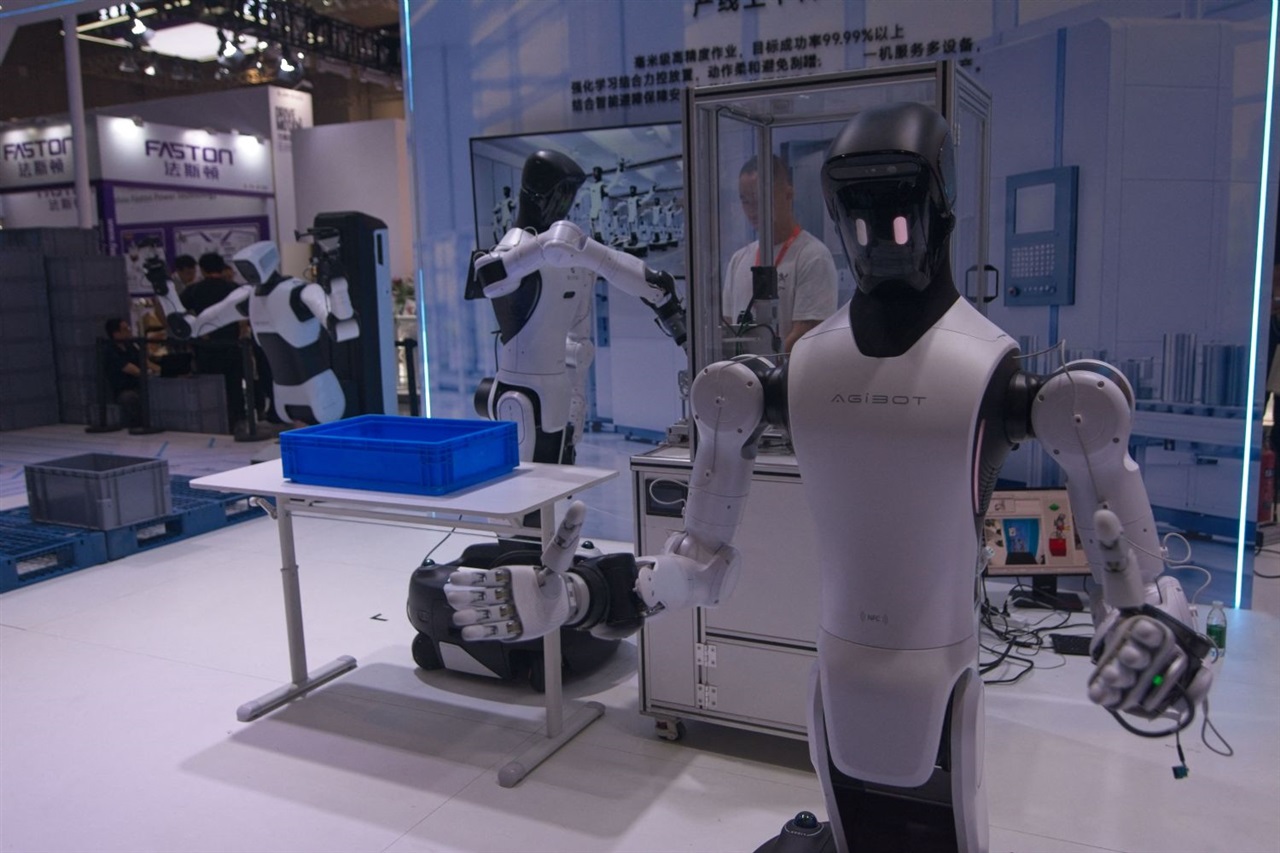
A column argues that GPT-6 Astra, after its early-September launch, beat models trained on large robot datasets in several Physical AI benchmarks. If that holds, the premise that embodied intelligence requires years of proprietary motion data starts to wobble.
The global stakes are about where value accrues. Robotics investors have long assumed the moat sat in hard-won sensor and manipulation data, which justified vertical startups and custom stacks. A general model that absorbs physical reasoning from scale instead would push value back toward the handful of labs with the biggest training runs, the same players now hardening their pipelines (OpenAI says it now trains frontier models with no live internet access). Specialized robot firms would shift from owning the brain to owning the body, the deployment layer, and the safety envelope.
The caveat matters as much as the claim. Benchmark wins rarely survive contact with a factory floor, where latency, failure recovery, and liability dominate. A model that reasons well about physics in a test harness is not the same as one certified to run a welding cell for ten years. Expect a split: generalist models for perception and planning, with specialized control and safety systems wrapped tightly around them.
For Japan, this cuts straight to a core strength. FANUC, Yaskawa, and the dense SIer ecosystem that integrates them built their advantage on reliable hardware and deep process knowledge, not on frontier model training. If intelligence commoditizes, that hardware-and-integration expertise becomes more valuable, not less, because someone still has to make a general model work safely on real equipment. The risk is the reverse dependency: Japanese robotics leaders renting cognition from US labs, ceding margin and roadmap control.
Japanese SIers and manufacturers should treat this as a signal to invest now in the integration layer, safety validation, and domain data that a generalist model cannot replicate, while running pilots that pair foreign foundation models with local control systems. RPA vendors face a parallel question as physical and digital automation converge. The defensible position is owning the last mile of deployment, not the model itself.




