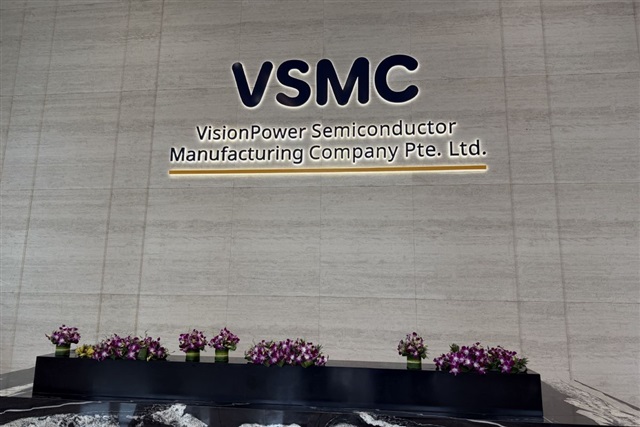
VSMC, the joint venture between Taiwan's Vanguard International Semiconductor and NXP, brought its 12-inch fab in Tampines, Singapore, online on September 28. The plain fact is unremarkable; the strategic logic behind it is not.
This fab is a deliberate wager that resilience now outprices efficiency. Singapore offers none of the cost advantages of building in Taiwan or China, and the mature-node processes VSMC targets — automotive, industrial, and consumer chips — are margin-thin businesses where every dollar matters. Choosing Singapore anyway signals that VIS and NXP are willing to pay a premium for a jurisdiction their customers consider politically neutral. For NXP, whose automotive and industrial buyers demand guaranteed multi-year supply, that premium is really an insurance policy against the Taiwan Strait risk that keeps procurement officers awake. This is the mature-node mirror of TSMC's Arizona and Japan expansions: the leading edge gets the headlines, but the boring analog and power chips that make a car or a factory run are quietly being rerouted through geographies the West trusts.
The broader signal is that supply-chain geography has become a product feature. Buyers are increasingly willing to sign long-term commitments to fabs located where they feel geopolitically comfortable, even at higher cost. That reshapes the economics of mature-node manufacturing, a segment long assumed to be a race to the cheapest floor. If VSMC proves customers will pay for location, expect more such joint ventures to seed capacity across Southeast Asia and beyond.
For Japan, this development sharpens an already active strategy. Japan has spent heavily to attract TSMC to Kumamoto and to revive domestic capacity through Rapidus, and VSMC validates the same thesis Japanese planners are betting on: that trusted-geography fabrication commands durable demand. Japanese automakers and industrial giants — the exact NXP-style customers VSMC courts — gain a second de-risked source outside the Taiwan-China axis, which strengthens their negotiating position and reduces the single-point-of-failure exposure that hurt them badly during the pandemic chip crunch.
For Japanese materials, equipment, and chemical suppliers, every new trusted-geography fab is a fresh customer, and Singapore sits comfortably within their commercial reach. The harder question is competitive. As mature-node capacity multiplies across Japan, Singapore, and the US, oversupply becomes a real medium-term risk for the very segment Japan is subsidizing. Japanese firms and the SIers building the automation and MES layers around these fabs should plan for a market where trusted geography, not lowest cost, is the differentiator — and where too many players may eventually chase the same premium.




