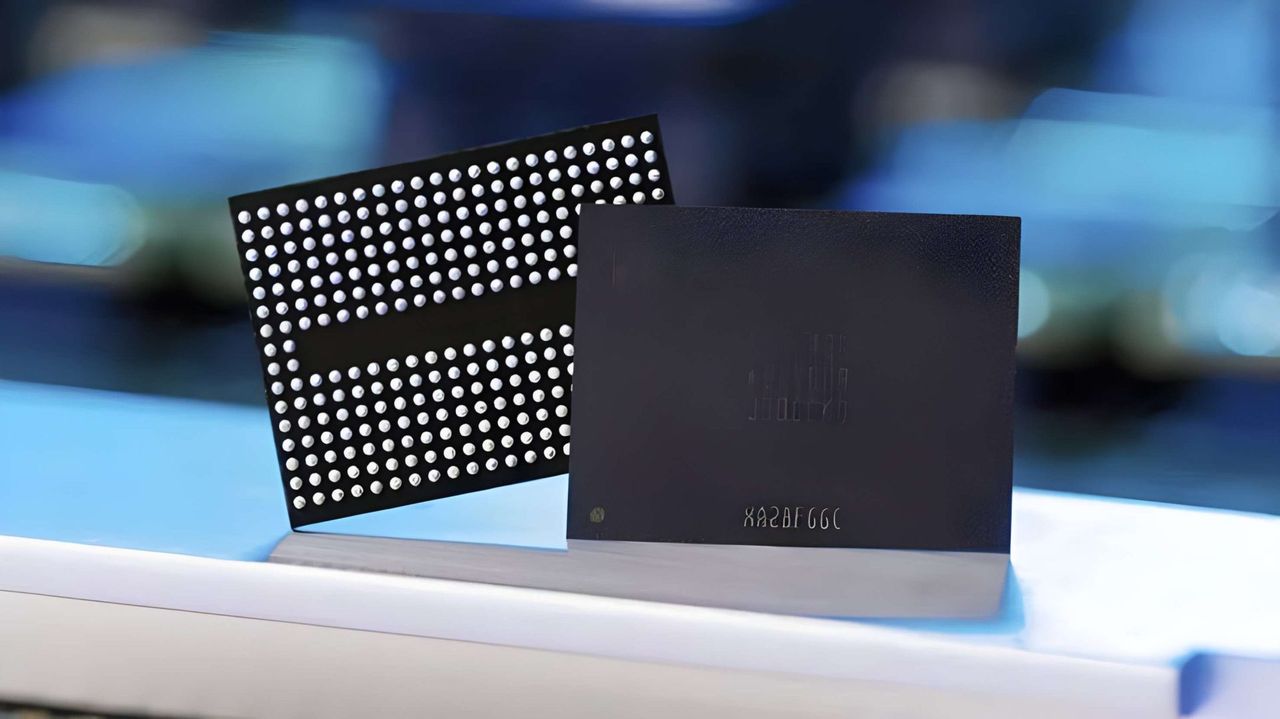
NVIDIA's Vera Rubin ramp is absorbing TLC NAND into its Context Memory eXtension, tightening supply and pushing 512Gb spot prices to roughly $21 after a June trough. The strategic signal matters more than the number: AI infrastructure demand has stopped being a GPU story and is now a whole-supply-chain story.
For years, NAND was treated as a commoditized, oversupplied corner of semiconductors, prone to brutal boom-bust cycles. Vera Rubin changes the demand structure. By binding NAND cells directly into an accelerator's memory hierarchy, NVIDIA converts what was discretionary consumer and enterprise storage demand into structural, AI-anchored offtake. That reduces the elasticity memory buyers have relied on. When the marginal buyer is a hyperscaler building out AI clusters rather than a PC OEM, spot prices behave differently, and the traditional cycle timing that procurement teams model starts to break.
The downstream squeeze is the part executives should watch. Enterprise SSD demand is scaling at the same moment accelerator platforms are locking up wafer output, so the pressure compounds. Buyers outside the AI arms race, in embedded systems, industrial gear, and mainstream servers, may find themselves paying AI-cluster prices for storage they treat as a background input. Margin planning that assumed cheap, abundant NAND needs revisiting.
For Japan, the exposure is unusually direct. Kioxia is a core global NAND supplier, so tightening TLC markets and firmer pricing land squarely on a Japanese balance sheet, potentially as an earnings tailwind but also as a strategic test of how it prioritizes AI-tier versus commodity allocation. On the buyer side, Japanese data center operators, cloud builders, and the SIers assembling on-prem AI stacks for enterprise clients should assume storage BOM costs drift upward and lead times lengthen. Fixed-price system integration contracts written on last year's memory assumptions carry real margin risk.
The practical move for local dev and infrastructure teams is to treat NAND as a scarce, strategically allocated resource rather than a fungible commodity: lock supply earlier, design for storage efficiency, and build price escalation clauses into AI-infrastructure proposals. The teams that model memory as a demand-linked input to the AI cycle, not a countercyclical bargain, will price and provision more accurately than those still waiting for the old glut to return.




