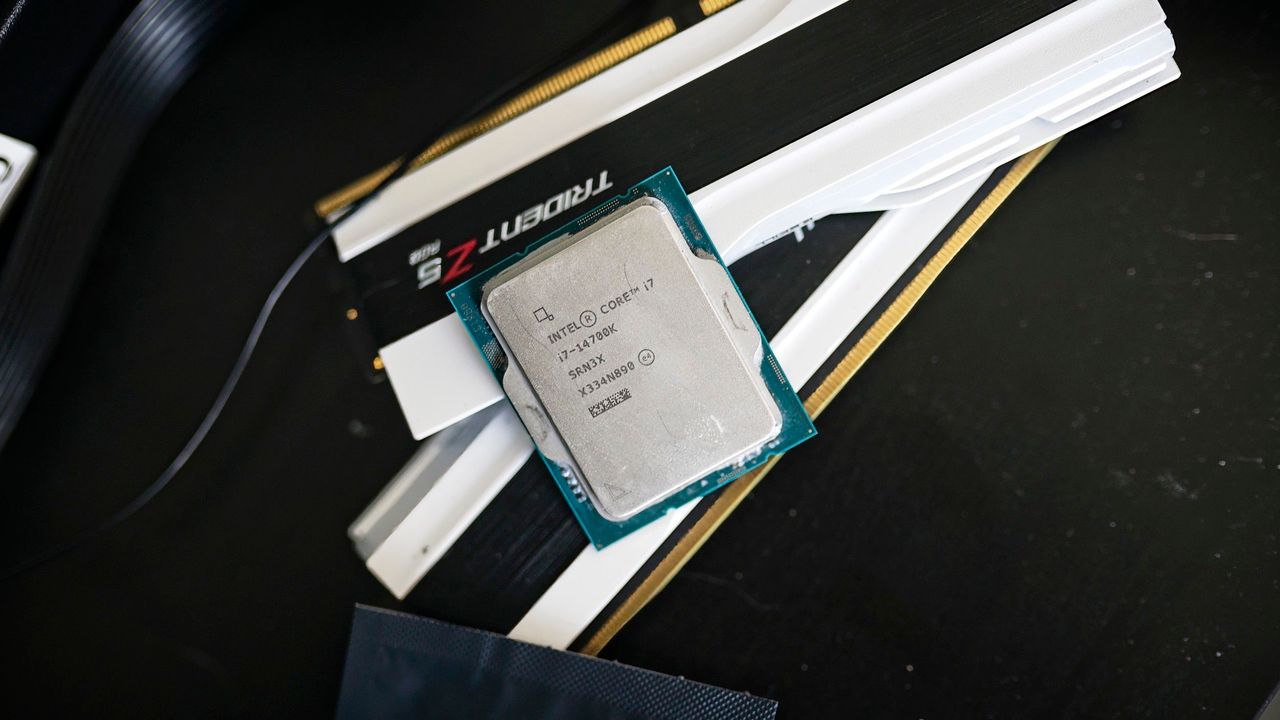
Intel says demand for its aging Raptor Lake desktop chips has surged and will remain in the lineup for years, driven largely by climbing DDR5 memory prices.
The real story here isn't Intel product strategy — it's the downstream shockwave of the AI capital cycle hitting the consumer hardware stack. Memory makers are reallocating wafer capacity toward high-bandwidth memory and enterprise DRAM to feed AI accelerators, and that reallocation is draining supply from mainstream DDR5. When commodity memory gets scarce, the price signal ripples out to every layer beneath it. Older platforms that were supposed to sunset suddenly become the value play, because the CPU is no longer the expensive part of the build — the RAM is. Intel gets an unplanned tailwind: it can keep monetizing a mature, fully-depreciated product line while it works through its foundry and next-gen roadmap troubles. It's a rare piece of good news layered on top of the week's bigger Intel headline, Nvidia's roughly $30 billion equity stake, which signals just how much strategic capital is now being redeployed to prop up the US chip base.
For the Japanese market, this matters more than it looks. Japan's corporate PC fleet is in the middle of a forced Windows 11 hardware refresh, and much of that procurement runs through SIers and hardware resellers bidding on multi-year fixed-price contracts. A sustained DDR5 price spike compresses margins on deals that were quoted before the memory market turned. Expect SIers to face uncomfortable conversations about BOM cost pass-through, and to quietly favor older, DDR4-capable or lower-spec configurations to protect deal economics.
There's also a sourcing dimension. Japanese enterprises and their integration partners tend to standardize on a narrow set of certified configurations for support and lifecycle reasons. If the cheapest reliable path is now a previous-generation platform, procurement and internal dev teams should revisit their standard build specs rather than defaulting to the newest silicon. For workstation-heavy dev shops and on-prem RPA/automation servers, the pragmatic move is to lock in memory allocations early and treat DDR5 as a scarce, price-volatile input for the next several quarters — not a commodity you can assume will be cheap at delivery time.




