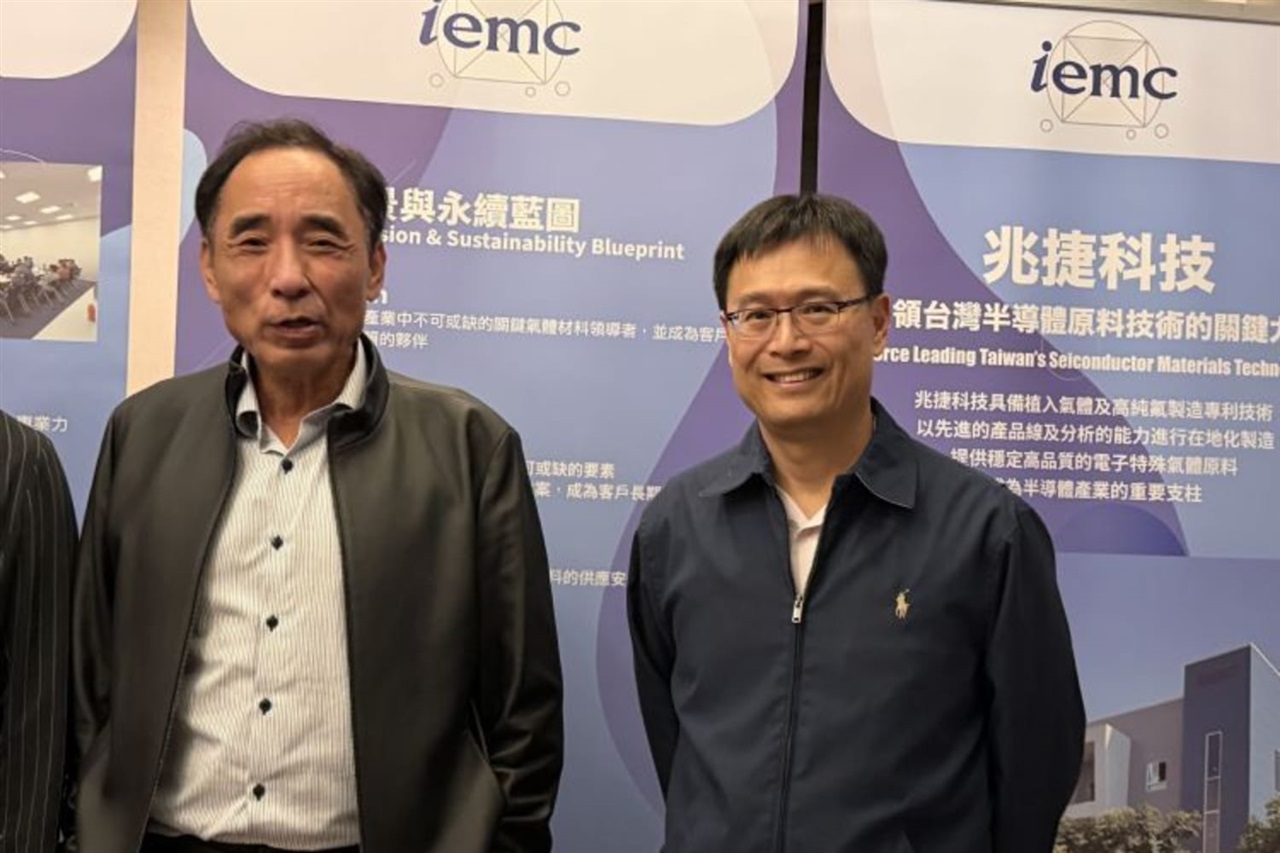
Taiwan's Ion Electronic Materials is nearing break-even and targeting 2027 profitability after posting over 30% year-over-year gas revenue growth to NT$534 million in the first three quarters of 2026. Led by industry veteran Charles Kau, the company's trajectory underscores a structural shift in the semiconductor ecosystem: the aggressive localization of electronic specialty gases required for AI and high-performance computing nodes.
Globally, upstream chip materials have long operated as cross-border oligopolies, insulated by extreme purity standards and multi-year qualification cycles. However, geopolitical friction and wafer fab expansions are pushing foundries to cultivate domestic suppliers near advanced fabrication hubs. Yet this capacity expansion collides with emerging macroeconomic caution. With major telecom and financial institutions—including SoftBank's mobile arm and Citi—raising questions about a potential slowdown in US AI datacenter demand, upstream material vendors face a delicate timing risk. Scaling capital-intensive gas production relies on sustained wafer starts for AI accelerators and high-bandwidth memory. If hyperscaler infrastructure capital expenditures moderate just as localized material capacity comes online, second-tier suppliers could confront margin compression before achieving full economies of scale.
For Japan, Taiwan's push to localize specialty gases represents a direct strategic challenge to one of its most defensible industrial strongholds. Japanese chemical and industrial gas conglomerates have historically dominated the supply of ultra-high-purity etching and deposition gases into Taiwanese fabs. As Taiwanese foundries actively diversify toward domestic vendors to mitigate maritime logistics bottlenecks and currency fluctuations, Japanese material incumbents can no longer rely solely on export models; they must deepen joint-venture manufacturing inside Taiwan while defending intellectual property around next-generation molecular formulations.
Simultaneously, this dynamic exposes vulnerabilities in Japan's domestic semiconductor revival and enterprise IT landscape. As new fabs ramp up across Kumamoto and Hokkaido, Japanese industrial consortia must ensure domestic specialty gas logistics scale smoothly alongside local chemical production. For Japanese system integrators (SIers) and factory automation teams, rising competition in electronic materials creates urgent demand for smart-manufacturing modernization. Chemical producers require real-time IoT quality telemetry, automated cylinder tracking, and predictive supply-chain software—replacing legacy RPA patches with integrated ERP and MES architectures—to maintain the yield reliability that justifies a premium over emerging regional challengers.




