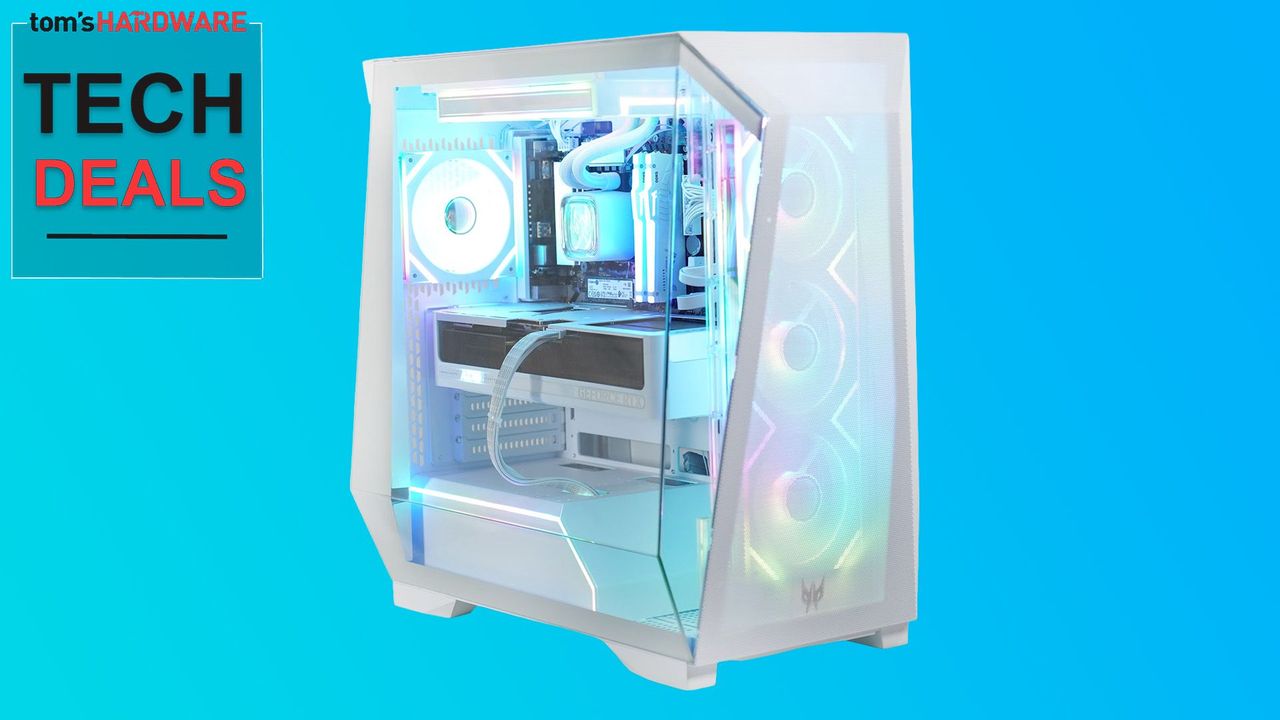
The underlying fact is narrow: Acer's Predator Orion 6000, packing an Nvidia RTX 5070 Ti, a Core Ultra 7 265KF, 32GB of RAM and a 1TB SSD, is selling near $2,099. The strategic signal is broader than one SKU.
Aggressive discounting on a current-generation, upper-mid-tier GPU system tells you something about where consumer silicon demand sits right now. After years in which every capable GPU was absorbed by crypto, then by AI experimentation, deep cuts on prebuilts suggest channel inventory is finally normalizing and that Nvidia's consumer tier is competing on price again while the company's real margin story lives in the data center. For buyers, that is a rare window; for OEMs, it is a reminder that hardware bundling, not raw components, is where they defend margin. The presence of an Intel Core Ultra part is its own subplot: Intel is fighting to stay the default in enthusiast builds even as its financial narrative wobbles.
There is a second, more interesting read. A sub-$2,100 machine with a 5070 Ti and 32GB of RAM is no longer just a gaming rig. It is a credible local inference node capable of running quantized open-weight models on-device, which reframes consumer hardware pricing as an input cost for AI development, not entertainment.
For the Japanese market, the immediate friction is the yen. Import-priced prebuilts land far heavier in Japan than a US sticker implies, which keeps domestic BTO builders and the on-prem workstation channel strategically important rather than commoditized. The deeper opportunity is for SIers and enterprise dev teams. Security- and data-residency-conscious Japanese clients, especially in finance, manufacturing and the public sector, are wary of sending prompts to overseas cloud APIs. Cheap, powerful local GPU boxes make on-premise LLM inference and private RAG pilots genuinely affordable, letting integrators offer sovereign AI stacks without hyperscaler dependency.
The practical takeaway for local teams: treat falling consumer GPU prices as a green light to stand up in-house inference and prototyping hardware. RPA and automation shops in particular can pair commodity GPU workstations with open models to move from rule-based bots toward on-prem, context-aware agents, closing part of the gap with cloud-native rivals while keeping data inside the building.




