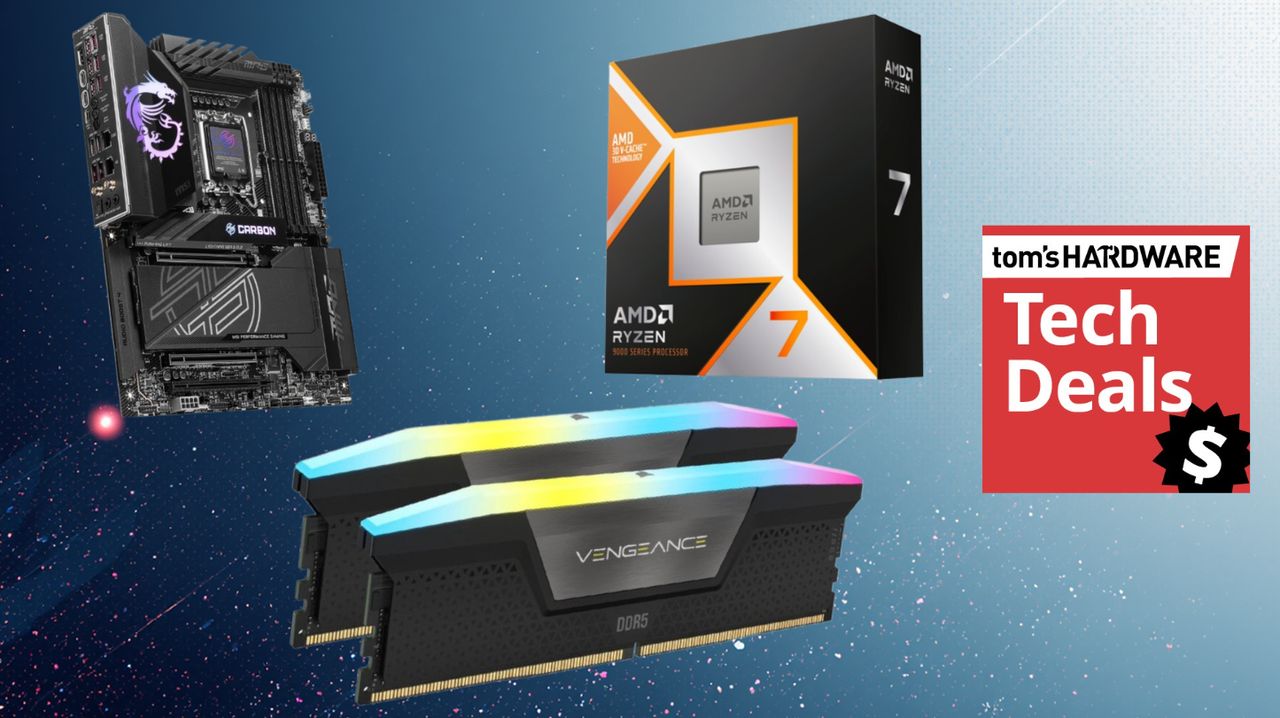
Newegg is offering a $1,250 hardware bundle combining an AMD Ryzen 7 9800X3D processor, 32GB of Corsair DDR5-6000 memory, an MSI X870E motherboard, and a Rosewill liquid cooler for a $119 discount. On the surface, this is standard retail promotion, yet for technology executives and supply chain observers, component bundling around constrained, high-demand silicon serves as a clear barometer for broader PC hardware inventory imbalances.
Globally, processor architectures featuring large on-die cache designs command strong pricing power among enthusiasts and workstation builders, while adjacent components—specifically premium motherboards, standard DDR5 memory modules, and house-brand cooling peripherals—face stiffer margin pressure and slower inventory turnover. By tethering high-velocity CPUs to higher-margin or overstocked boards and memory, distributors protect blended average selling prices without resorting to direct MSRP cuts on flagship chips. Meanwhile, as memory fabrication capacity increasingly pivots toward enterprise server DRAM and high-bandwidth memory for data centers, consumer DDR5 pricing sits in a delicate equilibrium. Retail promotions that subsidize memory costs through platform bundles suggest that consumer PC upgrade cycles remain price-sensitive outside of top-tier compute silicon, forcing channel partners to engineer synthetic value to move full platform generations.
For the Japanese market, US retail bundling trends highlight structural friction in domestic IT hardware procurement and custom workstation deployment. Japanese electronics retailers and BTO (Build-to-Order) system integrators contend with multi-layered distribution margins and currency headwinds that keep high-end desktop components noticeably pricier than in North American channels. As Japanese software development teams, game studios, and mid-sized SIers evaluate local workstation builds for on-premise compilation, simulation, and local AI prototyping—often seeking alternatives to recurring cloud compute bills—the total cost of ownership for modern AM5 platforms remains elevated.
Furthermore, Japanese enterprise IT departments and local development shops rarely procure bare components through ad-hoc retail bundles due to strict vendor qualification, warranty support requirements, and standardized asset management. Instead, they rely on domestic commercial PC vendors and specialized SIers. When global channel partners use aggressive bundling to clear X870E motherboards and DDR5 stock in Western markets, Japanese corporate buyers often see delayed price relief. Procurement leaders at Japanese technology firms should monitor these overseas component promotions as a leading indicator of upstream motherboard and DDR5 oversupply, using that visibility to negotiate better volume pricing with domestic BTO suppliers during upcoming developer workstation refresh cycles.




