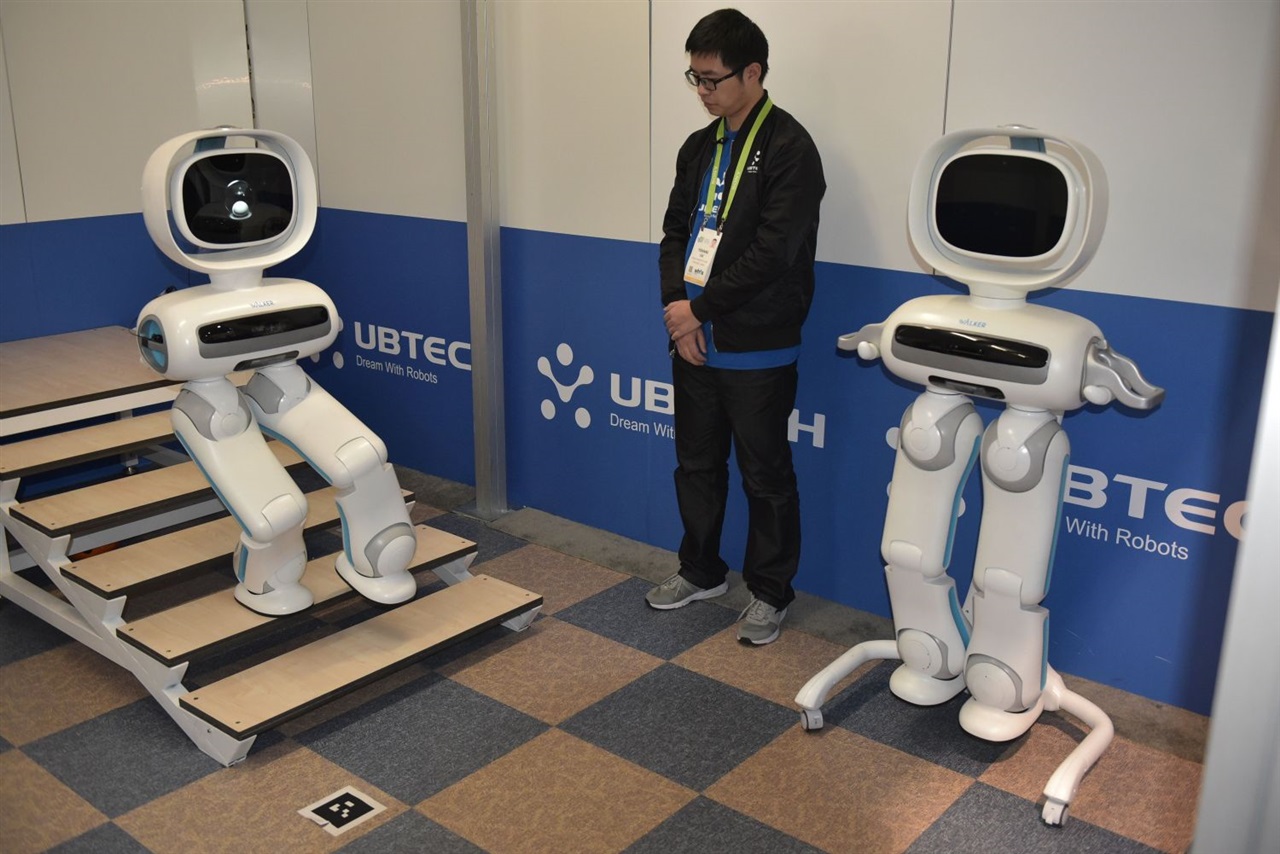
Pudu Robotics, a Chinese maker of commercial service robots that books roughly 80% of sales overseas, is pushing into humanoids and weighing European manufacturing, positioning Tesla as a long-term rival rather than an immediate one. The framing matters more than the rivalry itself.
The global signal here is about go-to-market, not just hardware. Tesla's humanoid narrative sets expectations around general-purpose dexterity and eventual mass production, but that vision remains unproven at scale. Pudu is approaching from the opposite direction: an installed base of deployed delivery and cleaning robots, real service contracts, and a distribution network already operating across dozens of markets. Whoever converts an existing commercial footprint into humanoid deployments first will set the reference price and the integration standard, and a company that already exports the majority of its units has a structural head start on channel and support.
European assembly is the more consequential move. Localizing production near the largest overseas market hedges against tariffs, shortens service loops, and preempts the data-sovereignty and procurement-origin scrutiny that increasingly shapes who can sell robots into regulated environments. Expect buyers in logistics, hospitality, and facilities management to weigh total cost of ownership and serviceability over spec-sheet autonomy. That favors vendors with proven uptime and parts networks.
For Japan, this reframes a market that tends to anchor on domestic and Western robotics brands. Labor shortages in elder care, hospitality, retail, and logistics are acute, and Japanese operators are already comfortable with service robots on floors and in restaurants. A cost-competitive humanoid line backed by a working support network could enter faster than incumbents assume, and procurement will hinge on reliability and after-sales coverage, areas where Japanese buyers set a high bar.
For SIers and local integrators, the opening is in the layer above the hardware. The defensible work is fleet orchestration, safety certification, integration with warehouse and facility systems, and the operational playbooks that make humanoids usable on a Japanese shop floor. RPA and automation teams should treat embodied robots as an extension of existing process-automation roadmaps rather than a separate category, and start scoping which physical tasks justify a humanoid versus a cheaper single-purpose machine. The strategic risk for Japanese hardware vendors is ceding the integration and service relationship to foreign platforms while still competing on the robot itself.