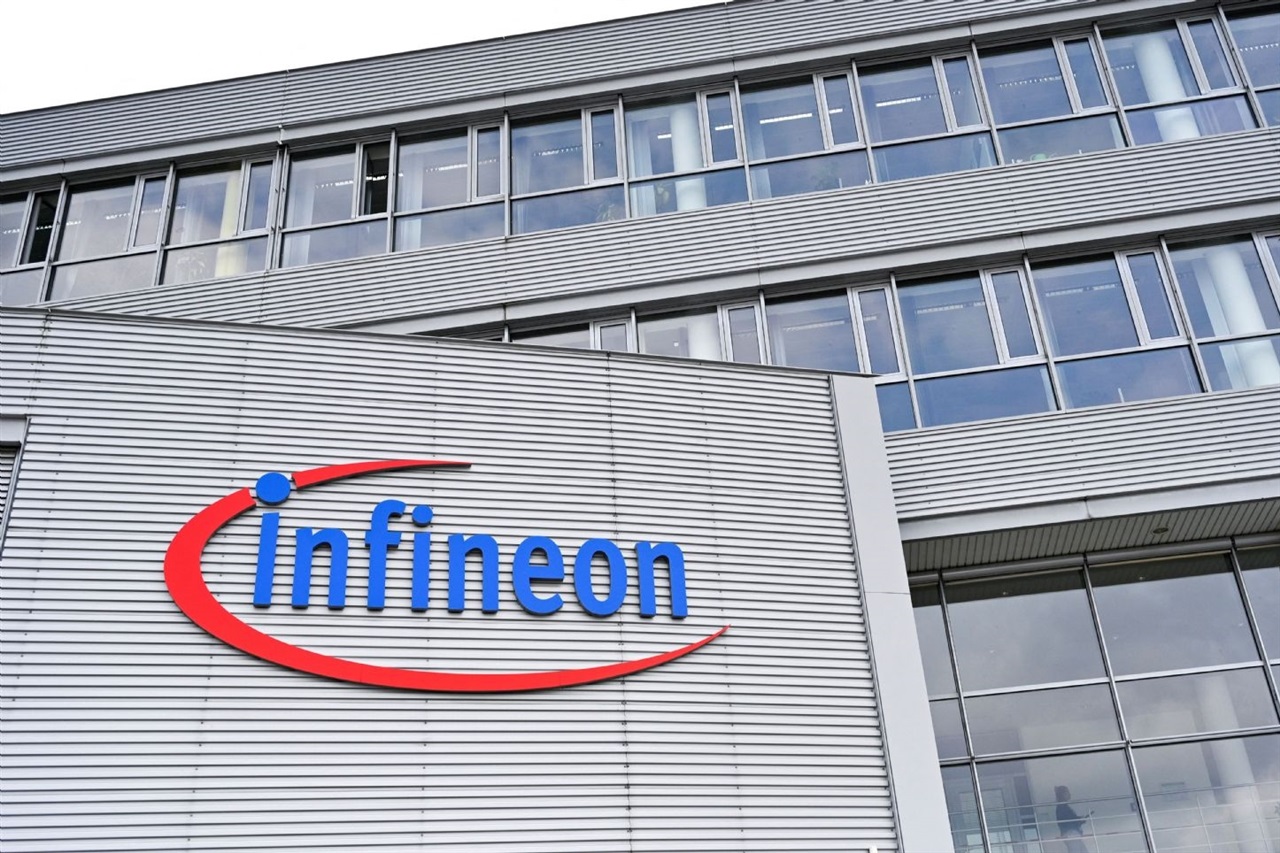
Infineon Technologies' data center power chip orders have already surpassed its nearly EUR4 billion fiscal 2027 revenue forecast, leaving internal factory capacity and foundry partners as the sole constraints on realized growth. While financial analysts like Citi and telecom operators—including SoftBank's mobile arm—raise warnings of a potential US AI datacenter demand slowdown, physical component backlogs tell a starkly different story. What looks from the outside like cooling cloud capital expenditure is frequently a misread of acute supply-chain bottlenecks shifting from logic processors to power delivery.
For the global semiconductor and cloud ecosystem, the primary constraint in AI infrastructure is migrating down the bill of materials. Securing logic accelerators and high-bandwidth memory is futile if facilities cannot step down grid voltage to feed dense server racks efficiently. Power management semiconductors rely on specialized analog and wide-bandgap manufacturing processes that cannot be scaled overnight via standard foundry capacity. Hyperscalers risk severe deployment delays not from wavering boardroom conviction, but because power conversion components are gating rack-level integration. Meanwhile, the divergence between macroeconomic capex skepticism and booked factory backlogs creates acute bullwhip risks: cloud buyers may double-order scarce power modules to guarantee allocation, masking true end-market elasticity until new fab lines finally come online.
For Japan's technology sector, this bottleneck presents an immediate strategic opening alongside severe operational headaches. Domestic power semiconductor makers—long dominant in industrial and automotive silicon carbide and IGBT modules—have a clear window to capture hyperscale server allocations that European suppliers cannot fulfill on schedule. Conversely, Japanese system integrators (SIers) and domestic cloud operators building sovereign AI clusters face compounding procurement delays. Even with GPU allocations secured, local data center expansions risk stalling over basic power distribution hardware and rack-level voltage regulators.
Japanese enterprise IT leaders and SIers must adjust project timelines and procurement architecture accordingly. Rather than treating power delivery as an off-the-shelf commodity, infrastructure teams need direct visibility into tier-two semiconductor lead times before committing to enterprise AI deployment schedules. Concurrently, local engineering teams should prioritize workload optimization and smaller, quantized models that fit existing thermal and electrical envelopes, insulating corporate AI roadmaps from physical hardware bottlenecks.




