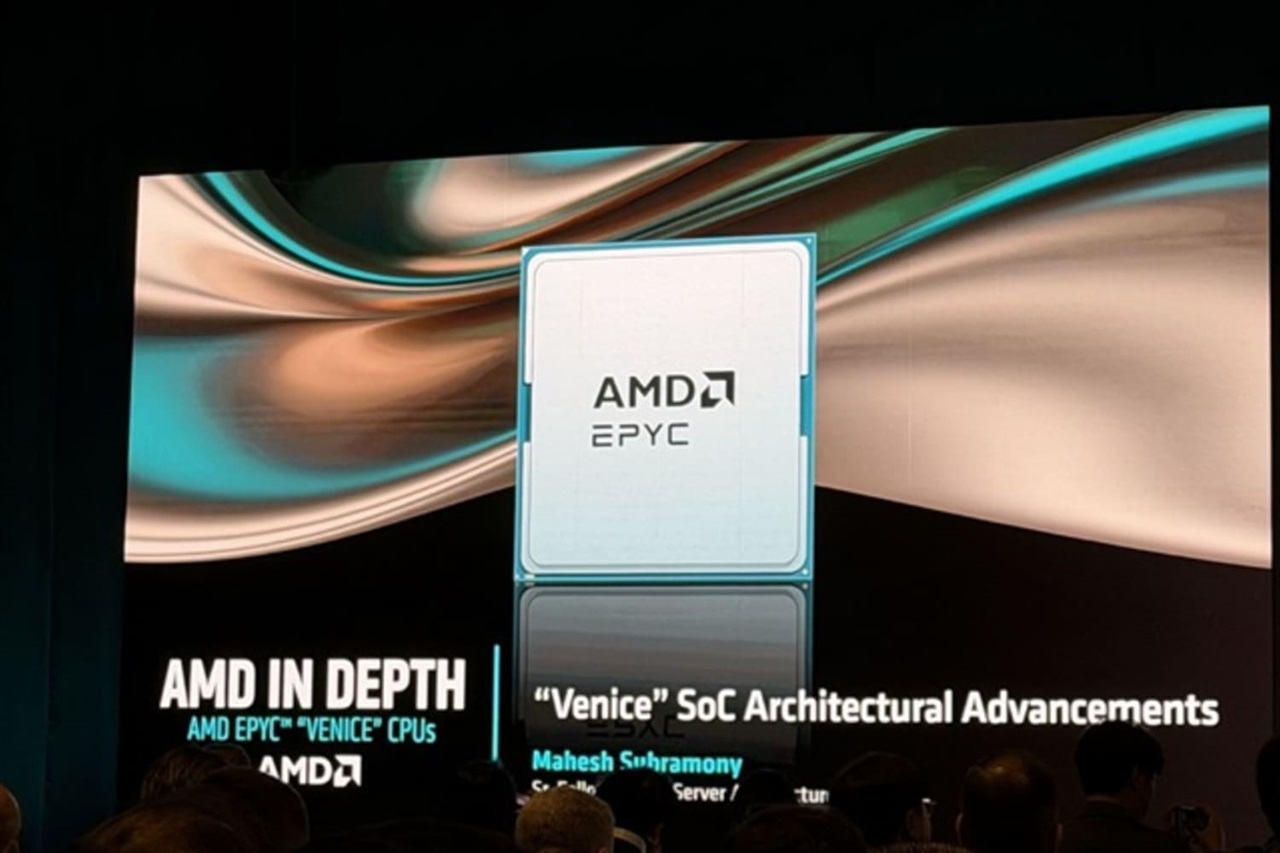
AMD has introduced its 6th Gen EPYC 9006 Series Venice processors on TSMC's 2nm node alongside its Helion Agentic AI rack platform, ROCm Agentic Toolkit, and MEXT flash-backed memory architecture to halve server DDR5 requirements.
This hardware pivot arrives at a critical inflection point for global infrastructure spending. With financial institutions like Citi questioning the sustainability of massive AI buildouts and SoftBank's mobile division flagging potential slowdowns in US data center demand, enterprise buyers are scrutinizing capital efficiency more aggressively than ever. Simultaneously, server economics have been distorted by memory shortages, where DRAM alone now accounts for 75% of total server bills of materials. By pairing TSMC 2nm compute density with MEXT—which substitutes scarce DDR5 with flash while preserving performance—AMD directly attacks the twin bottlenecks of memory inflation and capex fatigue. Furthermore, the shift from brute-force model training to multi-agent inference changes silicon priorities. Agentic workflows rely heavily on task scheduling, data retrieval, tool execution, and orchestration—tasks that are fundamentally CPU-bound rather than GPU-bound.
For the traditional GPU-centric supply chain, this signals a rebalancing of data center budgets. Hyperscalers and enterprise architects no longer need to over-provision expensive GPU clusters or absorb punitive DDR5 markups just to run complex orchestration pipelines. Instead, rack-scale systems optimized for host-processor efficiency and tiered memory expand deployment viability even as macro infrastructure budgets tighten.
In Japan, these architectural shifts carry immediate weight for domestic system integrators (SIers), cloud providers, and corporate IT departments. Japanese enterprises are actively transitioning from legacy robotic process automation (RPA) toward autonomous agentic workflows to offset chronic labor shortages, yet soaring hardware procurement costs—compounded by currency pressures on imported components—have stalled many on-premises and sovereign cloud rollouts. SIers building custom agent orchestration platforms for banking, manufacturing, and logistics clients can leverage CPU-centric rack designs and flash-tiered memory to slash server memory outlays without sacrificing real-time data processing. Local engineering teams should begin evaluating ROCm's agentic tooling alongside host-CPU orchestration layers, shifting capital away from memory-heavy legacy configurations toward cost-resilient infrastructure.




