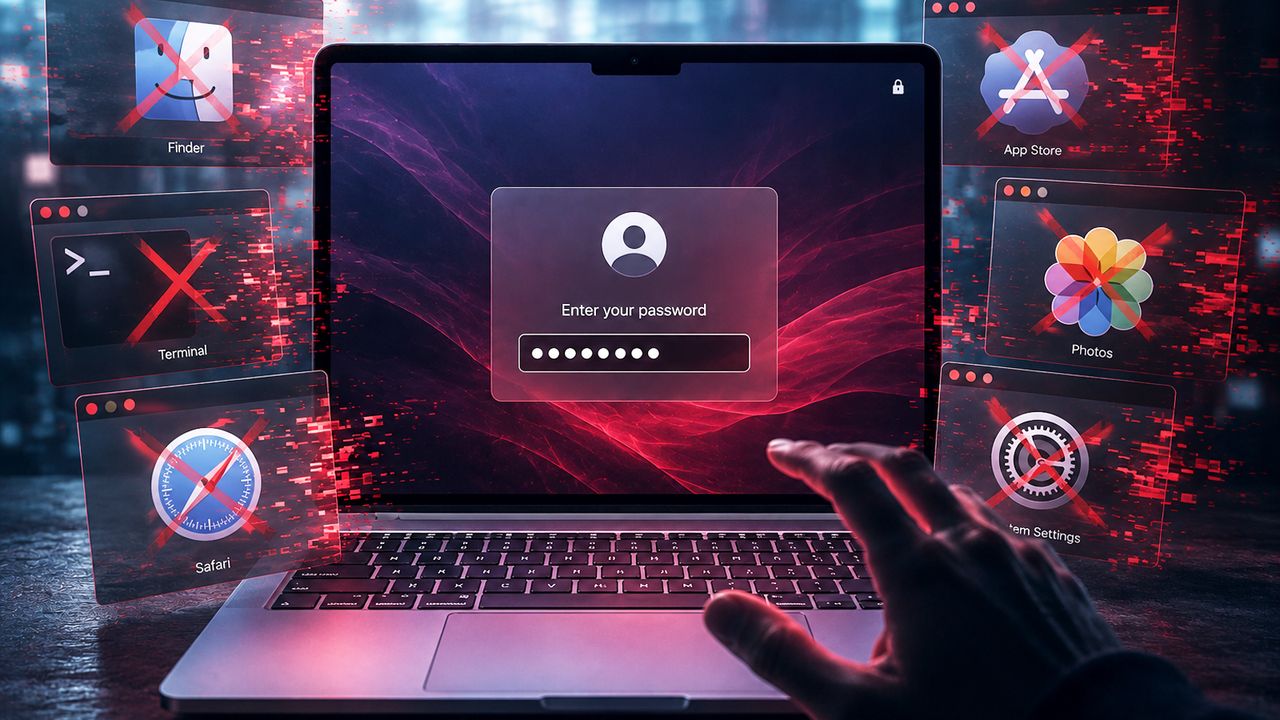
The underlying fact: a macOS infostealer named ClickLock terminates visible processes to pressure users into re-entering their system password, then harvests credentials and browser data.
The strategic signal here is not the malware itself but the attack vector. For years, executives treated macOS as a lower-risk endpoint, a belief reinforced by Apple's Gatekeeper, notarization, and TC permission prompts. ClickLock sidesteps all of it by attacking the human, not the kernel. When every open app suddenly quits, most users assume a system glitch and comply with an authentic-looking password prompt. This is the same psychological playbook that made Atomic Stealer (AMOS) and Cthulhu commercially successful on the dark web, and it confirms that macOS has graduated into a first-class target for the malware-as-a-service economy.
The business exposure is concentrated where Apple hardware dominates: engineering teams, design studios, executive suites, and the fast-growing developer base at AI and fintech startups. These are precisely the users with privileged cloud credentials, source-code access, and browser-stored session tokens. A single harvested keychain or authenticated cookie can hand an attacker lateral access to GitHub, AWS consoles, and SaaS admin panels, converting one distracted click into a supply-chain incident.
For security leaders, three actions matter now. First, extend EDR coverage to macOS fleets rather than relying on Apple's built-in XProtect; vendors like CrowdStrike, SentinelOne, and Jamf offer behavioral detection for mass process termination and credential-prompt spoofing. Second, neutralize the payoff by moving to phishing-resistant hardware keys and short-lived tokens, so stolen passwords unlock nothing. Third, retrain staff on a simple rule: the OS never asks for your password because apps closed.
The broader trend prediction: as endpoint OS defenses harden, attackers will keep migrating up the stack to human-trust exploitation, and macOS stealer kits will proliferate on subscription models through 2025. Investors watching the security sector should favor identity-first and passwordless platforms over signature-based antivirus, because the durable moat is removing the value of stolen credentials, not detecting every new binary.




