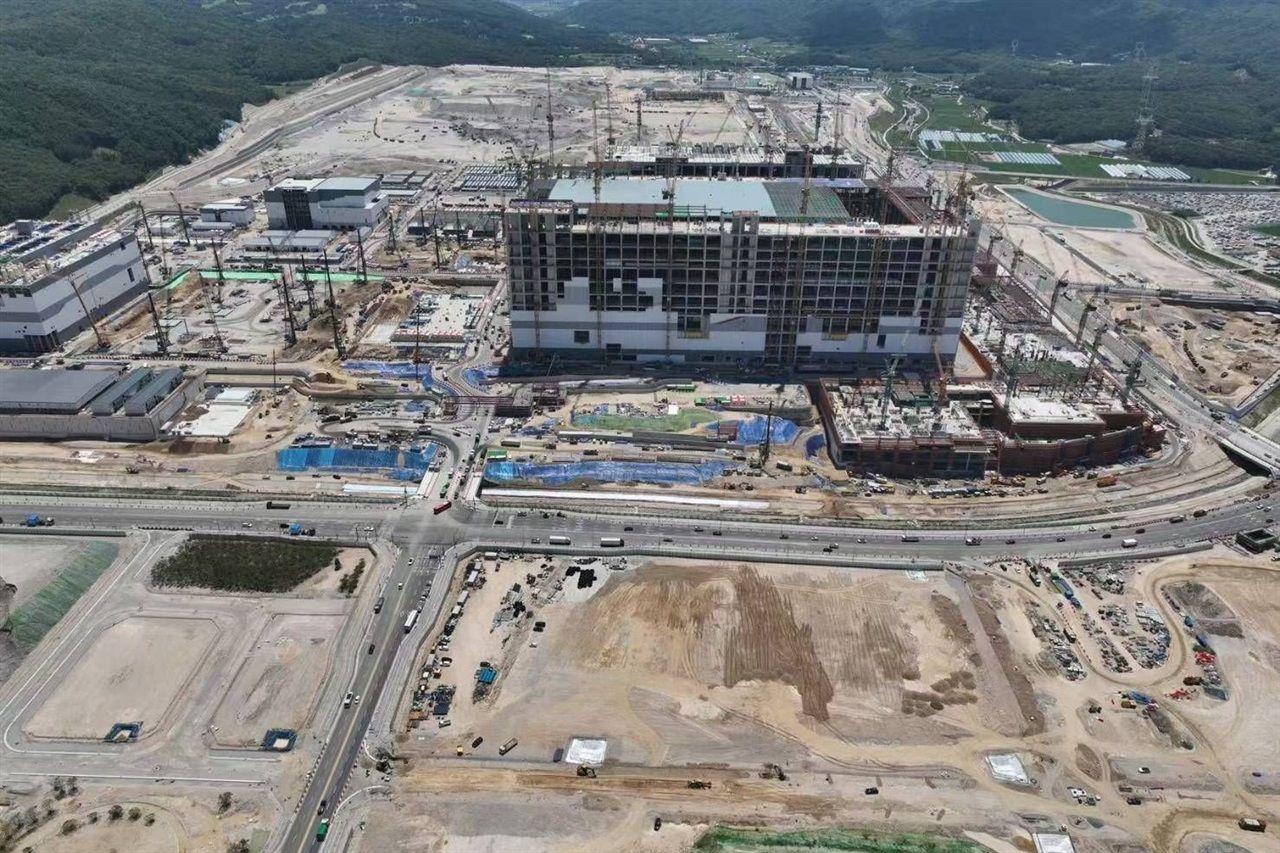
South Korea plans to bring new chip fabs online at least two years ahead of schedule by compressing construction approvals and building out power, water, and road infrastructure, backing roughly US$1.2 trillion in planned private investment.
The strategic signal is that the industry has shifted its competitive axis from subsidy size to time-to-first-wafer. Capital is abundant; what is scarce is the ability to convert a funding commitment into running capacity before a demand cycle turns. The US CHIPS Act showed how permitting friction, environmental review, and labor shortages can stretch a fab timeline by years and erode the value of the incentive. By treating approvals and grid connections as the binding constraint rather than cash, Seoul is attacking the part of the cost curve that actually determines whether a fab catches the HBM and advanced-logic demand driven by AI datacenter buildouts. Two years is not a marginal gain in this market; it can decide which supplier locks in the design wins for a given GPU generation.
The harder question is execution risk. Faster approvals concentrate demand on the same power and water systems that AI datacenters are already straining worldwide, and compressed timelines raise the odds of rework, environmental pushback, or equipment-delivery mismatches. Speed only pays if yield ramps keep pace.
For Japan, this sharpens an uncomfortable comparison. Japan has committed serious public money to Rapidus in Hokkaido and to TSMC's Kumamoto cluster, but its advantage has been execution discipline, not administrative speed. Korea's move reframes permitting velocity and infrastructure readiness as a national competitive variable, and Japan's layered approval processes across national and municipal bodies are a structural drag that money alone will not fix.
For Japanese equipment and materials suppliers, the read is more favorable. Firms in deposition, cleaning, photoresist, and inspection sell into every fast-tracked fab regardless of flag, so accelerated Korean construction pulls their order timelines forward. The risk sits with Japanese policymakers and the regional ecosystems around Chitose and Kumamoto: if they cannot match Korea's time-to-wafer, Japan keeps its reputation for reliability while ceding the first-mover revenue on each new node. Enterprise IT and SIer exposure here is indirect, through supply-chain planning and the capex cycles of domestic device makers, not direct demand.




