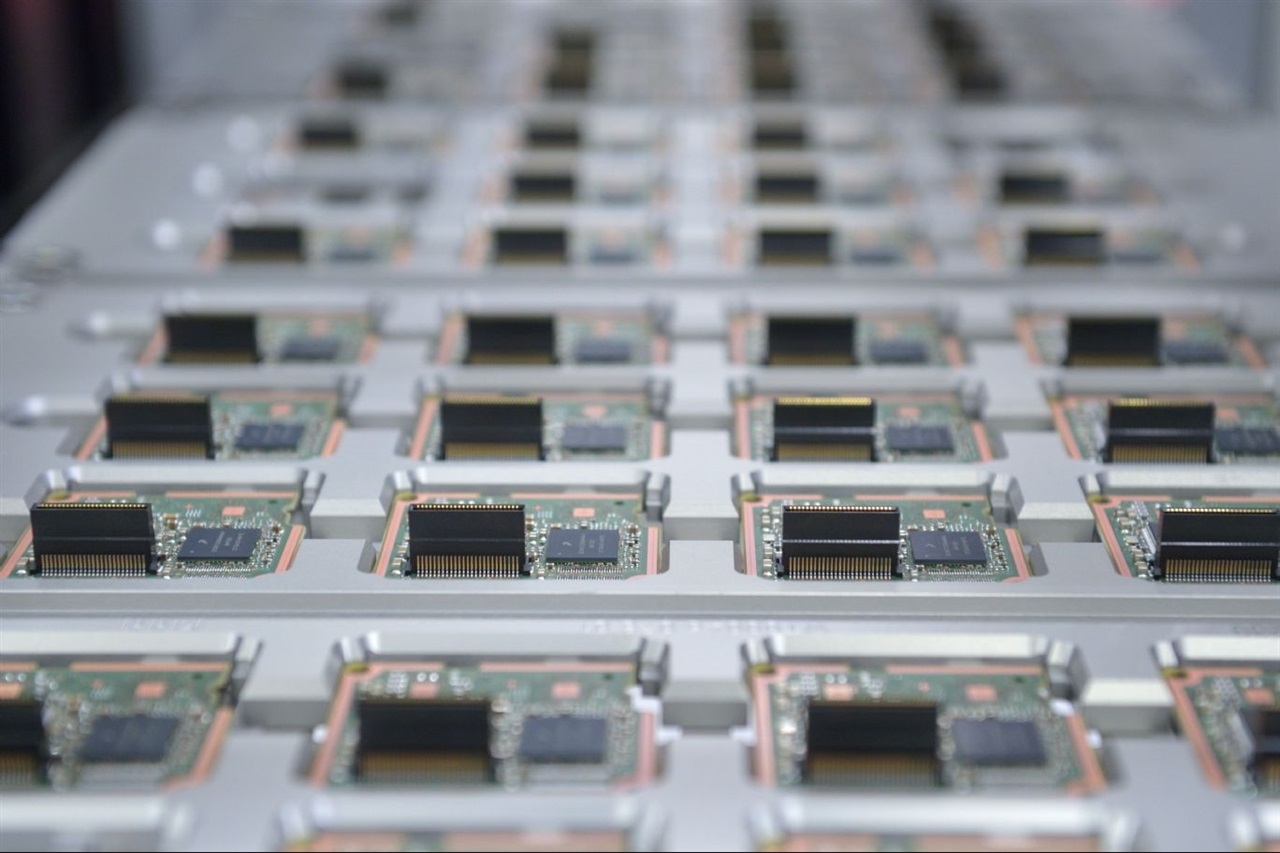
China's OSAT (outsourced assembly and test) firms opened the fourth quarter with high utilization and sector-wide price increases, yet their third-quarter earnings reveal that reported profit growth rested heavily on investment gains and lower taxes rather than core operations.
The global read is about the quality, not the direction, of the recovery. AI demand has lifted order books and finally given packagers pricing power after years of commodity margins, but the same demand has exposed how far behind these firms sit in advanced packaging, the stacking and interposer work that turns raw silicon into HBM-equipped accelerators. Closing that gap requires a capex wave that compresses free cash flow precisely when revenue looks strongest. Investors reading only the headline profit line risk mistaking one-off financial gains for durable operating leverage. The structural point: advanced packaging is becoming as much a bottleneck for AI compute as leading-edge lithography, which is why packaging capacity, not just wafer supply, now sets the ceiling on accelerator output.
This also reshapes the competitive map. The high end of advanced packaging remains concentrated among a handful of Taiwanese and foundry-linked players, and China's packagers are spending aggressively to avoid permanent relegation to legacy and mid-range work. Export controls that limit access to the best tools make that catch-up slower and more expensive, so the capex figures should be read as the cost of staying relevant rather than a sign of imminent parity.
For Japan, the implication runs through the materials and equipment layer rather than packaging services themselves. Japanese suppliers dominate several inputs that every packaging capex cycle consumes, from substrate materials and bonding films to inspection and assembly equipment. A China-led spending surge is near-term demand for these vendors, but it also funds a future competitor, a tension Japanese boards should weigh deliberately rather than bank as pure upside.
Japanese device makers and the SIers serving domestic manufacturers should treat packaging as a supply-chain risk to model explicitly. If AI-grade packaging stays tight and concentrated, lead times and costs for any Japanese product embedding advanced accelerators will stay elevated. Enterprise IT and development teams planning on-premise AI buildouts should assume hardware procurement, not model access, becomes the binding constraint, and plan capacity commitments accordingly.




