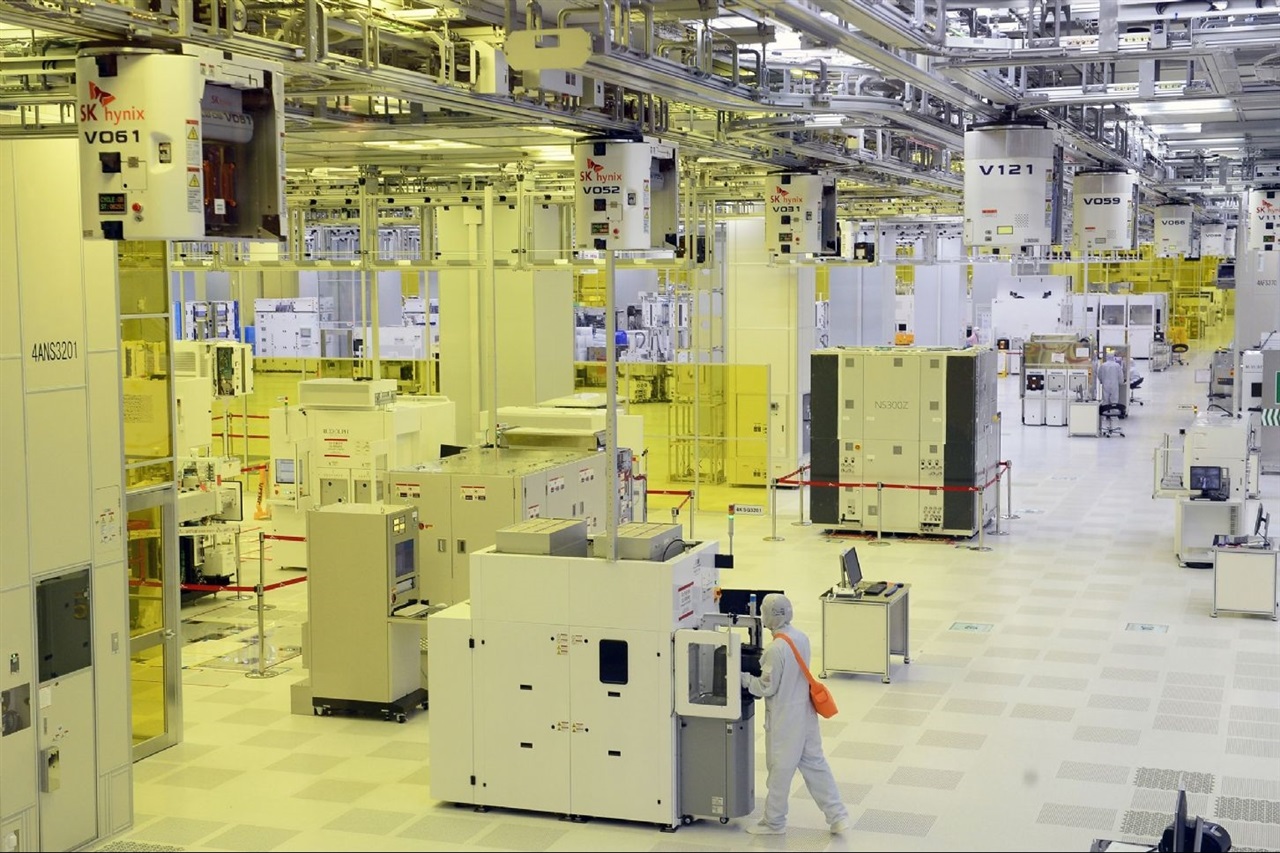
The underlying move is narrow but strategically loud: Samsung and SK Hynix are preparing to upgrade their China-based NAND plants to produce chips exceeding 200 layers, a bid to reclaim share from state-backed YMTC while formal US restrictions on upgrading those operations technically remain in force.
The real signal here is not the layer count but the enforcement climate. For three years the operating assumption was that Korean memory makers would slowly wind down advanced production inside China because Washington would never grant the equipment waivers to do otherwise. A quiet decision to upgrade implies the opposite: that the practical ceiling on China-based output is lifting, or at least no longer tightening. That recalibrates every capital plan built on the premise of a decoupling floor.
It also reframes the competitive threat. YMTC has closed the technical gap on high-layer 3D NAND faster than most Western analysts projected, and it competes on price in a commoditized segment where cost-per-bit decides design wins. If Samsung and SK Hynix let their China fabs stagnate, they cede a growing domestic Chinese demand base to a subsidized rival. The parallel reporting on advanced DRAM for AI datacenters underlines the same logic: memory is splitting into a premium HBM tier funded by the AI buildout and a fiercely contested legacy tier where China is gaining. Defending both fronts at once is the strategic pressure.
For Japan, the most exposed player is Kioxia, which sits almost entirely in the commodity and client NAND segment and lacks the HBM cushion that funds its Korean rivals. A revitalized Chinese and Korean push on high-layer NAND squeezes exactly the market Kioxia depends on, right as it tries to stabilize post-IPO. Japanese equipment and materials suppliers face the inverse: Tokyo Electron, Screen, Shin-Etsu, SUMCO, and JSR all benefit if China-based upgrade cycles resume, since fab retooling drives tool and chemical orders regardless of whose logo is on the fab.
For Japanese enterprises, SIers, and datacenter operators, the practical takeaway is supply and pricing risk, not geopolitics. A memory capacity fight between Korea, China, and Kioxia tends to compress NAND prices in the near term but injects volatility into procurement planning. IT teams sizing storage refreshes and AI inference clusters should treat 2026 memory pricing as a range, not a line, and build contracts with that swing in mind.




