Note: the supplied article is about GPU power-delivery monitoring, not the Meta privacy penalty flagged in the briefing. I am analyzing the article actually provided.
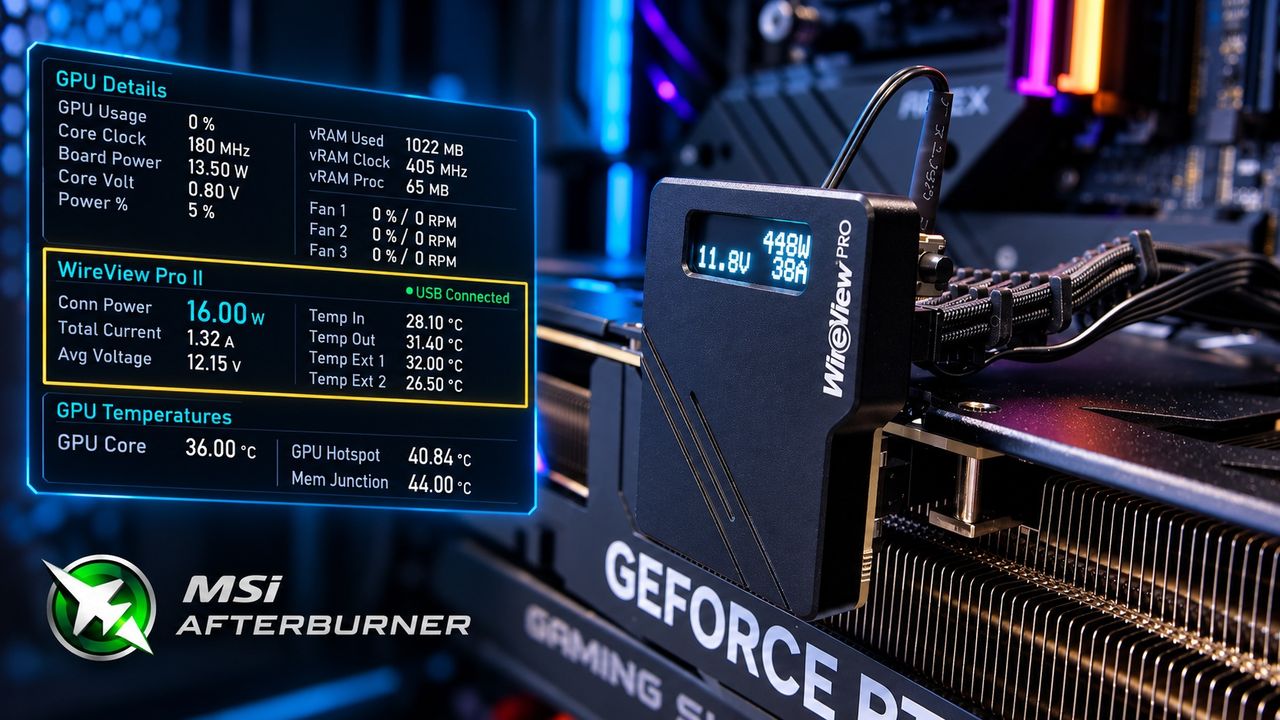
An open-source MSI Afterburner plugin now pipes 28 sensor readings from Thermal Grizzly's WireView Pro II into the in-game overlay, including per-pin monitoring of the 12V-2x6 connector. The headline is a utility release. The underlying signal is bigger: NVIDIA's connector melting problem has matured into a standing aftermarket.
When a single physical interface on flagship RTX 40 and 50 silicon can fail under uneven current load, the market responds in layers. First come inline measurement devices like WireView. Then comes a software layer that makes those readings legible to ordinary users, in this case built not by a vendor but by a Reddit developer. That sequence matters. It means the trust gap NVIDIA left open is being filled by third parties, and the company no longer fully controls the diagnostic narrative around its own hardware. Every per-pin reading a user can now see is also a potential screenshot in a warranty dispute or a viral failure thread.
The strategic read for the industry: power delivery has become a competitive and liability surface, not a solved commodity. Connector standards, current balancing, and real-time telemetry are now purchase considerations for anyone spending four figures on a GPU. Board partners and PSU makers that bake in monitoring will differentiate; those that treat the connector as settled inherit reputational risk.
For the Japanese market, this plays on two tracks. The domestic enthusiast and self-build scene, concentrated in Akihabara retail and served by shops like TSUKUMO and Dospara, skews toward high-end GPUs and is unusually tooling-literate, so demand for measurement hardware and overlay plugins will be disproportionate here. More consequential is the enterprise side: Japanese cloud and AI operators standing up GPU clusters amid the current datacenter buildout cannot rely on hobbyist overlays. They need rack-level power telemetry, and that is a procurement and SIer opportunity. System integrators building GPU infrastructure for Japanese firms should treat connector-level monitoring and thermal auditing as a billable managed-service layer, not an afterthought.
The broader lesson for local dev and ops teams: hardware reliability is migrating into the observability stack. The same instinct that put APM and distributed tracing into software should now extend to physical power paths in AI compute. Teams that fold GPU power telemetry into existing monitoring dashboards will catch degradation before it becomes downtime.




