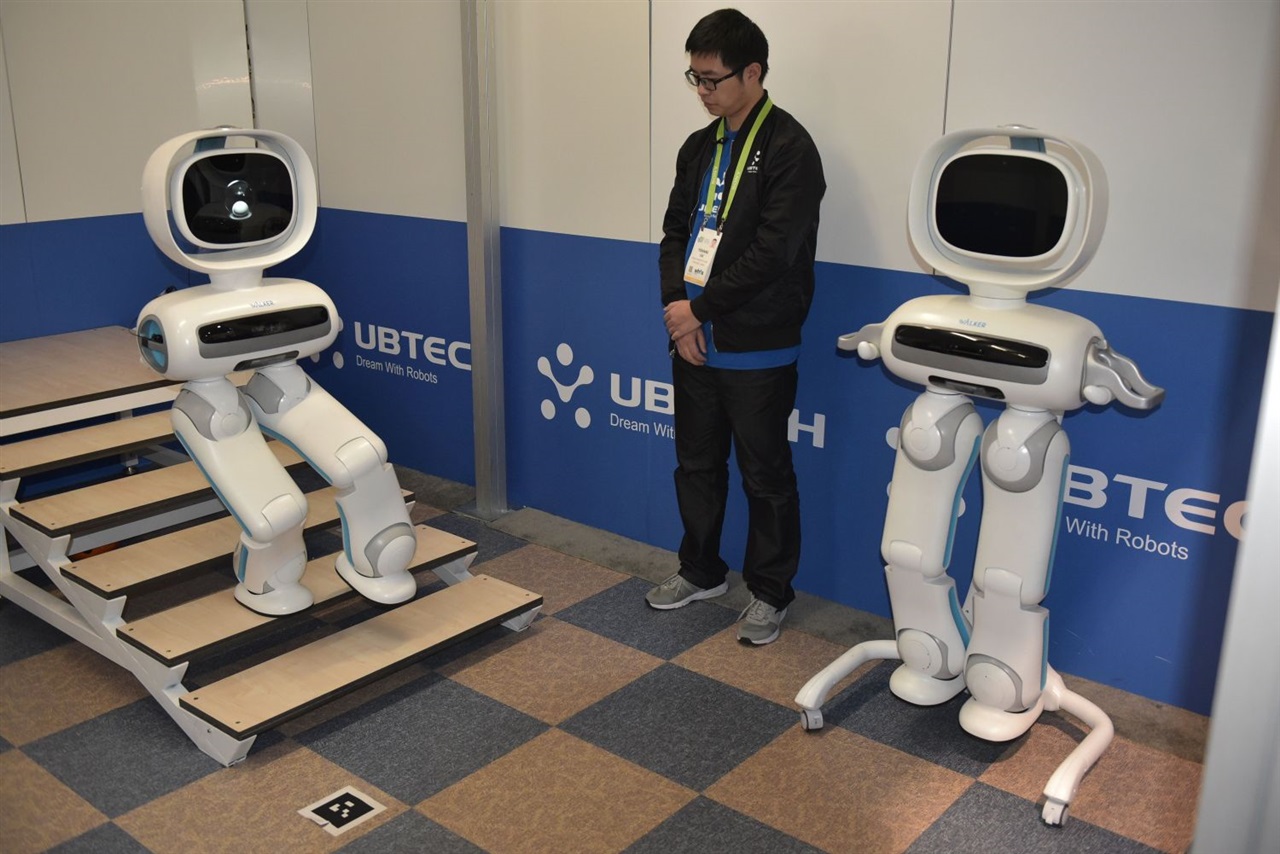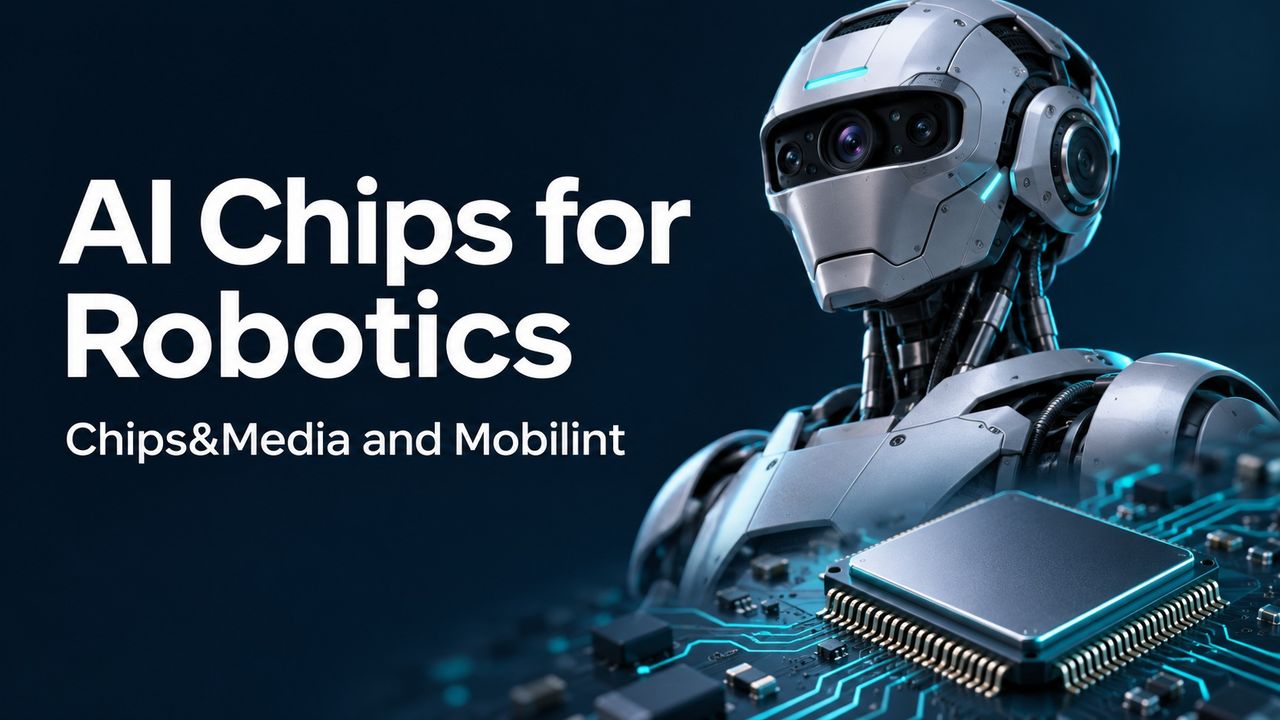
South Korean fabless startup Mobilint has initiated mass production of edge AI chips integrating video codec IP from Chips&Media, targeting multi-camera robotics and humanoids. While the broader industry remains fixated on massive cloud-based vision-language-action models, the true bottleneck for embodied AI is shifting down to the physical edge: ingesting, compressing, and processing simultaneous high-resolution video streams without draining onboard battery reserves or saturating internal data buses.
As autonomous mobile robots and humanoids transition from controlled laboratory demos to dynamic commercial environments, sensor arrays are expanding rapidly. Relying on raw, uncompressed video feeds or general-purpose GPUs to handle multi-stream perception creates severe thermal and latency penalties. By tightly coupling specialized neural processing units with dedicated video codec hardware on a single die, chipmakers can slash memory bandwidth overhead and power consumption. Globally, this architectural convergence signals an unbundling of the robotics silicon stack. Rather than defaulting to power-hungry, monolithic system-on-chips originally designed for automotive or datacenter workloads, robotics OEMs are gaining access to purpose-built, cost-effective edge silicon.
For Japan, this semiconductor shift strikes at the core of its industrial competitiveness. Legacy factory automation leaders and robotics manufacturers have historically excelled in precision mechatronics and deterministic control, where robots operate repetitively inside caged cells. However, Japan’s acute demographic contraction is forcing automation out of structured factories and into unstructured logistics hubs, retail floors, and eldercare facilities—environments that demand continuous, multi-angle visual perception. Domestic robotics hardware makers must rethink their compute architectures; relying on oversized processors drives up unit costs and limits battery runtimes, undermining commercial viability.
Simultaneously, Japanese System Integrators (SIers) and enterprise IT teams face a major architectural inflection point. Deploying fleets of vision-guided robots across warehouses or manufacturing plants will overwhelm local wireless networks and cloud budgets if video telemetry is handled inefficiently. Hardware-level video encoding alongside localized AI inference enables SIers to design hybrid edge-cloud workflows: millisecond-level obstacle avoidance stays strictly on the device, while highly compressed exception logs and training snippets transmit back to central servers. Local embedded engineering teams, long accustomed to microcontroller-based motion programming, will need to build competencies around heterogeneous SoC pipelines that balance codec latency with neural network accuracy.