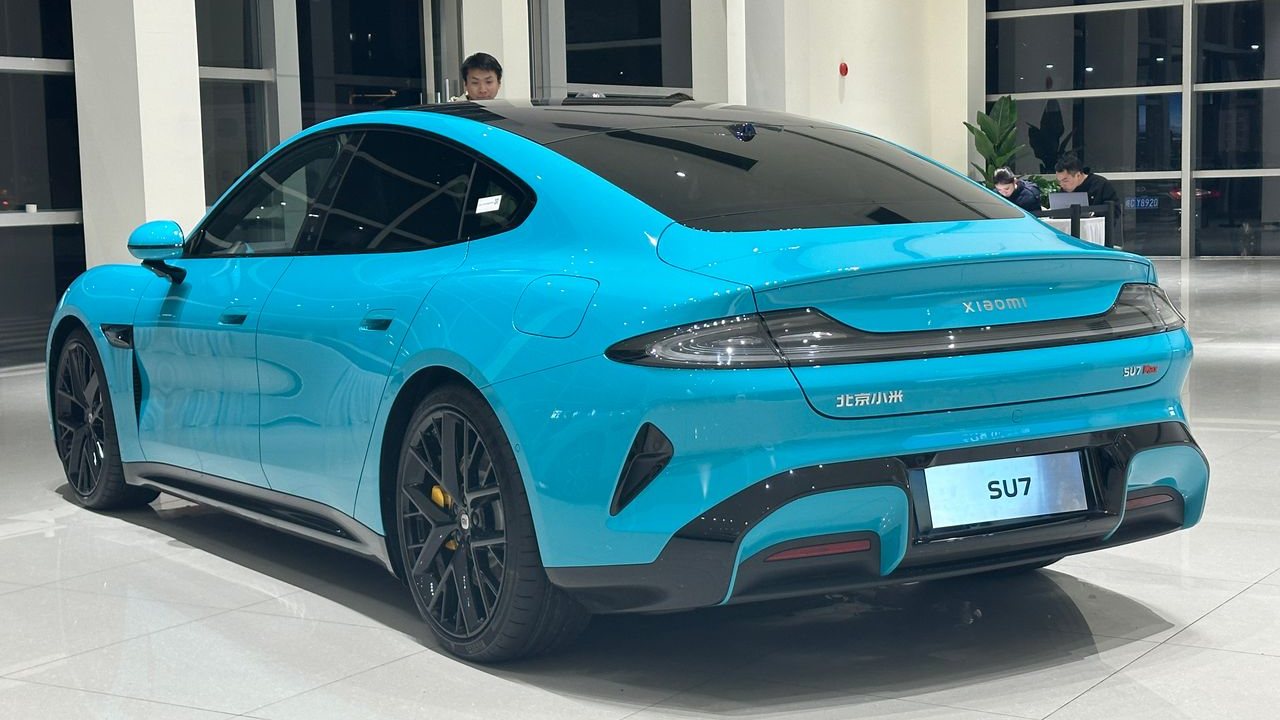
Xiaomi's SU7 Ultra crossing the 100,000-unit mark in China is less a single brand's win than confirmation that the country's automotive competition now runs on software, ecosystem, and community logic rather than build quality alone. The smartphone-derived playbook—vertically integrated supply chains, OTA updates, and an engaged user base—has been ported wholesale onto a high-performance EV, and it is working.
The strategic significance lies in what it neutralizes. Toyota, Honda, and Nissan built decades of advantage on durability and reliability, but in tier-one Chinese cities the car is now treated as an extension of the smartphone ecosystem, not a transport appliance. Legacy product planning, gated by multi-year approval cycles in distant headquarters, simply cannot match the 24-month cadence of BYD, Huawei's AITO, and Xiaomi. The 2024 sales picture—Toyota down roughly 7%, Honda near 30%, Nissan around 12%—reflects structural erosion, not a cyclical dip. Core sedans like Camry, Accord, and Altima are losing their reason to exist in this market.
The damage radiates into the supplier base. Xiaomi's in-house approach to motors, batteries, software, and increasingly silicon compresses the Tier-1 layer. Companies with heavy China-EV exposure—Nidec in drive motors, Panasonic Energy in cells, Renesas in automotive MCUs—must now model an insourcing scenario where their largest emerging customers build rather than buy. Denso, Aisin, and JATCO face parallel pressure as their OEM clients retreat.
The defensible response is layered. Short term: deepen partnerships with local tech players—Momenta, DeepSeek, Baidu—beyond driver assistance into full cockpit OS and connected services. Medium term: devolve real authority to China-based development centers to bypass home-market sign-off. Long term: reframe China presence from a volume battle into a technology-acquisition outpost, harvesting capabilities that can be redeployed in Southeast Asia and beyond.
For global investors, 2026 looks like a decisive consolidation year. The survivors will be those willing to abandon hardware nostalgia and compete on software, user experience, and ecosystem depth—the same axes that let Apple and now Xiaomi outflank incumbents. Watch capital allocation announcements closely; the OEMs still funding legacy sedan refreshes are the ones to underweight.




