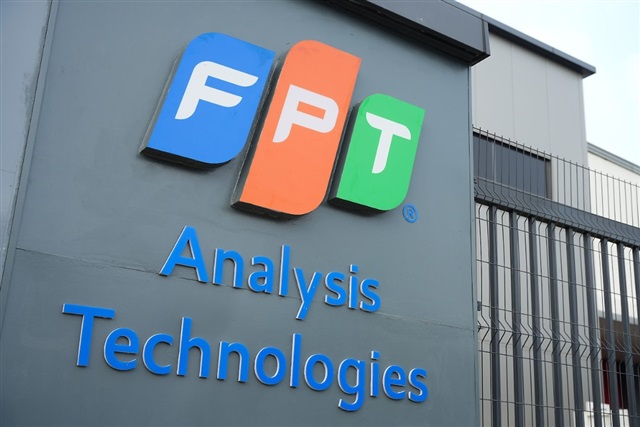
FPT has started trial runs at a chip test-and-package facility in Bac Ninh, Vietnam, beginning with testing and six lines rated for up to 300 million units a year, with packaging to follow.
The strategic weight sits in the back end, not the volume. Assembly, packaging, and test (OSAT) is the quiet chokepoint of the supply chain, heavily concentrated in Taiwan, China, and Malaysia. Buyers spent the last three years diversifying front-end fabrication; back-end capacity lagged. A Vietnamese entrant, even at modest scale, matters because it gives OEMs a second or third qualification path in a region already absorbing "China+1" assembly work. Starting with testing is the sensible on-ramp: it needs less capital and fewer process secrets than advanced packaging, lets FPT build yield discipline and customer trust, then move up the value curve as chiplet and heterogeneous integration push more margin into the back end.
The harder question is execution. OSAT is a thin-margin, reliability-obsessed business where qualification cycles run long and switching costs are high. An IT-services company moving into physical semiconductor operations must prove process control, not just intent. Watch for named anchor customers and packaging certifications before treating this as a structural shift rather than a pilot.
For Japan, the angle is specific. FPT is already one of the largest offshore development partners for Japanese enterprises through its sizable Japan operation, long supplying software engineering and maintenance to banks, manufacturers, and SIers facing domestic talent shortages. A move into chip back-end work extends that relationship from code to silicon, and gives Japanese device makers such as those in automotive and industrial sensing a nearer-shore test option that complements TSMC Kumamoto and Rapidus on the front end.
Japanese SIers and manufacturers should read this as a template. The offshore vendor they treat as a labor-cost lever is building capabilities up the stack. Firms that lock in qualification and co-investment early gain a diversified back-end base; those that wait may find capacity committed to faster-moving Korean, Taiwanese, and US buyers. The planning task now is supplier mapping of back-end exposure, not another round of front-end fab headlines.




