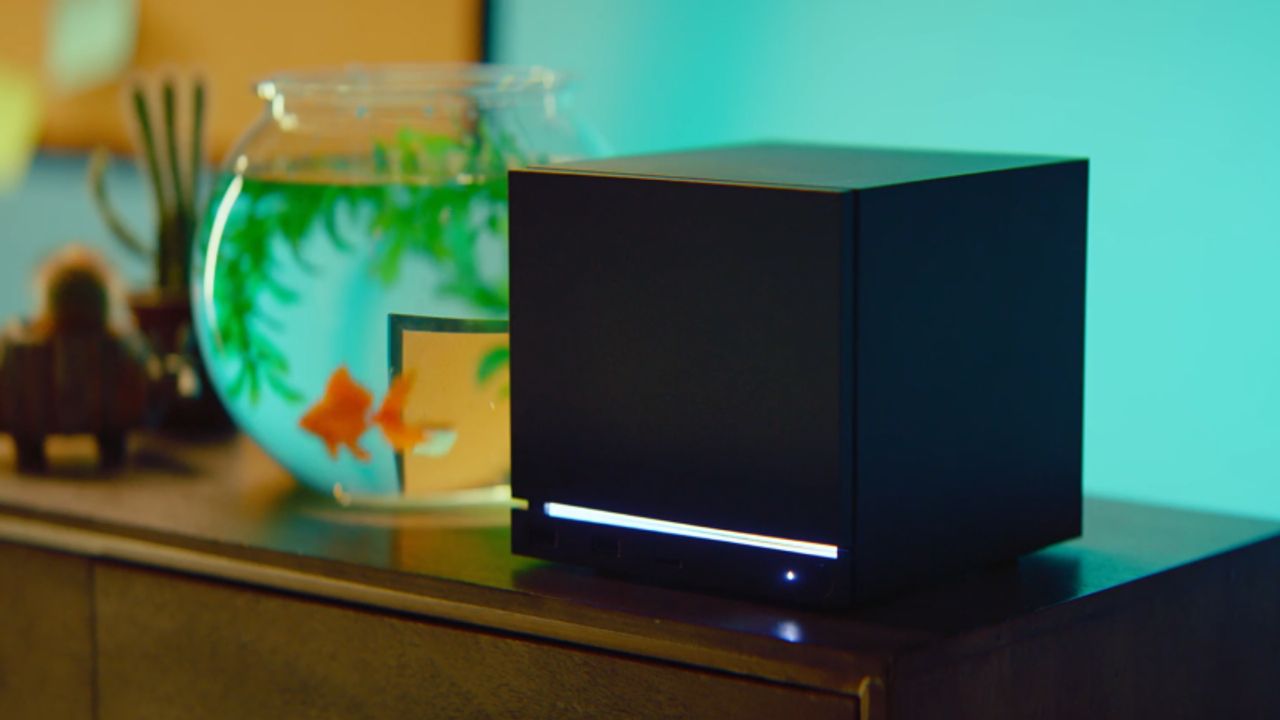
Valve's Steam Machine launches at $1,049 for the base 512GB configuration—notably without a controller—a price point that immediately reframes the device as a small-form-factor PC rather than a console competitor. Engadget's emphasis on the missing controller and storage tier signals the real story: this is not priced to win the living room on cost. It is priced to win on platform control.
The strategic core is SteamOS, not the box. After the Steam Deck proved a Linux-based, Proton-powered platform could run a vast Windows game library acceptably, Valve is now scaling that wedge into stationary hardware. The genuine threat is to Microsoft, whose Windows gaming moat has been the default assumption for two decades. Every Steam Machine sold is a Windows license not sold and a user normalized to a Microsoft-free PC. For executives, this is the latest data point in a broader pattern—Apple's silicon transition, ChromeOS in education, Linux gaming—where the desktop OS monopoly keeps eroding at the edges.
The console comparison cuts against Valve at this price. A PS5 Pro or Xbox sits well below $1,049, and Sony and Microsoft subsidize hardware to capture platform fees. Valve refuses that model, instead monetizing through Steam's 30% cut on a catalog it already owns. That gives Valve pricing freedom but caps mainstream volume. Expect the Steam Machine to sell to enthusiasts and Deck loyalists first, not displace consoles broadly.
The larger opportunity is third-party OEM adoption. If SteamOS matures into a credible gaming-PC standard, Valve could license or seed it across Lenovo, ASUS, and others—turning a single device into an ecosystem play that pressures both Microsoft's licensing revenue and Nvidia/AMD's Windows-centric driver priorities. Watch whether Valve opens SteamOS aggressively.
Recommended actions: hardware OEMs should evaluate SteamOS as a hedge against Windows licensing costs; investors should treat this as an option on platform disruption, not a unit-volume story; Microsoft should read it as confirmation that its gaming strategy must decouple from Windows lock-in. The price will draw criticism, but the durable signal is Valve's conviction that controlling the OS beats subsidizing the box.




