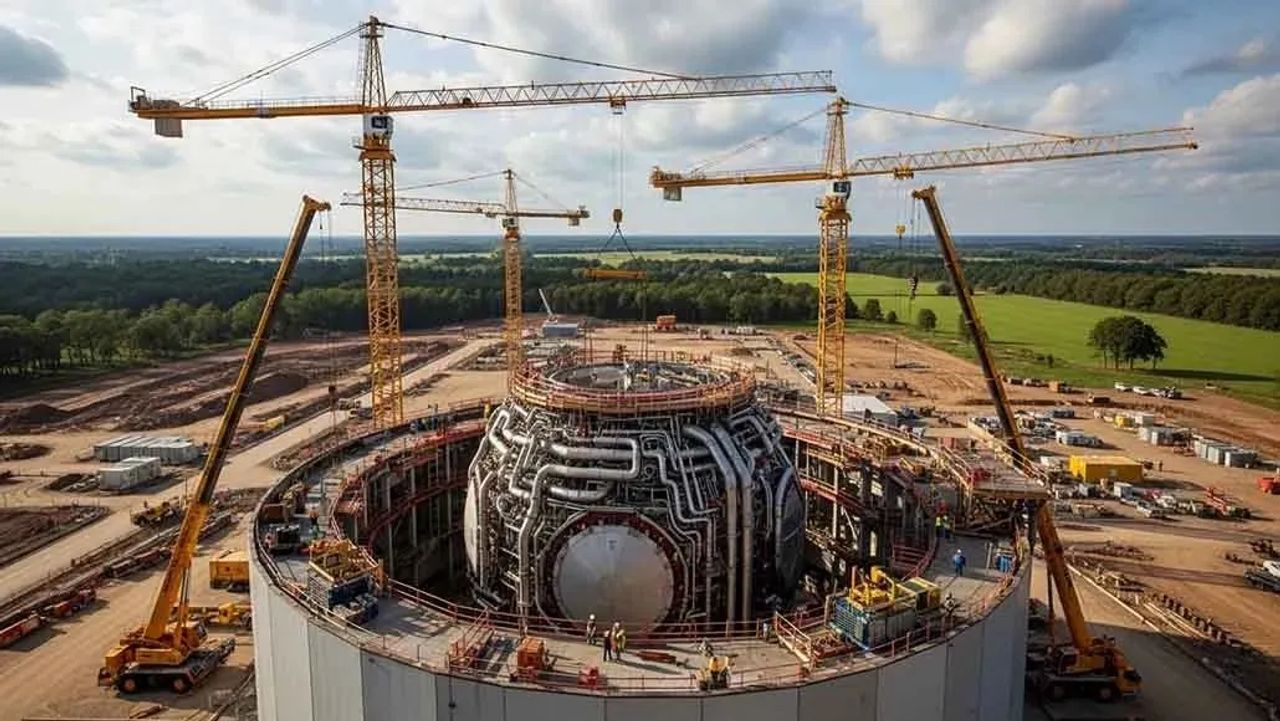
Washington has taken an equity position in fusion firm Helios in exchange for a $175 million Chips Act grant, paired with fresh private capital. The headline is the cash. The real story is the structure.
For most of the post-war era, US industrial support flowed as grants, loans, and tax credits with no strings attached to ownership. That norm is breaking. After taking stakes tied to CHIPS funding in semiconductor manufacturing, the government is now extending the same equity-for-subsidy logic into frontier energy. This is a deliberate shift toward state capitalism: if taxpayers underwrite the downside of strategic technology, the Treasury wants exposure to the upside. For executives, the implication is that federal money now carries dilution, governance questions, and the standing risk that a future administration treats its holdings as political leverage. Capital that once looked free now has a cap table cost.
Globally, this raises the bar for how strategic sectors get financed. Allied governments watching the US will feel pressure to match both the scale and the terms. Fusion itself remains years from commercial power, so the near-term signal is less about energy economics and more about how Washington intends to anchor critical supply chains and deep-tech moonshots onto domestic soil, with the state as shareholder of last resort.
For Japan, the contrast is sharp and uncomfortable. METI's playbook, from Rapidus to the TSMC Kumamoto fabs, rests on large non-dilutive subsidies with no equity taken in return. Under the Economic Security Promotion Act, Tokyo has the appetite to fund strategic tech but not the US instinct to own it. If equity-for-grant becomes the global standard, Japanese firms risk looking generously funded but strategically under-committed, while domestic debate will intensify over whether JBIC or a sovereign vehicle should take stakes in fusion and chip ventures rather than writing one-way checks.
SIers and enterprise IT leaders should read this as a demand-side signal. State-backed deep-tech buildouts, whether fusion pilots or advanced fabs, spin out heavy requirements for digital twins, grid simulation, plant control systems, and compliance tooling tied to economic-security rules. Japanese integrators with manufacturing and energy domain depth are well placed to capture that work, but only if they move early to build the specialized engineering practices these government-anchored programs will require. The window is opening now.