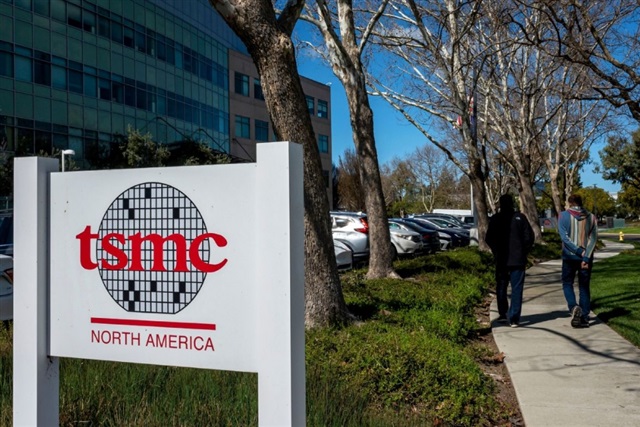
TSMC is studying a new manufacturing campus in Texas that could add tens of billions to its US footprint, creating a second American hub alongside Arizona while Singapore enters the conversation. The headline number matters less than the pattern: the world's most important fab operator is deliberately stretching its geography.
For years TSMC's edge was concentration. Clustering advanced nodes, packaging, and talent inside Taiwan drove yield learning curves no rival could match. The Texas-plus-Singapore signal marks a reversal of that logic. When AI demand strains advanced-node capacity and customers like Nvidia, Apple, and the hyperscalers want supply they can politically defend, redundancy becomes a feature worth paying a yield premium for. TSMC is converting geopolitical risk into a product. The cost is real: duplicated tooling, a thinner talent pool outside Hsinchu, and margin pressure from US construction and labor. But the alternative, single-point exposure to the Taiwan Strait, is now unacceptable to the customers writing the biggest checks.
The second-order effect is on everyone downstream. A dispersed TSMC pulls packaging, substrate, and chemical suppliers into Arizona and Texas, slowly rebuilding a Western supply ecosystem that atrophied over two decades. Expect Samsung and Intel Foundry to use TSMC's hesitation on bleeding-edge nodes abroad as their opening to compete on location and incentives rather than pure process leadership.
For Japan, this is the more consequential story than most local coverage will admit. TSMC's Kumamoto JASM project was Japan's bet that proximity to a leading-edge fab would revive its materials and equipment base. A sprawling US buildout competes directly for the same scarce engineering talent and the same supplier attention. Japanese materials giants in photoresist, silicon wafers, and specialty gases now face a genuine strategic choice: follow TSMC to Texas and Arizona, or anchor deeper in Kumamoto and bet on a domestic cluster. The firms that build dual-region capacity will capture the AI-chip wave; those that stay single-site risk being designed out.
For Japanese SIers and enterprise IT teams, the lesson is indirect but sharp. Supply geography is becoming a procurement variable, not just a factory concern. As TSMC spreads capacity to hedge political risk, Japanese enterprises building AI infrastructure should apply the same discipline to their own stacks, treating multi-region sourcing of GPUs, cloud capacity, and critical components as a resilience requirement rather than a cost line. The era of optimizing purely for the lowest unit price is ending; the new premium is on supply you can count on when geopolitics turns.




