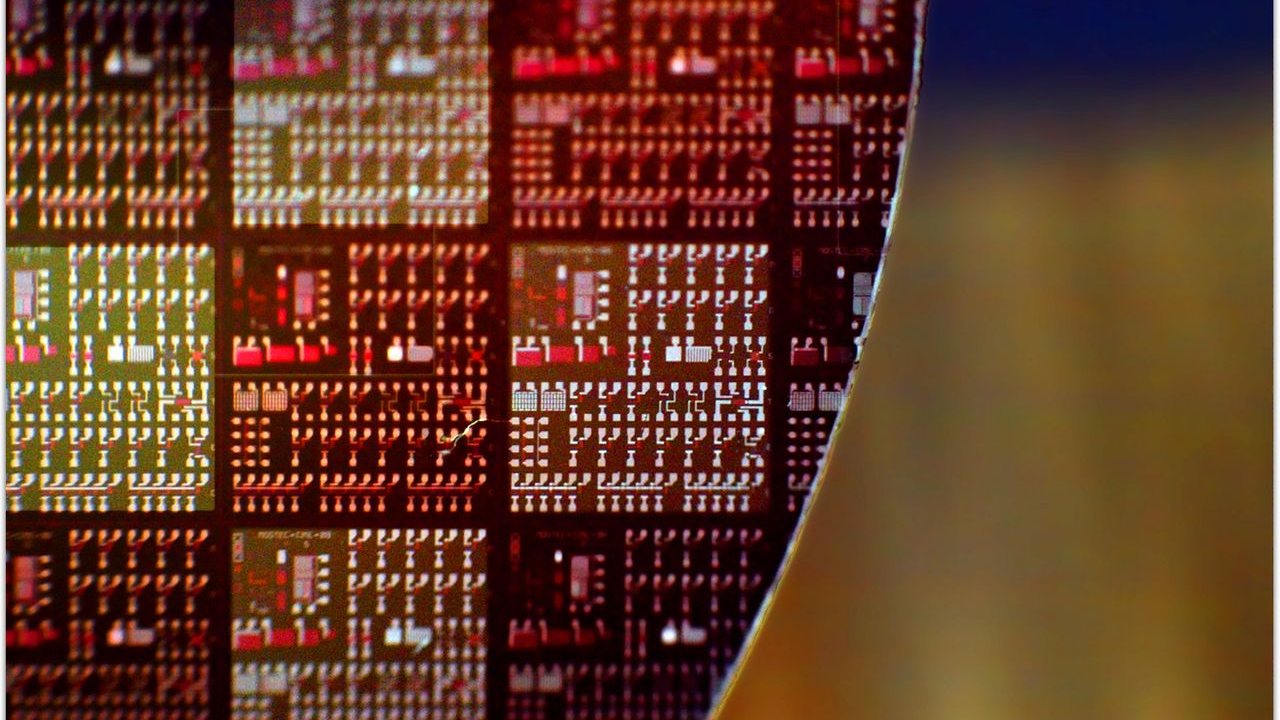
TSMC's 2nm production at Fab 20 is less a node bump than a structural inflection: the industry's shift from FinFET to gate-all-around (GAA nanosheet) transistors. The physics change—gates wrapping channels on all sides—demands atomic-layer deposition precision, selective etch, and ultra-pure cleaning at a tolerance prior nodes never required. That requirement map overlaps almost perfectly with the niche where a handful of specialist toolmakers hold dominant share, setting up the largest replacement-demand wave in roughly a decade.
The winners are concentrated and identifiable. Tokyo Electron, with TSMC accounting for a meaningful slice of revenue across ALD, coater/developer, and etch lines, stands to outperform consensus operating profit if Fab 20 scales toward 50k wafers/month by end-2026. SCREEN benefits from a step-up in single-wafer cleaning cycles—GAA reportedly adds roughly 30% more process steps versus 3nm—lifting both tool count and ASP. Lasertec's EUV mask-inspection franchise hinges on High-NA timing. On materials, the EUV photoresist market is effectively an oligopoly held by JSR and TOK, while Shin-Etsu and SUMCO anchor 300mm wafers and specialty chemicals supply.
The strategic catch is dependency. As Samsung and Intel chase 2nm, structural equipment demand broadens—but if either stumbles, the entire supply base tilts further toward a single TSMC anchor customer. That concentration is becoming unavoidable even as suppliers preach portfolio diversification. Investors should watch customer-mix disclosures closely; pricing power is real, but so is the fragility of betting one foundry roadmap.
Geopolitics is the wildcard. Tools shipped to TSMC sit outside current US export controls, yet Washington's trajectory on advanced-node equipment licensing points one direction—tighter. Suppliers face the dual mandate of hardening compliance regimes while preserving access to leading-edge customers across Taiwan, Arizona, and Kumamoto.
Recommended posture for executives and investors: front-load R&D toward High-NA EUV and atomic-scale processing for the 2nm/1.4nm horizon; localize technical-support staff at each fab cluster to defend share; and treat domestic alternatives like Rapidus as a hedge that thickens the supply chain. Competitors—ASML, Lam Research, Applied Materials, Entegris—will contest every adjacent socket. This is an offensive moment, not a defensive one.




