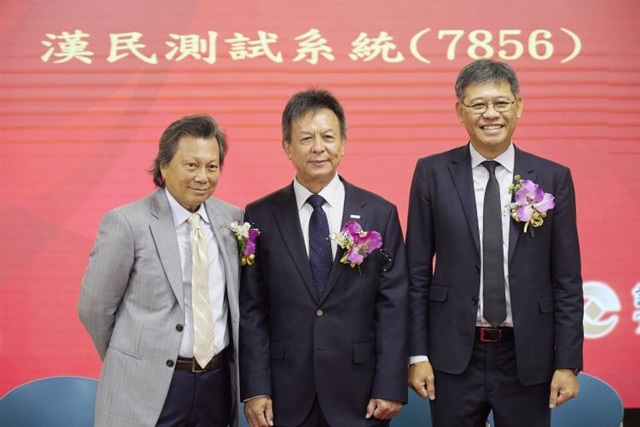
Hermes Testing Solutions' board-approved commitment of more than US$215 million for a Hsinchu R&D hub and a south-central Taiwan manufacturing site matters less for its headline figure than for where the money lands: wafer testing, the unglamorous back end of chipmaking that AI-era complexity has turned into a gating constraint.
The global signal is straightforward. As leading designs migrate to chiplets, HBM stacks, and advanced packaging, the industry increasingly lives or dies on known-good-die testing. Stacking an expensive logic die onto a flawed memory tier destroys yield economics, so test times, coverage requirements, and test-data volumes are all climbing faster than wafer counts. Capital flowing into test capacity is therefore a cleaner proxy for durable AI-silicon demand than another fab announcement. It also deepens Taiwan's full-stack grip, extending the island's dominance from front-end lithography into the back-end steps that determine whether chips actually ship.
That concentration is precisely the strategic problem for everyone else. A single geography controlling both fabrication and final test is an efficiency win and a resilience liability, and governments pursuing semiconductor sovereignty are discovering that building fabs without local test and packaging leaves the supply chain only half onshored.
For Japan, this is the overlooked half of its chip revival. Policy attention and subsidy money have concentrated on front-end capacity, yet back-end assembly and test have long been thin domestically. If advanced logic is to be built at scale on Japanese soil, a credible local test and advanced-packaging ecosystem has to follow, or wafers will keep flying to Taiwan for the final, value-defining steps. Japan's genuine strength in test equipment and precision materials gives it a real entry point, but equipment leadership is not the same as owning test capacity.
The opening for Japanese SIers and development teams sits in the software layer that test expansion creates. Modern test generates enormous telemetry, and manufacturing execution systems, test-data analytics, and AI-driven yield and fault-detection platforms are squarely within integrator competence. As Japan localizes more of the chip stack, the smarter play for enterprise IT and engineering teams is not to chase hardware but to build the data and automation tooling that advanced test operations increasingly depend on.




