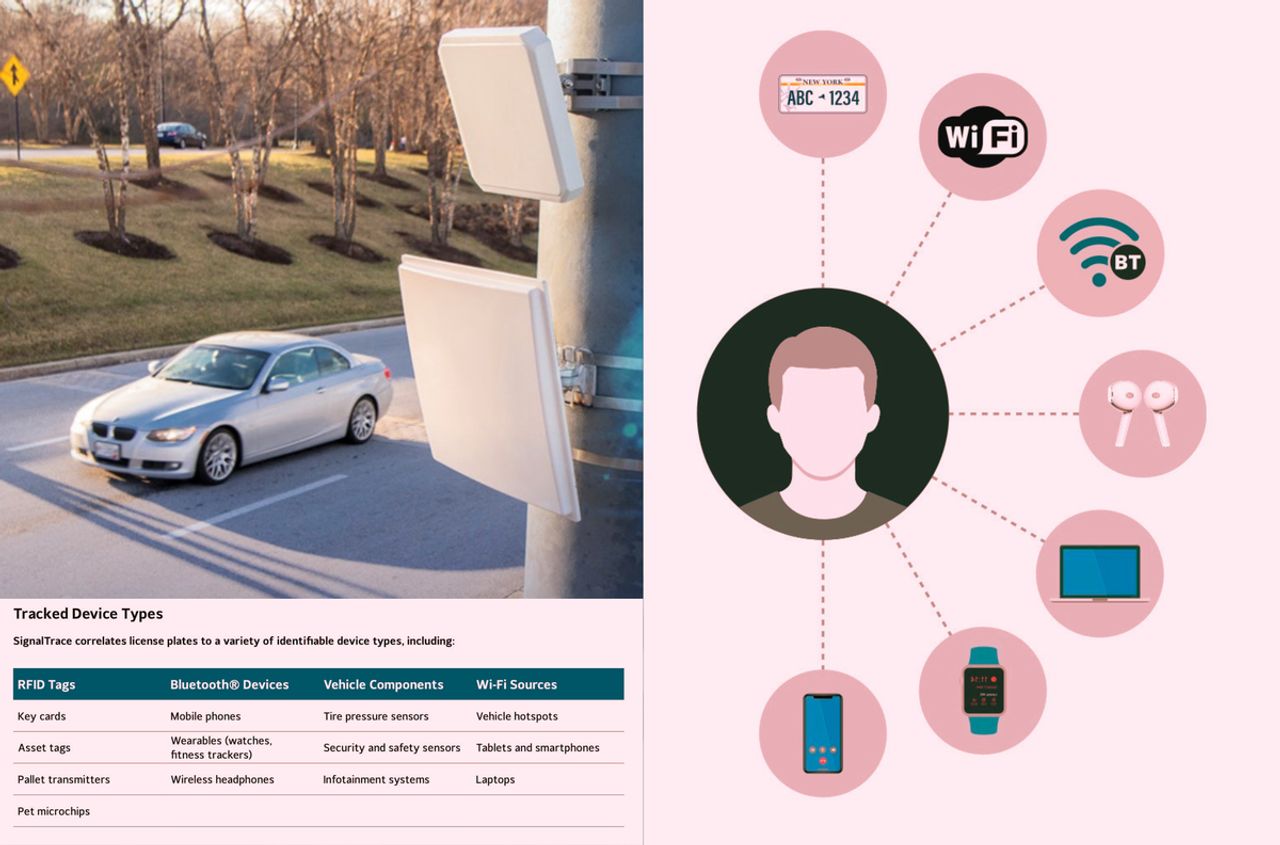
The quiet expansion of automated license plate readers (ALPRs) into Bluetooth and Wi-Fi device detection marks a structural shift: roadside infrastructure built to log vehicles is becoming a passive sensor grid that fingerprints the phones, earbuds, and wearables of everyone who passes. The vehicle was never the real target—the person is. This collapses the thin legal distinction that has shielded ALPR networks from privacy law, because device identifiers map far more directly to individuals than plates do.
For executives, the immediate risk is contamination of the surveillance-adjacent supply chain. Companies like Flock Safety and Motorola Solutions sit at the center, but the exposure radiates outward to every chipmaker, cloud provider, and analytics vendor whose products end up inside these systems. Enterprises that license data to or integrate with location-intelligence platforms should audit downstream usage now; the reputational blast radius from a single investigative story can exceed any contract's revenue. Meta's parallel rollout of facial recognition in smart glasses signals the same trajectory in the consumer tier—ambient identification is becoming a default capability rather than an opt-in feature.
The regulatory clock is accelerating. The EU's AI Act already classifies real-time biometric and remote identification as high-risk or prohibited in many public contexts, and US state legislatures—Illinois's BIPA being the template—have shown appetite to impose per-violation statutory damages. Bluetooth MAC tracking sits squarely in this crosshair. Vendors marketing 'device trails' to law enforcement are building products that may be unsellable in California, Illinois, and most of Europe within 24 months.
The opportunity lies in the countermovement. Demand for privacy-preserving design—MAC randomization enforcement, on-device processing, and audited data-minimization—will become a procurement differentiator. Apple already rotates Bluetooth identifiers; expect Google and chip vendors to harden defaults, eroding the technical basis for these tracking products. Investors should treat surveillance-data startups as carrying latent regulatory liability rather than pure growth.
Recommended actions: technology firms should establish explicit policies barring their components and APIs from undisclosed person-tracking deployments; data buyers should demand provenance and consent documentation; and boards should treat ambient surveillance exposure as a material ESG and litigation risk, not a niche civil-liberties debate.




