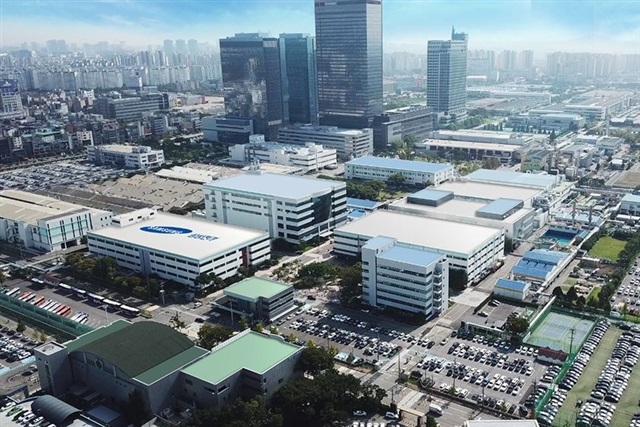
Samsung Electro-Mechanics is pouring roughly US$5.1 billion into AI-server substrate capacity but faces tool procurement delays, as equipment vendors wrestle with component shortages and stretched lead times. No slip has been confirmed.
The strategic signal matters more than the headline number. For two years the AI supply narrative fixated on GPUs and HBM. The constraint is quietly migrating down the stack to the ABF (Ajinomoto Build-up Film) substrates that carry large logic dies. These high-layer-count packages are exactly what AI accelerators demand, and the manufacturing lines require specialized lithography, lamination, and drilling tools that only a handful of makers build. When a buyer of Samsung's scale reports lead-time friction, it tells you the industry is capacity-starved precisely where capital cannot buy speed: every new substrate line waits in the same tool queue. That converts the bottleneck into a timing advantage for whoever already has installed base and reserved equipment slots.
This is where the story turns decisively toward Japan. The premium end of the ABF substrate market is dominated by Ibiden and Shinko Electric, with Kyocera and others in support. If Korean expansion stalls on equipment, incumbent Japanese suppliers retain pricing power and the inside track on next-generation AI packaging qualifications through 2026. Equally important, the ABF film itself traces back to Ajinomoto, and much of the critical tooling and precision components originate with Japanese equipment and materials firms. A global shortage of substrate machinery is, in part, a demand surge flowing straight into Japan's industrial base.
For Japanese electronics majors and their investors, the read is to treat substrate and advanced-packaging capacity as a scarce strategic asset rather than a commodity line item, and to lock equipment and materials commitments early. For SIers and enterprise IT buyers planning AI infrastructure, the implication is subtler but real: server and accelerator availability in 2026 will be gated not only by chip allocation but by packaging throughput. Procurement roadmaps and cloud-capacity assumptions should price in that second bottleneck, because a substrate shortfall delays finished systems just as surely as a wafer shortage does.




