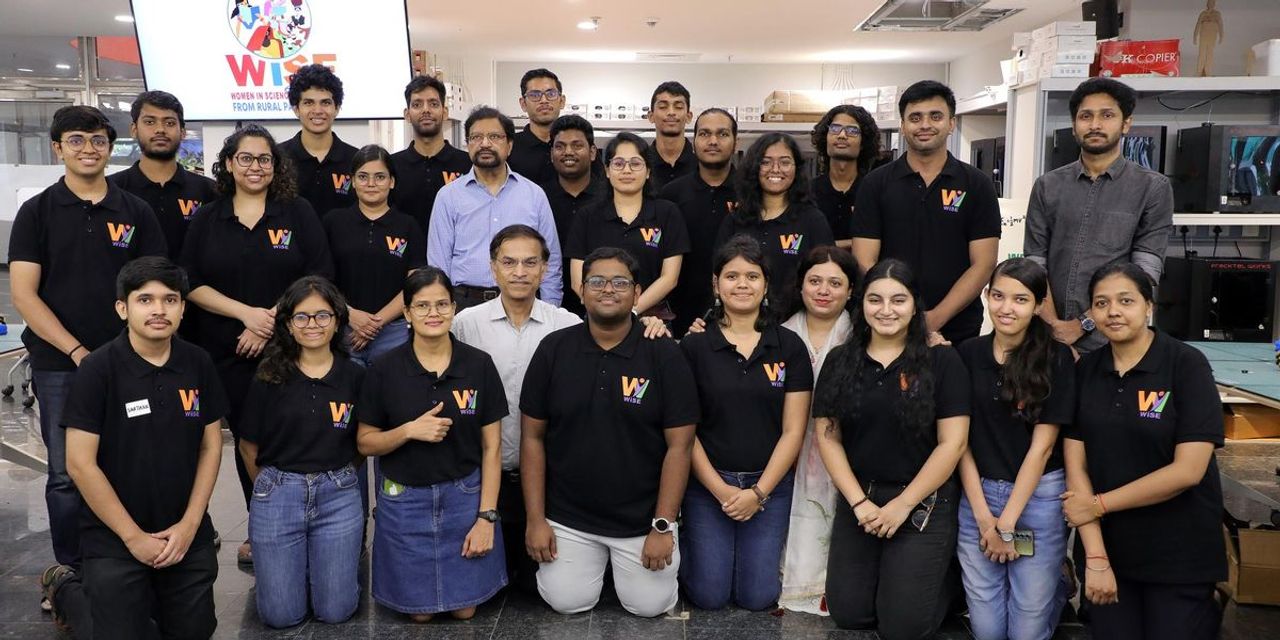
A three-year IEEE program brought hundreds of girls from rural India into hands-on engineering workshops, targeting the exact ages (11-14) when dropout rates spike. The underlying fact is small; the strategic signal is not.
For global technology leaders, the numbers frame a supply problem, not a diversity slogan. Women make up roughly 28% of the STEM workforce and about 35% of STEM graduates, a figure that has barely moved in a decade. Meanwhile, the semiconductor industry alone faces projected shortfalls of hundreds of thousands of engineers by 2030, and every major AI lab is competing for the same narrow pool of talent. When half the population is systematically filtered out before university, the constraint on the industry's growth curve is being set in secondary schools, not in H-1B quotas or campus recruiting.
The deeper insight is geographic. The talent shortage in high-cost hubs coexists with untapped capacity in rural and emerging markets. Companies that treat early-stage STEM pipelines as CSR line items are missing that this is workforce logistics. Firms with real exposure to India, Southeast Asia, Africa, and Latin America (think Intel, Micron, IBM, and the hyperscalers building regional data centers) should treat pre-university education investment as a supply-chain hedge, the same way they treat fab capacity or rare-earth sourcing.
The risk is that these efforts stay boutique. An $80,000 grant reaching a few hundred students is a proof of concept, not scale. The opportunity is to industrialize it: co-fund regional programs with local universities, tie hiring pipelines to community colleges in underserved regions, and use remote learning infrastructure to lower the marginal cost per student toward zero.
Recommended actions: audit where your five-year talent demand actually sits, then map it against where your pipeline investment goes today. Most firms will find a mismatch. Investors evaluating labor-intensive tech businesses should start pricing pipeline resilience the way they price energy costs for AI infrastructure. The winners of the next talent cycle are being decided now, in classrooms most executives have never seen.




