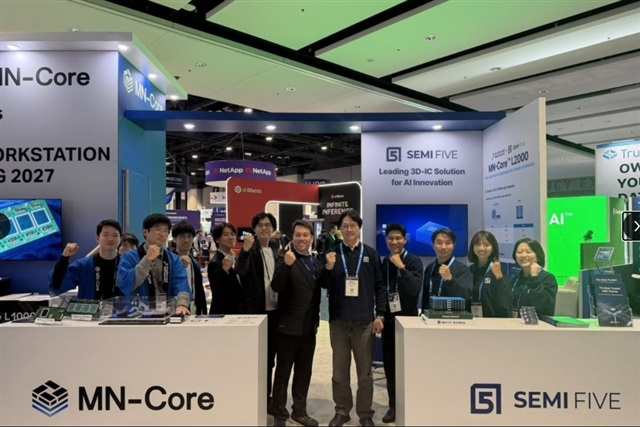
SemiFive and Japan's Preferred Networks (PFN) are developing an inference processor with DRAM above the logic die, an alternative to conventional HBM packaging. For global infrastructure buyers, the strategic question is whether a different memory layout can lower the cost of serving models without sacrificing capacity or predictable response times. A shorter path between memory and compute could reduce data-movement energy, particularly where memory access, rather than arithmetic, limits performance.
The risk shifts into the stack. Placing memory over active logic can complicate heat removal, while assembly yield and testing determine how much usable hardware emerges from production. Memory capacity and support for changing model requirements also matter. An HBM alternative does not automatically eliminate packaging constraints or supplier concentration; it may replace familiar bottlenecks with less mature ones. Buyers should compare total serving cost under sustained loads, not infer commercial viability from the layout.
For Japan, PFN's involvement creates an opportunity to connect chip design with domestic enterprise workloads. The useful test is not whether the processor is Japanese, but whether it can economically serve the models companies actually deploy within their latency, power and data-control requirements. Where on-premises inference is required, an efficient accelerator could broaden deployment options. Yet a Japanese design role alone does not establish supply-chain independence: production, packaging and memory dependencies still need scrutiny.
Japanese SIers and development teams should make software readiness a procurement requirement. Model support, compiler behavior, monitoring and integration effort can erase a hardware saving. For RPA deployments that add model-based reasoning, chip efficiency matters only if inference represents a material share of end-to-end cost; application delays and human review may dominate instead. The likelier initial opportunity is a narrowly qualified set of inference workloads, not wholesale replacement of HBM-based systems. Commercial success will depend on delivering a supported system that lowers operating costs, rather than an attractive chip specification.




