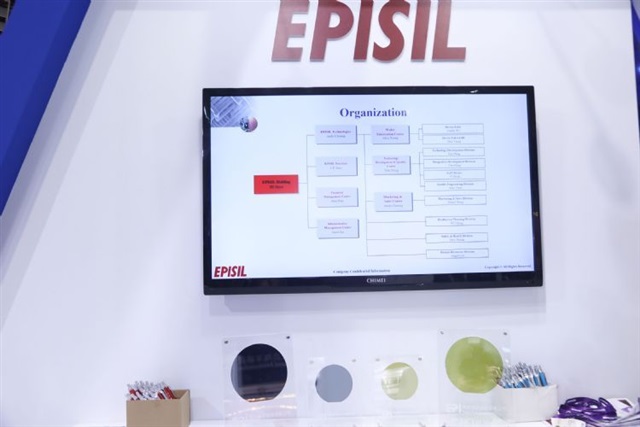
Episil's disclosure that SiC utilization has climbed from a 30% trough back to roughly 90%, with 8-inch expansion contingent on 6-inch demand holding into 2027, is more than a single foundry update. It is a read on where the entire silicon-carbide supply chain sits in its cycle. The message underneath is disciplined: capacity will follow confirmed orders, not speculative forecasts. After two years of EV inventory correction and brutal price competition, that caution is the industry's new default posture.
Globally, the 6-to-8-inch transition is the defining cost battle in power semiconductors. Larger wafers promise more usable die per boule and lower unit economics, which is why Wolfspeed, STMicroelectronics, Infineon, and onsemi have all staked positioning on 8-inch roadmaps. But Episil's framing is a useful corrective to the narrative that 6-inch is being phased out. Yield maturity, substrate supply, and equipment depreciation still favor 6-inch for a meaningful window. The transition will be demand-pulled and gradual, not a clean generational cutover. For anyone modeling capex timing, that distinction separates a 2026-2027 inflection from a late-decade one.
The strategic risk is asymmetric. Move to 8-inch too early and you carry underutilized, expensive capacity through a soft patch. Move too late and you cede the cost curve to rivals once volume scales. The utilization rebound suggests the near-term worry is tilting back toward supply tightness, which rewards players who kept 6-inch lines warm.
For Japan, this is directly material. Rohm, Mitsubishi Electric, Toshiba, and Fuji Electric are all committed SiC investors, with Rohm having pushed aggressively on 8-inch substrate development and vertical integration. A demand recovery that validates 6-inch for longer gives Japanese makers more room to amortize existing fabs before the 8-inch leap, easing the capex strain that has pressured their power-device margins. It also matters for Denso, Toyota, and the broader EV and industrial-drive supply base that depends on stable SiC pricing and availability.
The second-order effect reaches Japanese enterprise IT and SIers. SiC is foundational not only to vehicle electrification but to high-efficiency power conversion in data centers and grid infrastructure, the physical layer under every AI compute buildout. SIers scoping factory-automation, EV-charging, and datacenter-power projects should treat SiC lead times and the wafer-size roadmap as a planning variable, not a back-office detail. A supply chain that stays on 6-inch longer, then migrates deliberately, implies steadier component pricing and lower disruption risk for domestic infrastructure programs over the next two years.




