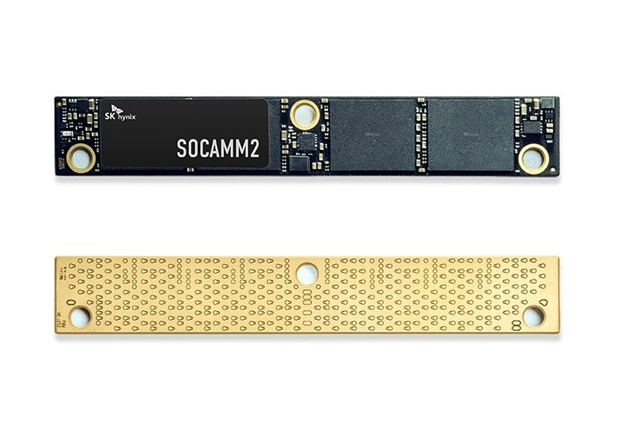
Microsoft's move to offer a Surface laptop with up to 128GB of unified memory, paired with its refresh around Qualcomm's X2-class Arm silicon, is being framed as proof that serious AI workloads are migrating onto local devices. The more important signal is quieter: the client PC is now competing for memory against the datacenter, and it is losing.
The economics are brutal and simple. Memory vendors earn far richer margins selling high-bandwidth and server-grade DRAM into AI buildouts than loading commodity modules into laptops with soft shipment demand. When capacity is tight, allocation follows margin. That means the hardware story everyone wants to tell about on-device agents and locally run models runs straight into a supply constraint set by hyperscaler purchasing, not by consumer appetite. A 128GB laptop is a statement of intent, but intent does not clear a bill of materials when the parts are spoken for.
There is a second, structural shift riding underneath. Arm-based client silicon gaining broader OS and OEM support erodes the x86 default and reshapes who captures value in the PC stack. Combine that with memory scarcity and you get a client market where differentiation moves from the CPU to how much usable AI memory a device can secure and afford. Vendors that lock in supply contracts early will quietly out-position rivals, regardless of chip benchmarks.
For Japan, the exposure is specific. The country has no scaled domestic DRAM champion; Kioxia sits in NAND, while high-capacity DRAM largely routes through foreign suppliers, including Micron's Hiroshima operations. That leaves Japanese PC brands and enterprise buyers as price-takers in a market tilted toward servers. For corporate IT and SIers, this reframes the on-device-AI pitch: if high-memory endpoints stay scarce and expensive, the pragmatic path for Japanese enterprises is cloud or hybrid inference, not fleets of premium AI laptops. RPA and local-agent vendors courting Japan's labor-constrained firms should price around that reality rather than assume cheap, abundant local compute.
My read: expect the AI PC narrative to decouple from AI PC availability through at least the next buying cycle. SIers that build cloud-anchored agent architectures now, treating high-memory local devices as a premium exception rather than the baseline, will serve Japanese clients more reliably than those betting on an on-device wave that memory allocation is actively throttling.




