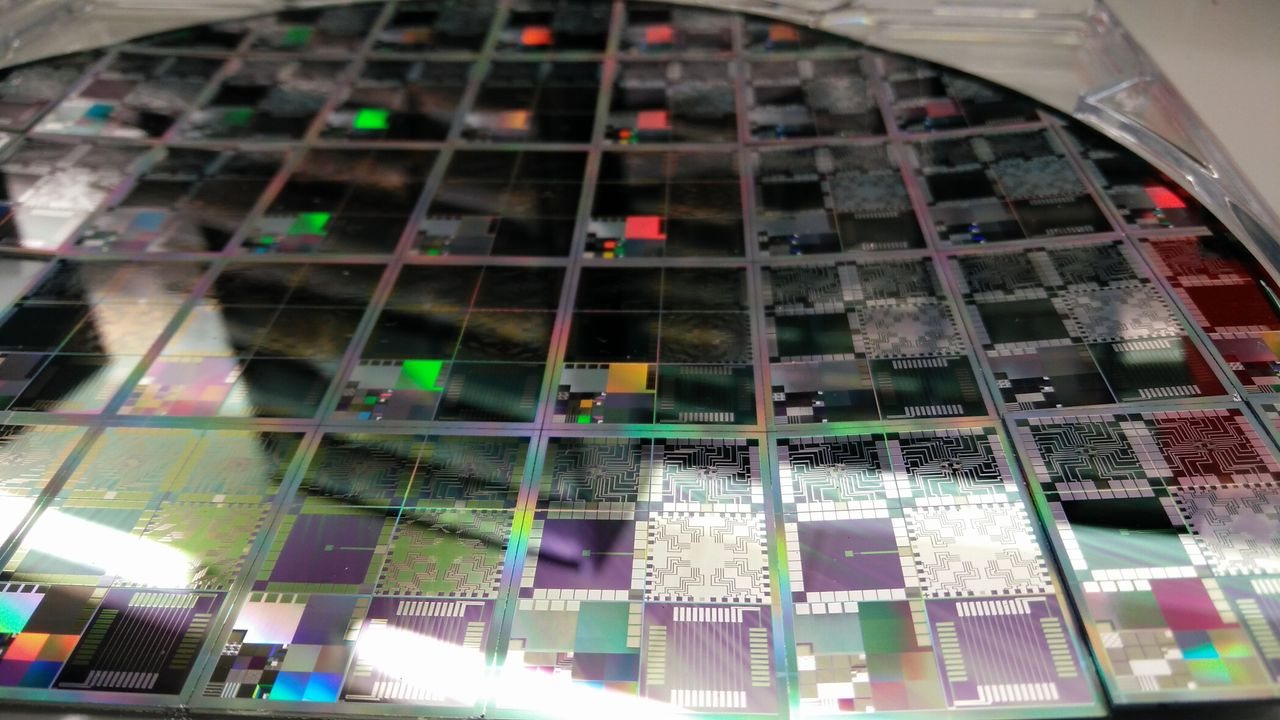
The headline fact is simple but seismic: Tesla has reportedly awarded its next-generation AI5 automotive chip to Samsung Foundry, choosing a 2nm GAA-plus-HBM4 integrated package over TSMC's logic-only N2 proposal, with volume production targeted for 2027.
What matters is not the node but the bundle. Samsung won by selling logic and memory together, exploiting a structural gap that TSMC has never had to defend: it owns no DRAM business. As TSMC rations scarce CoWoS advanced-packaging capacity toward Nvidia and AMD, customers needing tightly co-designed compute-plus-memory stacks now have a credible reason to look elsewhere. For the first time, the world's dominant foundry has a flank that vertical integration can attack. Expect Samsung to weaponize this with other AI and automotive accounts, and watch SK Hynix's perceived HBM monopoly soften at the edges as Samsung pushes memory-logic co-packaging.
The deeper signal is Tesla's design philosophy. Running the same silicon across FSD and the Optimus robot collapses the line between automotive and robotics compute, and it bypasses the traditional Tier-1 supplier entirely. That is an existential challenge to the legacy automotive-chip model built on certified, function-safe MCUs sold through integrators. Renesas, Infineon, NXP and STMicroelectronics built defensible margins on ASIL-D specialization; a hyperscaler-style vertical stack threatens to commoditize exactly that position.
For investors, three vectors deserve attention. First, equipment and materials suppliers (Tokyo Electron, Disco, Lasertech, ASML) gain near-term order upside as Samsung's GAA and TSV lines scale, while substrate and packaging specialists must now hedge across two megafabs rather than optimizing for one. Second, third-source foundry credibility (Rapidus, Intel Foundry) gains commercial logic as buyers price in supply concentration risk. Third, packaging IP becomes the new battleground; companies controlling advanced substrate and bonding capacity capture outsized value.
Recommended action: chip buyers should diversify foundry exposure now and lock allocation for 2026-27 tapeouts; automakers without a credible software-defined-vehicle silicon strategy should pursue shared-platform alliances rather than fight Tesla's integration alone; and component investors should rotate toward memory-logic co-packaging enablers before the capex wave fully prices in.




