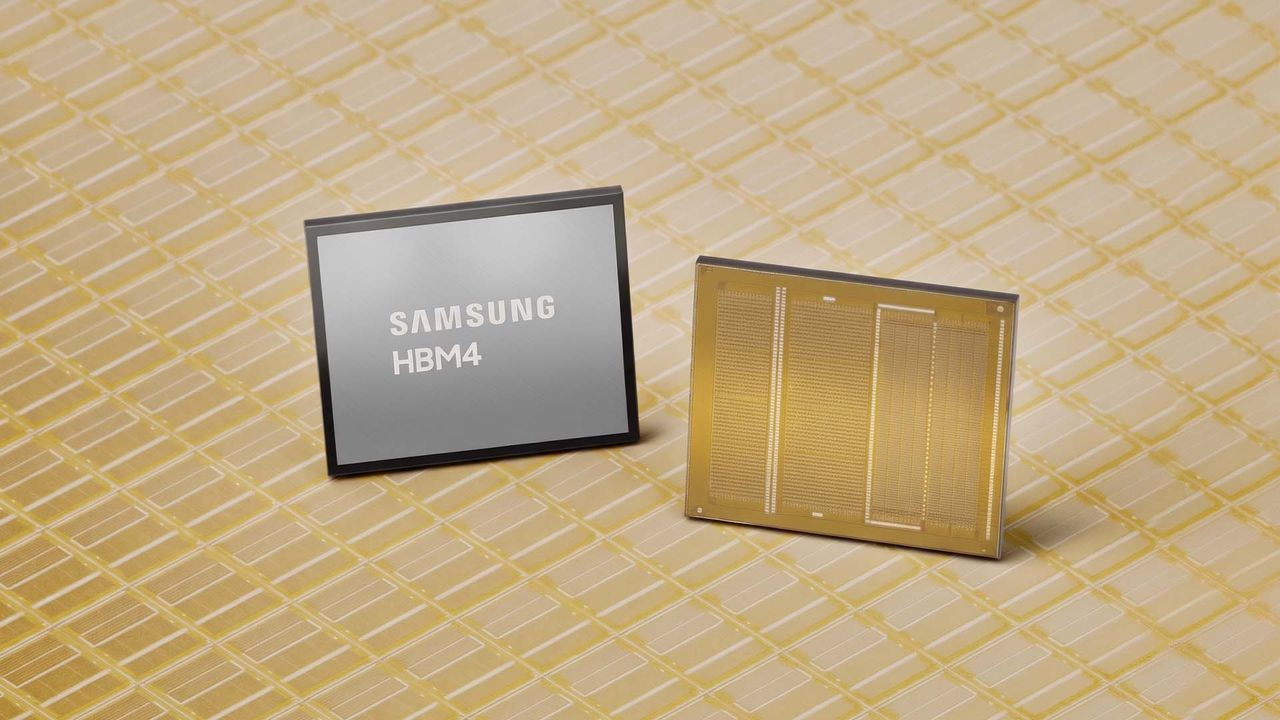
Every HBM supplier is riding the AI profit wave, yet their pricing power is diverging sharply along one axis: the ability to guarantee shipments. Samsung is reportedly commanding up to a 25% premium, around $4.50 per unit, not because its silicon is categorically better but because buyers will pay to remove supply risk. That distinction matters enormously this week, as Microsoft, Alphabet, and Meta walk into earnings with investors openly questioning whether their AI capex is earning its keep.
HBM is the binding constraint on AI accelerators, so a reliability premium propagates straight into the cost base of every datacenter being built. For a hyperscaler, paying more for assured volume is rational arithmetic: an idle GPU line costs far more than a memory markup. The market is bifurcating into vendors who sell certainty at a margin and latecomers who compete on price. As HBM4 ramps, expect that gap to widen, and expect it to show up as higher depreciation on the same income statements Wall Street is now probing for returns.
For Japan the exposure is indirect but concrete. With no domestic HBM manufacturer, Japanese cloud operators and SIers building enterprise AI infrastructure inherit the premium as a pass-through cost, lengthening payback on projects already under budget pressure. The offsetting strength sits upstream: Japan's test and inspection equipment, deposition and etch tools, and specialty materials suppliers gain as HBM4 volume and complexity rise, since advanced stacking widens the content and yield-sensitivity their gear addresses.
SIers should treat memory supply risk as an explicit line item in AI buildout proposals rather than a hidden assumption, and advise clients that compute pricing will stay volatile through the HBM4 transition. The sharper risk is demand-side: if the broader debate about weak enterprise AI returns cools budgets, the reliability premium becomes harder to justify, and Japanese firms mid-way through RPA-to-AI migration could see rollout timelines stretch. Lock supply where the use case is proven; stage spending where it is still speculative.




