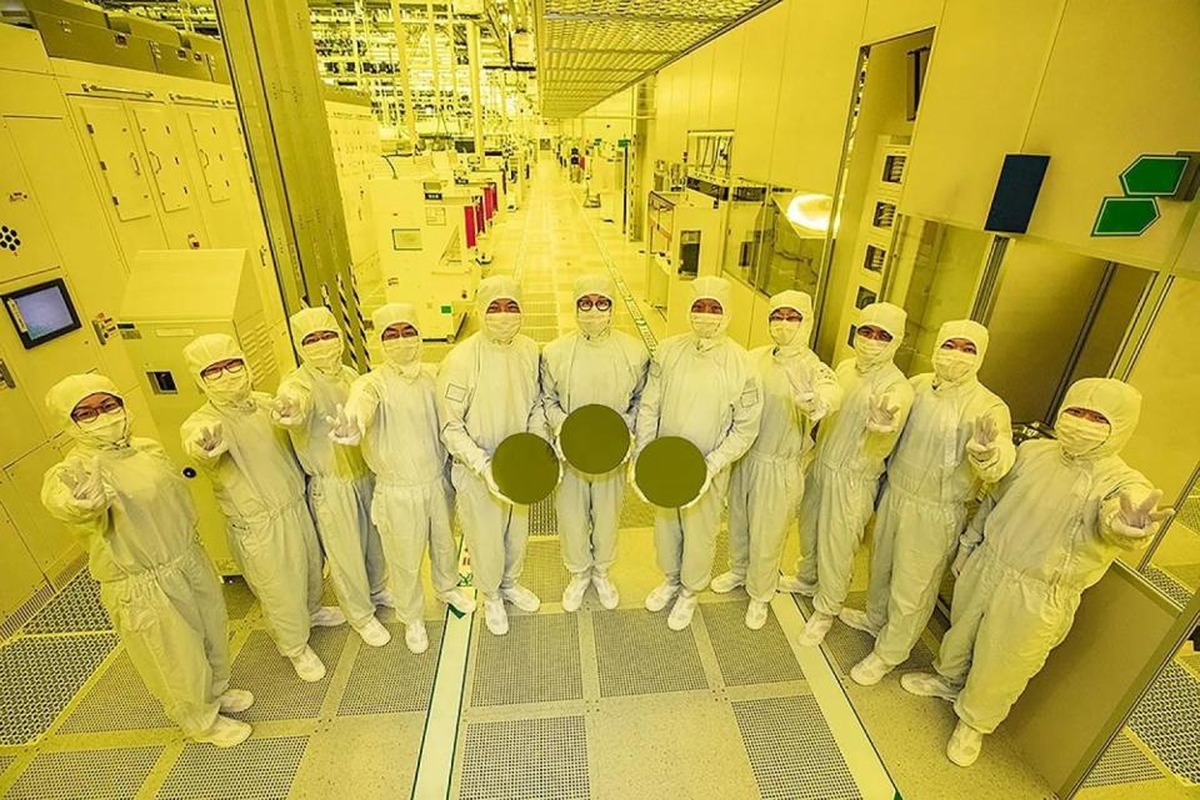
To stem the outflow of senior memory semiconductor engineers to China, Samsung Electronics has put an explicit price tag on talent retention. According to industry and union estimates reported by international media, Samsung is offering special performance and retention packages worth up to $560,000 (approximately 84 million yen) to core engineers in its memory division. Yet whether deferred stock bonuses alone can halt cross-border talent mobility involves structural dynamics far more complex than a simple salary hike.
Investigation data released on October 6 by the office of South Korean National Assembly member Choi Su-jin outlines the scale of this engineering migration: 27 veteran DRAM engineers from Samsung Electronics (23) and SK Hynix (4) transferred to China's leading DRAM manufacturer, ChangXin Memory Technologies (CXMT). These engineers averaged 15.4 years of tenure at the South Korean chipmakers, including six chief- or executive-level specialists with more than two decades of front-line mass-production experience. Their expertise spans circuit design, process integration, yield analysis, advanced packaging, and High Bandwidth Memory (HBM)—a combination that the Dong-A Ilbo noted is sufficient to operate an entire memory fabrication plant.
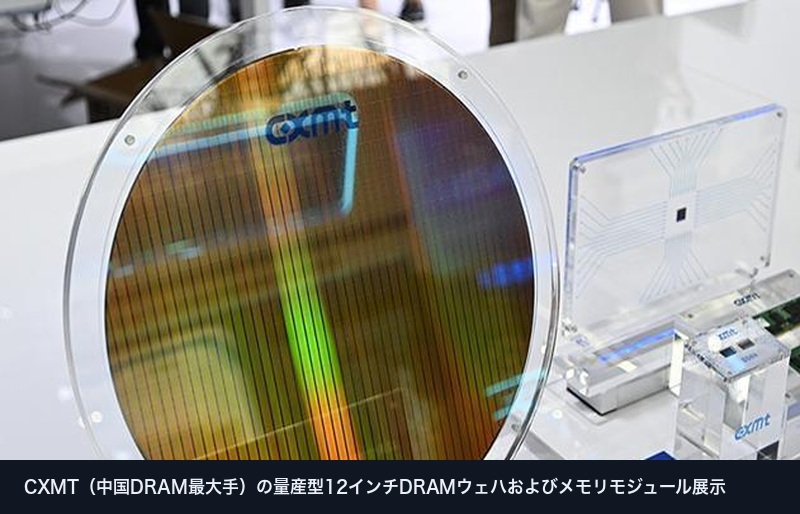
Recruitment terms offered by Chinese headhunters were substantial: base salaries ranging from 1.6x to 2x previous compensation, three-to-five-year employment guarantees, subsidized housing, and children's education allowances. Equally notable was how non-compete agreements were navigated. Fifteen of the 27 engineers did not move directly from Samsung or SK Hynix to CXMT; instead, they first joined equipment or materials suppliers, foreign firms, or universities before transitioning to CXMT after standard one-to-two-year non-compete windows expired. However, recruiting external talent is distinct from long-term retention: the 27 engineers stayed at CXMT for an average of just 2.9 years, and 26 had already departed by the time of the parliamentary survey (with seven moving to other Chinese chip organizations including Huawei's Hong Kong research center and HiSilicon). Concurrently, CXMT expanded its internal R&D workforce nearly 2.9-fold—from 2,606 engineers at the end of 2022 to 7,491 by June 2026—rapidly institutionalizing fab setup and yield stabilization know-how.
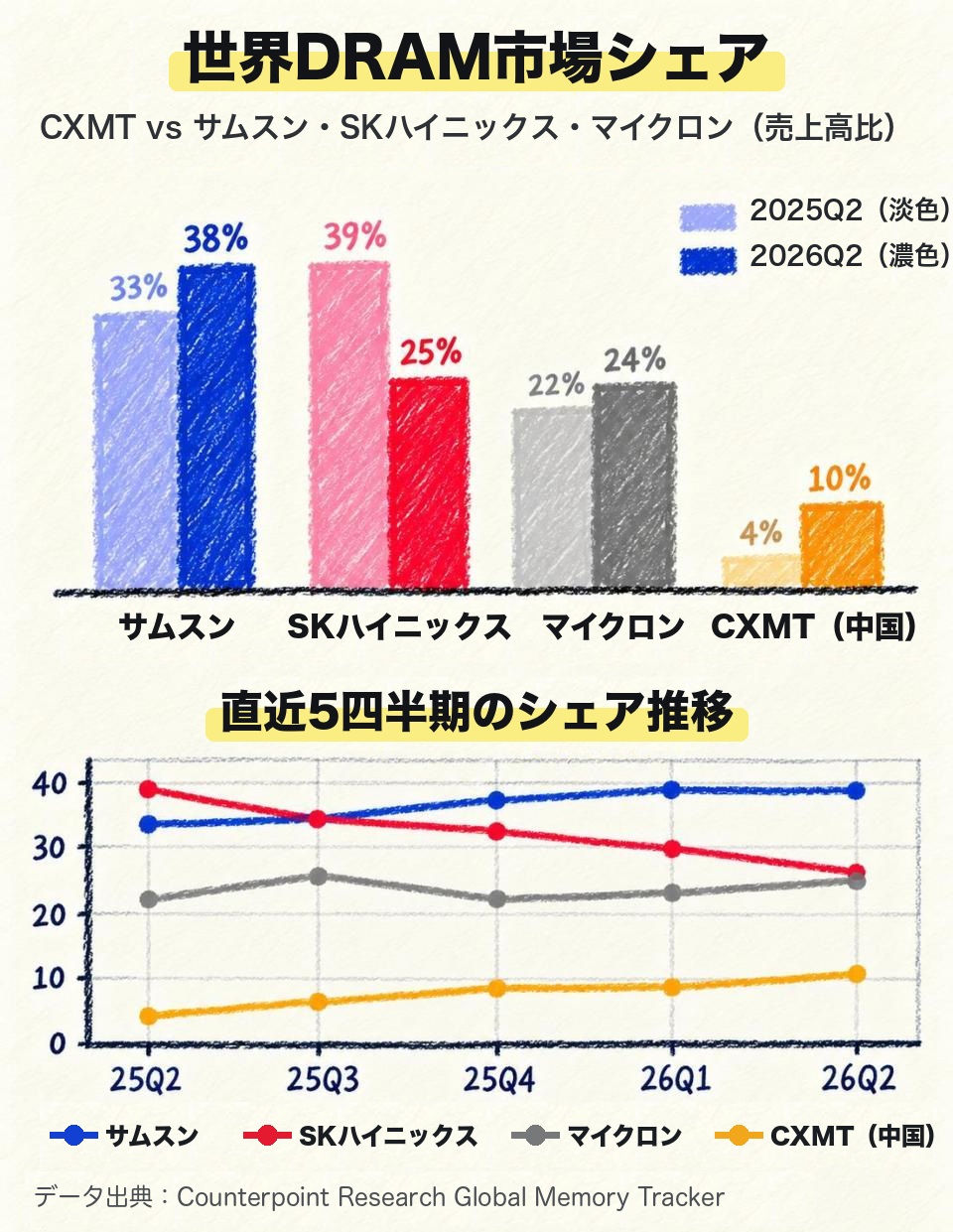
Both Samsung and SK Hynix are responding by replacing one-off cash bonuses with multi-year profit-sharing and equity vesting structures. Samsung's estimated $560,000 package combines existing profit-sharing with a new special equity bonus funded by 10.5% of the chip division's 2026 operating profit (with roughly 15.4 trillion KRW provisioned in H1 2026), paid in stock that unlocks over three years (one-third immediately, one-third after one year, and one-third after two years). SK Hynix similarly eliminated its previous 1,000%-of-base-pay ceiling in late 2025, allocating 10% of operating profit to employee rewards and delivering an initial payout equal to 2,964% of base salary, with 20% deferred for two years. Against this backdrop, Counterpoint Research data shows CXMT's global DRAM revenue share reaching 10% in Q2 2026 (up 4 percentage points year-on-year) to rank fourth behind Samsung (38%), SK Hynix (25%), and Micron (24%).




