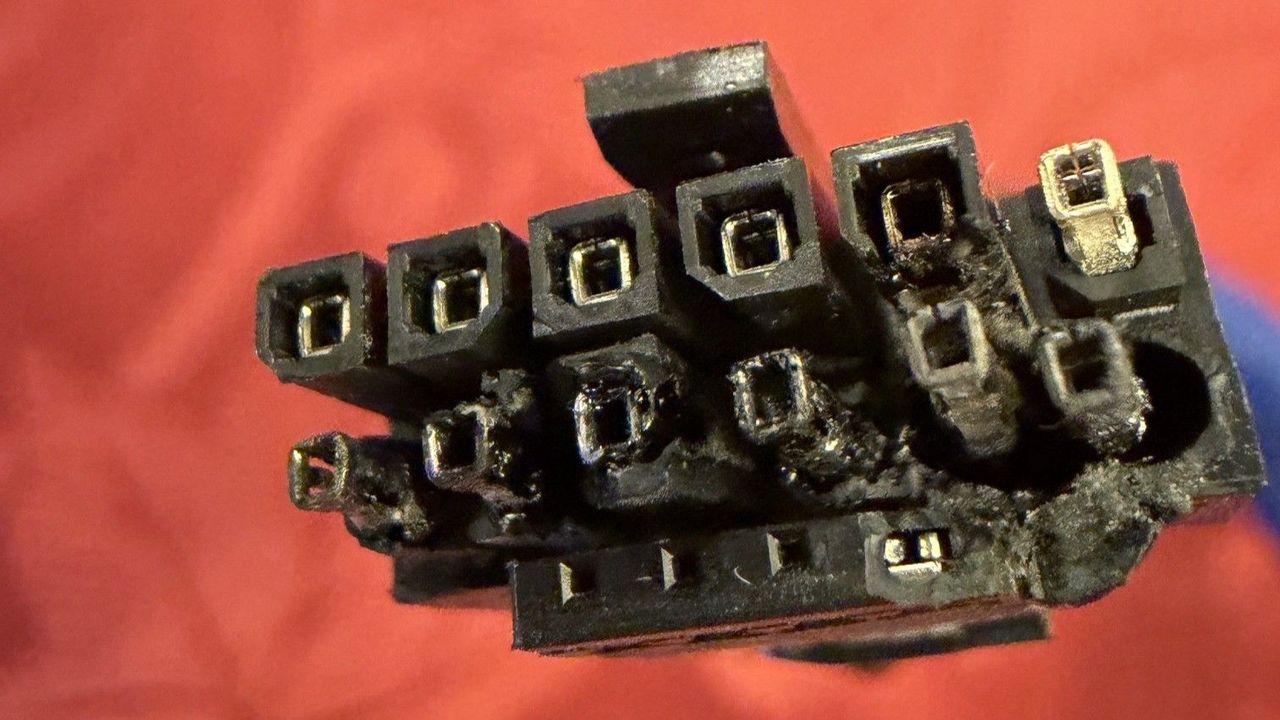
The underlying incident is narrow: a high-end prebuilt PC's 12VHPWR-class power connector failed, and the system builder and GPU maker each pointed to the other's policy to deny coverage. But the strategic signal is larger. The 600W-class flagship GPU era has pushed power delivery to the edge of what a single small connector can safely handle, and the industry's warranty model has not kept pace. When a GPU, a cable, and a chassis come from three different suppliers, failure attribution becomes a contractual gray zone that the end customer absorbs. That is a product-liability design flaw as much as an engineering one.
Globally, this exposes a structural weakness in the premium prebuilt and workstation market just as demand for local AI compute drives buyers toward ever-higher-wattage GPUs. As more desktops ship with 500W-plus accelerators for on-prem inference, the surface area for thermal and connector failures expands, and the ambiguity over who honors the claim scales with it. Vendors that cannot offer a single, unified point of accountability will face reputational and regulatory pressure, particularly in markets with strong consumer-protection regimes. Expect connector standards scrutiny, clearer load-margin specs, and system builders being pushed to own end-to-end warranty rather than passing component risk downstream.
For the Japanese market, this lands on a well-established consumer-protection foundation. Under the Product Liability Act (PL法) and the Consumer Contract Act, a Japanese buyer of an assembled system generally expects the seller to stand behind the finished product, not to be shuffled between a US builder and a GPU vendor's expired coverage window. Domestic BTO players such as the large electronics retailers' PC arms typically provide unified first-party support, which becomes a genuine competitive moat as imported high-wattage prebuilts carry fragmented, time-limited component warranties. Executives sourcing hardware should treat warranty attribution as a procurement criterion, not an afterthought.
For SIers and enterprise dev teams, the lesson is sharper as local AI workstations move onto desks and into edge racks. A melted connector on a developer's 5090-class inference box is not a gaming anecdote; it is downtime, data-at-risk, and an unclear RMA path. Integrators building on-prem AI infrastructure should insist on single-vendor system warranties, validated power-delivery headroom, and documented thermal margins in their statements of work. RPA and operations teams running unattended compute should factor connector-level failure into maintenance cycles rather than assuming server-grade reliability from consumer silicon.
The broader takeaway for decision-makers: as AI pulls high-wattage GPUs out of datacenters and onto local machines, the quiet risk is not model performance but the physical and contractual plumbing underneath it. Procurement discipline on warranty ownership and power-delivery specs is now a line-item concern.




