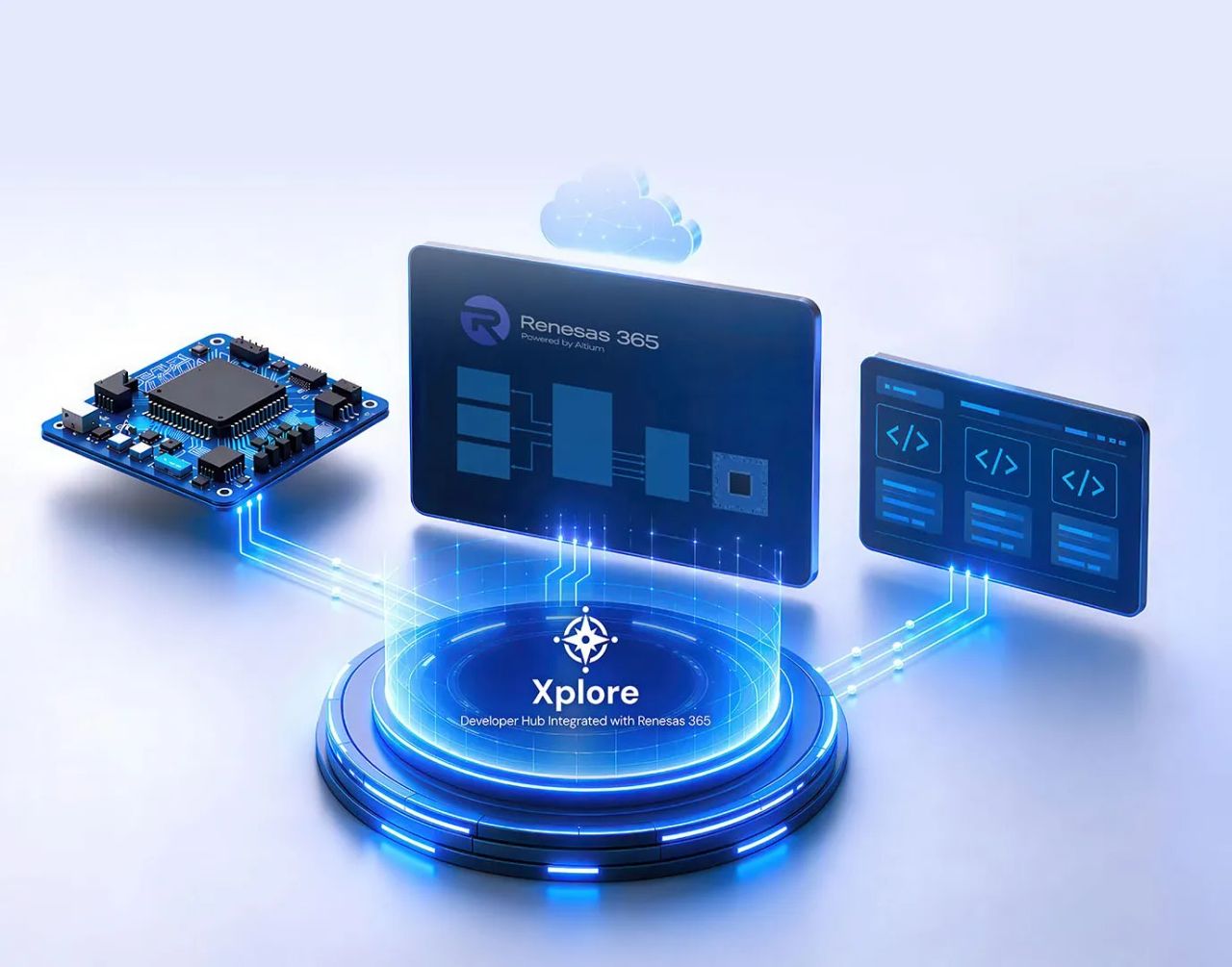
Renesas Electronics has introduced the Xplorer Developer Hub, bundling affordable RA microcontroller boards, expansion modules, and software tools directly into its Renesas 365 system development platform. This move highlights a profound structural shift across the global semiconductor landscape: silicon vendors can no longer compete purely on transistor density, power profiles, or unit pricing. Instead, the competitive moat has migrated up the stack to developer velocity and cloud-connected workflows.
Globally, microcontroller providers face intense commoditization pressures and shifting buyer behaviors. Modern hardware startups and enterprise R&D teams expect software-like onboarding experiences, rapid prototyping capabilities, and seamless cloud integration out of the box. By unifying low-cost physical evaluation hardware with a centralized digital platform, Renesas is actively reducing the friction of hardware-software co-design. The strategic goal is ecosystem lock-in; once engineering teams build their application architectures and deployment pipelines inside a proprietary cloud environment like Renesas 365, switching to rival silicon becomes prohibitively expensive in terms of engineering hours.
For the Japanese market, this evolution carries significant weight—both because Renesas is a domestic bellwether and because Japan's industrial sector relies heavily on outsourced embedded engineering. Historically, Japanese manufacturers and Tier-1 automotive or industrial suppliers have leaned on specialized embedded System Integrators (SIers) to handle low-level board bring-up, driver integration, and custom middleware development. This labor-intensive model thrived on hardware complexity and fragmented toolchains.
As Renesas abstracts away hardware setup through pre-validated expansion modules and unified application software, the baseline value of low-level integration shrinks. Japanese embedded SIers face an urgent mandate to evolve. Billable hours spent simply getting sensors to talk to microcontrollers will rapidly evaporate. To protect their margins, local SIers and enterprise development teams must reallocate talent away from manual hardware configuration toward higher-order system architecture, edge security, and fleet-wide lifecycle management. Furthermore, for Japanese industrial enterprises struggling with an aging engineering workforce, unified hubs like Xplorer offer a practical lifeline—allowing leaner internal teams to prototype connected factory and IoT solutions without months of preliminary vendor coordination.




