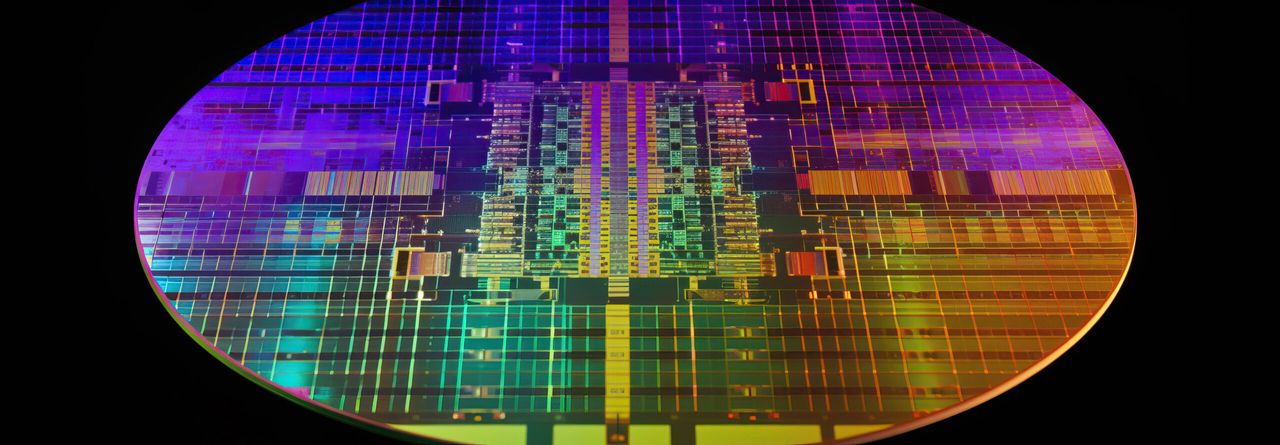
The quiet bottleneck in modern computing isn't the GPU—it's the road between the processor and memory. A research team from ETH Zürich, CISPA, and NYU has proposed Terracotta, a programmable memory controller and flexible DRAM interface designed to let new DRAM techniques actually ship, rather than die in academic papers.
That framing matters more than it sounds. For a decade, researchers have published in-DRAM computation and reliability schemes that never reached silicon because the DRAM interface is effectively frozen—standardized by JEDEC, locked into controller logic, and economically hostile to experimentation. A programmable path lowers the cost of trying new ideas without respinning the entire memory stack. The strategic implication: the industry may be approaching a phase where memory behavior becomes a software-updatable layer, not a fixed hardware contract.
Globally, this lands squarely in the AI compute debate. The real constraint on large-model training and inference is memory bandwidth and energy per bit moved, not raw FLOPs. HBM scarcity and power draw are the binding limits on datacenter economics. Anything that makes memory smarter—processing-in-memory, better refresh and error handling, adaptive scheduling—directly attacks the energy and cost curve that currently favors a handful of hyperscalers. If flexibility reduces the barrier to deploying these techniques, the competitive moat around custom memory engineering narrows.
For Japan, the stakes are unusually concrete. Memory is one of the few semiconductor domains where Japanese firms retain genuine global weight—Kioxia in NAND, and the broader materials and equipment ecosystem that underpins DRAM manufacturing worldwide. A shift toward programmable, technique-rich memory rewards players who can co-design hardware and the control logic around it. The risk is that Japan's strength sits in fabrication and materials, while the value increasingly accrues to whoever controls the controller and software interface—a layer where the domestic ecosystem is thinner.
For Japanese enterprises and SIers, the lesson is longer-horizon but real. The next efficiency gains in AI infrastructure won't come only from buying more accelerators; they'll come from the memory subsystem. SIers building on-premise AI platforms for regulated clients—finance, manufacturing, public sector—should track whether cloud and server vendors expose these programmable memory capabilities, because they reshape the cost-per-inference math that justifies on-prem versus cloud. For local development teams, it's a reminder that performance tuning is migrating down the stack: the abstraction that memory 'just works' is beginning to crack open, and the teams who understand that boundary will design systems others can't.




