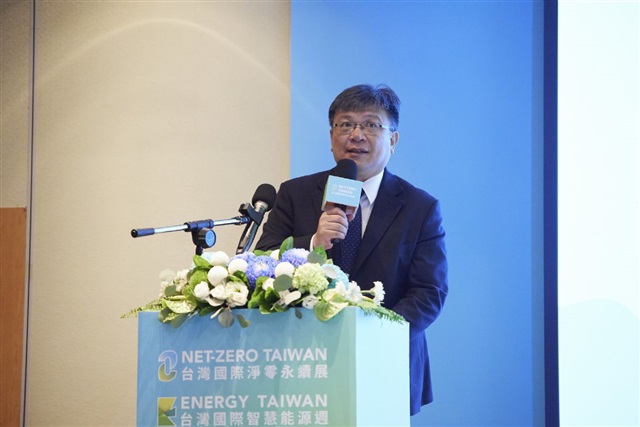
Taipower is reportedly asking large industrial users, TSMC among them, to help fund dedicated power generation as demand from logic fabs, memory, advanced packaging, and server assembly climbs. The framing matters more than the dollar figure, which remains undisclosed.
For decades, electricity was treated as a sovereign public good quietly bundled into a fab's operating cost. That assumption is breaking. When a national utility invites its largest customer to co-finance generating capacity, power stops being overhead and becomes a strategic input on par with EUV tools and water. The talks may still be conceptual, but the direction of travel is clear: at advanced nodes, the binding constraint is shifting from lithography to the grid. Every incremental node and every rack of AI accelerators raises the energy draw per wafer, and utilities built for predictable industrial load cannot absorb that curve on balance sheets alone.
Globally, this reshapes the economics of where fabs get built. Site selection used to weight talent, subsidies, and supply-chain proximity. Now firm, low-carbon baseload power carries decisive weight. Italy's parliamentary vote to reopen nuclear and the broader datacenter-driven revival of nuclear interest are the same story from the demand side: compute-intensive industries are quietly becoming energy companies' most important partners, and increasingly their co-investors.
For Japan, the implications are immediate and uncomfortable. TSMC's Kumamoto operations (JASM) and Rapidus in Hokkaido both depend on a grid still shaped by the post-Fukushima nuclear pullback and heavy LNG reliance, leaving Japanese power among the most expensive in the OECD. If Taiwan is already negotiating industrial cost-sharing, Japanese fabs will face parallel pressure, and the government's semiconductor subsidies may need to quietly morph into energy-infrastructure subsidies to keep landed power costs competitive. Hokkaido's renewable potential is real, but intermittency without firm backup is a poor match for 24/7 fab load.
For Japanese SIers and enterprise IT teams, the signal extends beyond chipmaking. The same power scarcity that squeezes fabs will tighten domestic datacenter capacity and pricing just as generative-AI workloads scale. SIers planning on-premise GPU clusters or sovereign-cloud buildouts should treat secured, priced power as a first-class design constraint, not a facilities footnote. Expect power-aware architecture, workload scheduling against grid conditions, and energy procurement to move onto the technical roadmap. The firms that win large AI integration contracts will be those who can answer not just where the compute runs, but where the electricity comes from.




