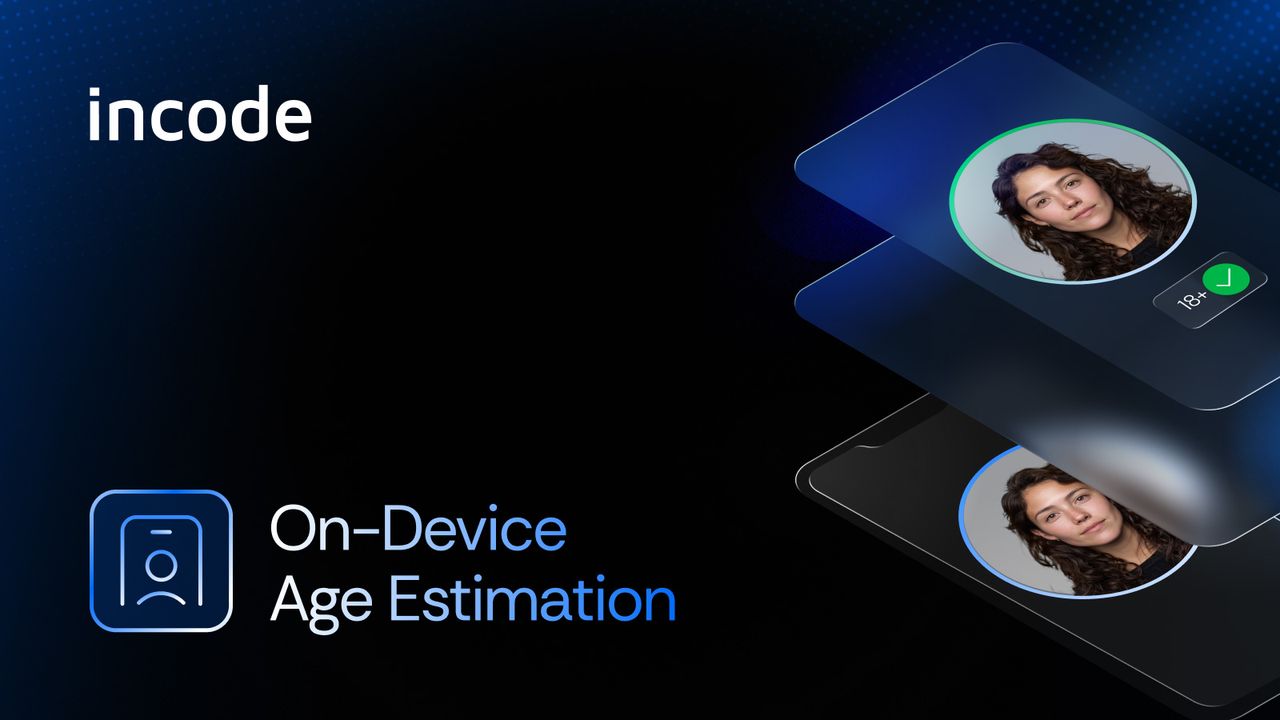
The core shift is architectural: age estimation is moving from cloud pipelines to the device itself, so a user's face is analyzed locally and never uploaded or stored. That single design decision reframes a regulatory headache as a strategic asset.
The timing is not accidental. The UK's Online Safety Act, the EU's evolving DSA guidance, Australia's under-16 social media ban, and a patchwork of US state laws (Texas, Utah, Florida) are converging on the same demand: platforms must verify age at scale. The naive answer—ship faces to a central server—creates exactly the liability regulators and users fear. Every stored biometric template is a breach waiting to become a GDPR fine or a class action. On-device inference collapses that attack surface to near zero, which is why vendors like Incode, Yoti, and Persona are racing to own the edge-verification layer.
For global platforms, the opportunity is defensibility. A company that can prove data minimization by design—no image leaves the handset—gains a compliance moat that is hard to litigate against and easy to market. Expect this to become table stakes for social, gaming, dating, and adult-adjacent commerce, then bleed into fintech KYC and healthtech onboarding where biometric sensitivity is even higher.
The risks are real. On-device models raise accuracy and bias questions, especially across skin tones and ages near legal thresholds, and error rates carry legal weight when a mistaken 'over-18' clears a minor. Fragmented and shifting rules also mean today's compliant design may fail tomorrow's audit, so verification must be modular, not hardcoded.
Recommended actions: treat age assurance as core infrastructure, not a bolt-on. Prioritize vendors offering on-device processing with independent bias audits and clear liability terms. Build a verification abstraction layer that can swap methods per jurisdiction, and log proof-of-compliance rather than raw biometrics. Investors should watch privacy-preserving identity as a durable category—edge biometrics, zero-knowledge age proofs, and reusable credentials are where the next compliance-tech winners emerge.




