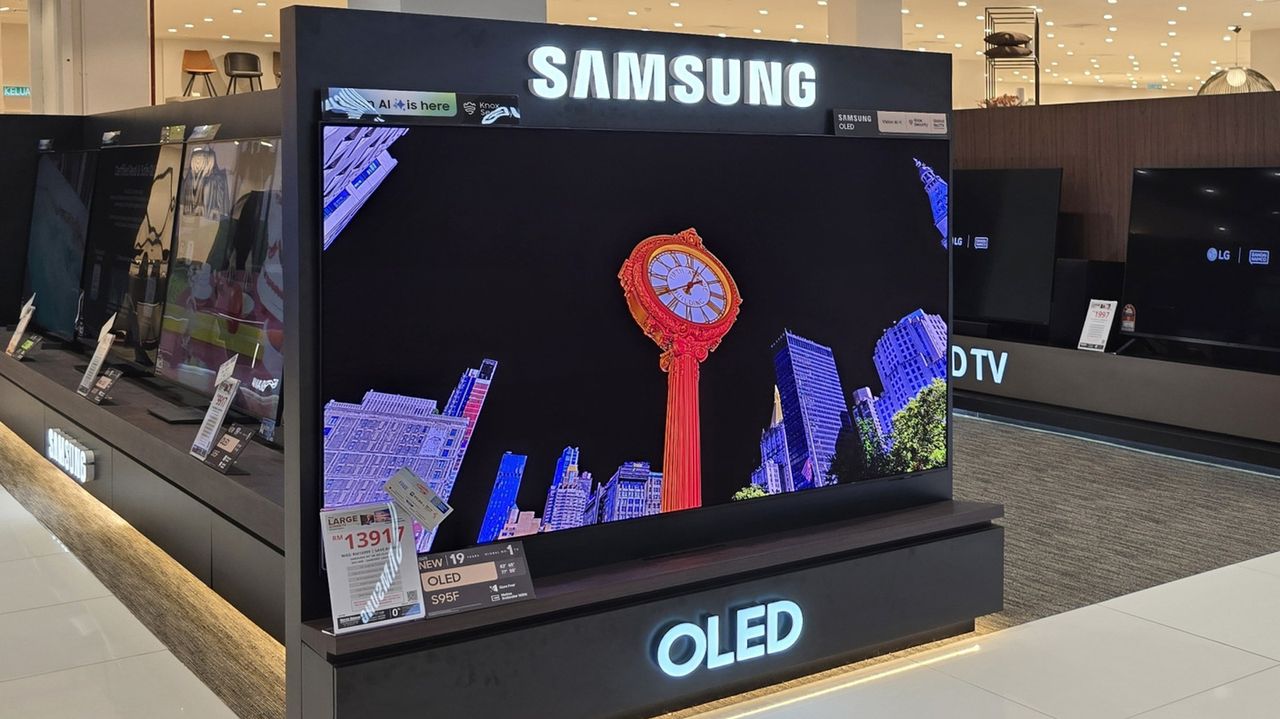
The consumer debate over whether OLED justifies its price tag masks a deeper structural shift: the value gap between premium emissive panels and advanced backlit LCD is narrowing faster than most incumbents priced in.
For a decade, LG Display and Samsung Display treated OLED as the defensible high end, insulated from the commoditized LCD market that Chinese fabs came to dominate. That moat is thinning. Mini-LED, championed by TCL and Hisense and now standard across Samsung's own QLED tiers, delivers peak brightness OLED still struggles to match in bright rooms, without burn-in risk, at materially lower cost. The result is a middle market where "good enough plus brighter" beats "best in a dark room" for most buyers.
The supply-chain implications run through Asia's panel oligopoly. BOE and CSOT have driven LCD and mini-LED backplane costs down through scale and state-backed capacity, pressuring Korean margins and accelerating LG Display's pivot toward IT and automotive OLED where differentiation and pricing hold. Samsung's QD-OLED hedge and its parallel mini-LED push signal that even the format's biggest backers are diversifying rather than betting the panel roadmap on a single technology.
For investors and OEMs, three moves matter. First, treat premium display as a segmented portfolio, not a single tier: mini-LED for volume, OLED for enthusiast and pro-visual niches, micro-LED as a long-dated option. Second, watch panel-maker capex allocation as the real signal of where margin will sit in 2027. Third, brands relying on OLED exclusivity for pricing power should assume that premium compresses annually and plan differentiation around software, gaming latency, and content ecosystems rather than the panel alone.
The strategic read: display leadership is decoupling from any single emissive technology. Whoever controls cost curves and format flexibility, increasingly Chinese fabs on the low end and Korean players on the specialized high end, will capture the value as the OLED premium quietly deflates.




