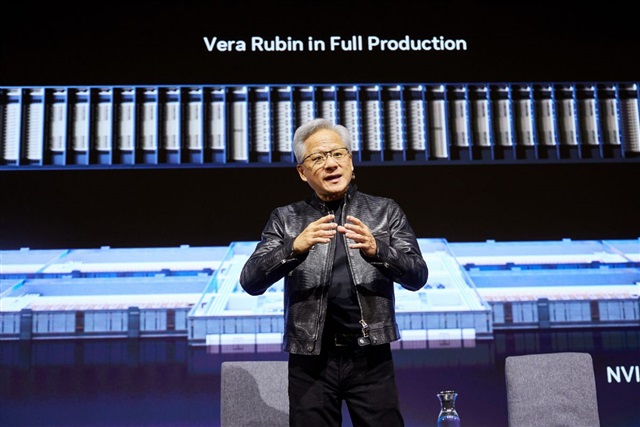
Nvidia is facing a California attorney general subpoena over China ties and a reported SEC accounting probe, while Jensen Huang’s exit is prompting supply-chain and employee uncertainty. Management has said it will preserve existing business relationships and accelerate pay reviews.
The issue is not whether AI demand survives; it is whether confidence in Nvidia’s allocation machinery does. A leadership change at a systemically important supplier makes each exception—who gets scarce accelerators, which partners receive priority, and how China-linked orders are handled—a governance question. Accelerated pay reviews may help retention, but they cannot resolve uncertainty over strategy or decision rights. Distributors and OEMs will price ambiguity into inventory, lead times and contracts, slowing projects even when demand holds.
Regulatory scrutiny raises the stakes. A subpoena is not a finding, and a reported SEC probe is not a conclusion, but both increase the cost of incomplete disclosure. Nvidia must show that export-control decisions, partner selection, accounting controls and succession planning follow repeatable processes rather than executive discretion. The board’s credibility will rest on auditable allocation rules and transparent risk disclosures, not reassurance.
Global buyers should separate three risk clocks: near-term supply continuity, medium-term platform support and long-term geopolitical access. Inventory buffers and allocation commitments address the first; tested portability and support paths the second; alternate accelerators, multi-region capacity and compliance reviews the third. The goal is not to abandon Nvidia, but to prevent a leadership or regulatory event from becoming a deployment outage. Investors should separate durable AI demand from the premium for flawless execution by one supplier.
For Japan, the exposure is operational as much as financial. Manufacturers, telecom operators, cloud buyers and public projects often run on long procurement cycles; a change in GPU availability or export eligibility can ripple into factory AI and SI milestones. Japanese SIers should make resilience a design requirement: maintain an approved accelerator matrix, validate model stacks across multiple hardware paths, document origin and export checks, and write substitution clauses into contracts. Development teams should separate model code, orchestration and vendor-specific optimization so a shock does not force a rebuild. RPA programs deserve the same review when their AI back ends depend on one capacity provider. The winners will sell continuity and auditability, not just GPU access.




