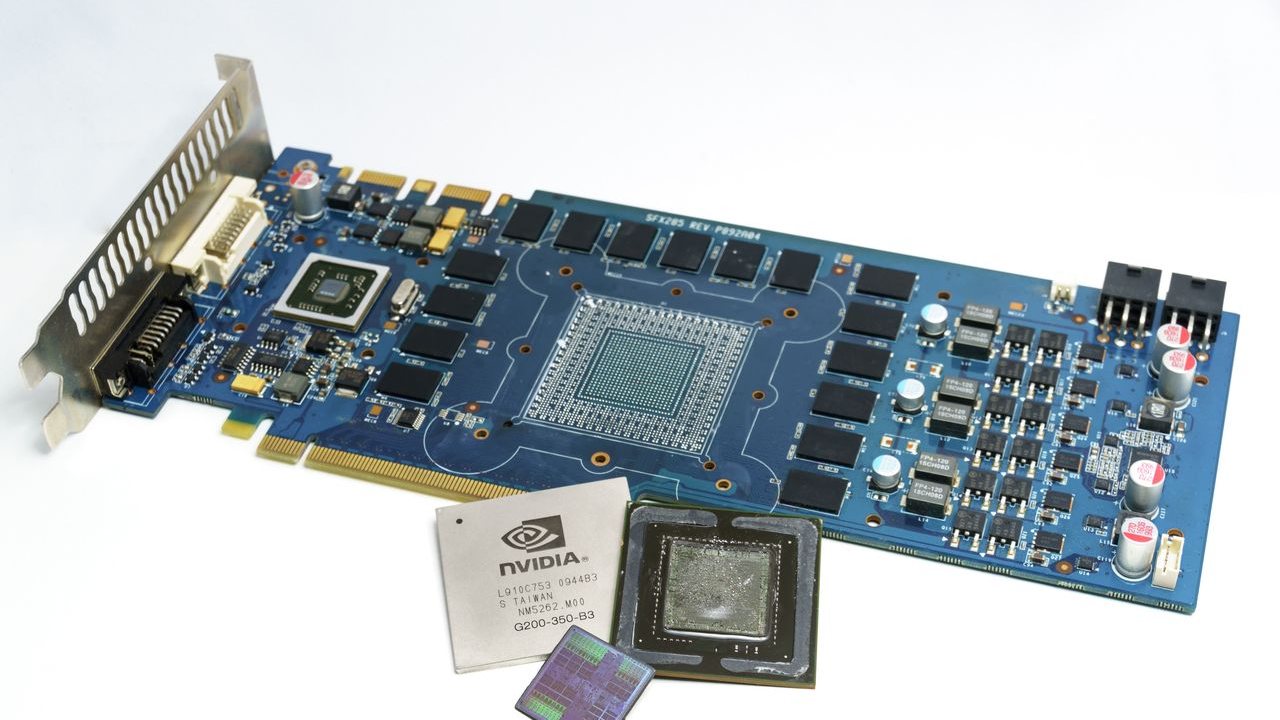
NVIDIA reportedly claimed first-wave capacity on TSMC's N2 (2nm) process for its next-generation Rubin accelerators, putting it alongside Apple at the front of the queue for a node that begins volume production in 2027. The real story is not procurement—it is the hardening of a one-generation lead.
N2 is TSMC's first gate-all-around (GAA) node, and early-ramp wafer allocation is the scarcest resource in AI silicon. Whoever holds it controls 2027-2029 economics. AMD's MI400 line and Intel's Gaudi roadmap are unlikely to reach N2 before late 2027 or 2028, meaning Rubin could enjoy a full node of performance-per-watt advantage at precisely the moment hyperscalers are most power-constrained. For Microsoft, Google, Amazon, Meta, and the neocloud cohort (CoreWeave, Lambda), this entrenches NVIDIA pricing power and weakens any near-term bargaining leverage from custom ASICs.
The second-order beneficiaries sit upstream. GAA ramps are materials- and equipment-intensive: leading-edge 300mm wafers are consumed at 1.3-1.5x normal volumes during yield learning, selective-etch and ALD tool demand spikes, and EUV resist and actinic mask inspection become standard fixtures. Tokyo Electron, ASML, Lam Research, Applied Materials, Shin-Etsu, JSR, and Lasertec all ride a demand curve partly decoupled from the broader silicon cycle—their fortunes now tethered to TSMC's N2 yield trajectory rather than consumer end-markets.
The concentration risk is the flip side. A NVIDIA-TSMC duopoly at the bleeding edge leaves AI infrastructure buyers with no viable substitute for Rubin-class compute. Samsung Foundry's 2nm yields remain disappointing, and Rapidus and Intel Foundry are years from competitive volume. A Taiwan Strait disruption would have no fallback at this node. Enterprises and sovereign AI programs should treat strategic accelerator inventory (6-plus months) and diversification into inference-class alternatives—Tenstorrent, Groq, custom silicon—as risk management, not optionality.
Recommended actions: investors should reprice 2026 upside for the WFE and materials complex; AI infrastructure operators should lock Rubin allocation by Q1 2026 before capacity tightens; and corporate security leaders should re-examine 2nm supply visibility under economic-security frameworks. The window to negotiate from strength is closing fast.




