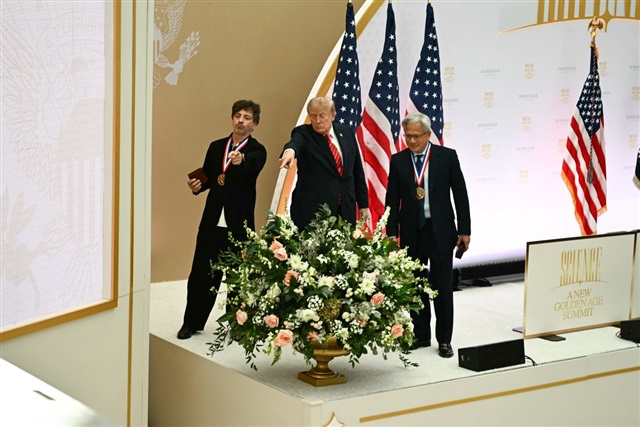
Global AI infrastructure buyers face a governance risk, not just a question of who leads their chip supplier. Nvidia has reinstated Jensen Huang; Donald Trump says he persuaded its board, while Treasury Secretary Scott Bessent has softened his preference for an outside leader.
Political support can steady expectations around leadership while weakening confidence in independent oversight. A board perceived as unable to replace its CEO may also struggle to challenge capital allocation or succession plans. Presidential backing alone does not establish that directors have lost their authority. Investors should look for evidence of how the decision was made and whether the board retains credible mechanisms for holding management accountable.
For enterprise buyers, leadership continuity is not an assurance of delivery or export eligibility. Executive access to Washington cannot substitute for durable rules governing sales. Procurement teams should test commitments against a change in political support, seek clear remedies for delivery disruption, and assess the software work needed to move critical workloads. Alternative suppliers gain a commercial opening only if their migration costs and operational reliability withstand scrutiny.
For Japanese enterprises, the exposure sits in AI infrastructure budgets and the contracts connecting hardware suppliers, cloud providers and SIers. A project dependent on a single accelerator platform can transmit vendor uncertainty into deployment schedules and service obligations. Buyers should separate confirmed capacity from anticipated availability and establish who bears the cost if a proposed configuration cannot be supplied. Political proximity should not be treated as a substitute for contractual protection.
Japanese SIers can build a stronger service offering around this uncertainty: benchmark representative workloads on alternative environments, document portability limits, and price migration work explicitly. Development teams should keep model-serving interfaces and orchestration separable from hardware-specific optimization where practical, rather than promise frictionless portability. The likely procurement shift is toward demonstrable contingency plans, not an immediate departure from Nvidia. The commercial opportunity lies in making dependence manageable, rather than pretending it can be eliminated.




