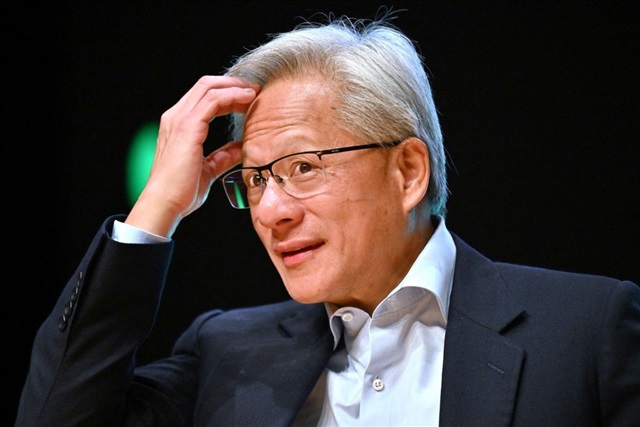
US federal investigators and Nvidia's board are examining CEO Jensen Huang's relationship with former Megaspeed executive Alice Huang, whose Taiwan entry permit was revoked amid suspected ties to Chinese intelligence. What might look like a corporate governance scandal is, in reality, an acute national-security stress test for the global AI infrastructure stack.
Nvidia sits at the center of Western semiconductor export controls, sovereign compute buildouts, and high-bandwidth memory supply chains involving partners like Samsung and SK. Because Jensen Huang personally anchors customer allocations, geopolitical diplomacy, and product roadmaps, any distraction or clearance scrutiny at the top introduces key-man risk at an unprecedented scale. Washington's export-licensing regime relies heavily on strict compliance assurances from leading chipmakers; an active counterintelligence investigation near the C-suite gives regulators strong leverage to tighten oversight on how advanced accelerators flow through third-party hubs in Southeast Asia. Meanwhile, hyperscalers and enterprise CIOs—already facing mounting investor scrutiny over AI capital expenditure—now have a governance imperative to accelerate multi-silicon strategies using custom ASICs and alternative GPU suppliers.
For Japan, the timing is particularly sensitive. Japanese telecommunications carriers, cloud providers, and major System Integrators (SIers) have staked their sovereign AI strategies—backed by heavy government subsidies—almost entirely on securing Nvidia GPU clusters. Unlike US hyperscalers building proprietary chips, Japanese enterprises and SIers depend heavily on turnkey Nvidia hardware and software stacks to modernize legacy infrastructure and deploy agentic enterprise workflows. If executive turmoil or heightened US security audits delay hardware allocations or complicate cross-border partner engagements in East Asia, Japanese datacenter timelines could slip.
Japanese IT leaders and SIer executives should treat this episode as a wake-up call on vendor concentration. Development teams building enterprise AI platforms must decouple application logic from proprietary CUDA dependencies where feasible, adopting hardware-agnostic orchestration layers so workloads can port across alternative accelerators. Furthermore, Japanese enterprises partnering with regional cloud intermediaries in Asia will need stricter supply-chain compliance vetting to ensure their compute capacity is insulated from geopolitical and counterintelligence fallout.




