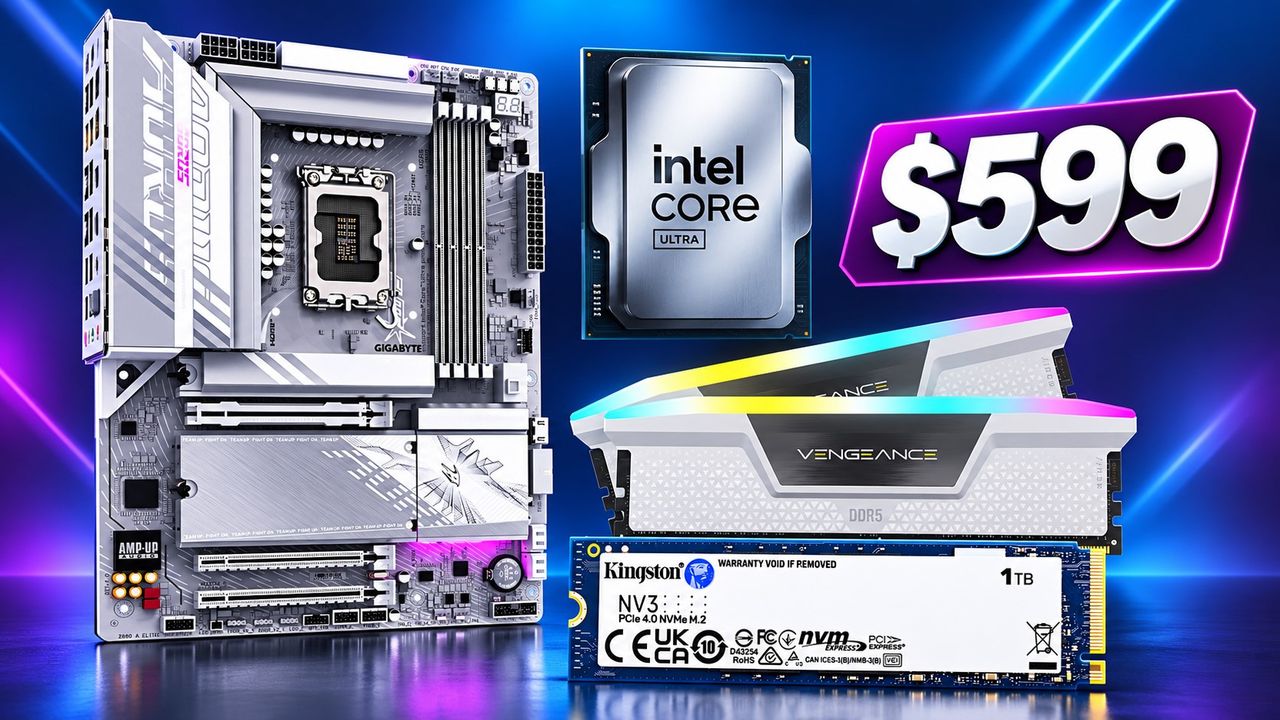
Newegg is offering a $599 bundle containing an Intel processor, motherboard, memory and SSD. For enterprise buyers globally, the opportunity is cheaper hardware for development benches and test environments; the risk is confusing component savings with lower operating costs. A promotional bundle is not evidence of a sustained decline in PC prices. It is a reason to revisit procurement assumptions, not abandon standardized fleets.
The useful comparison is a complete, supported machine against the bundle plus everything needed to deploy it. Enclosures, power supplies, cooling, software and assembly can absorb part of the apparent saving. Configuration matters just as much: the included 16 GB of memory may constrain development workloads running containers, emulators and local databases concurrently. If buyers immediately replace bundled parts, the headline discount becomes less relevant. Procurement teams should price the configuration their workload requires, rather than assign full economic value to every included component.
For Japanese companies, the advertised dollar price is a benchmark, not a landed yen cost. Buyers need to establish whether delivery and warranty coverage extend to Japan, then account for currency conversion, shipping, taxes and support arrangements. A development lab with spare machines and in-house hardware expertise may tolerate component-level troubleshooting. An unattended RPA endpoint supporting a business process has a different risk profile: restoration time and replacement availability can matter more than the initial saving. These use cases should not share an automatic lowest-price purchasing rule.
For Japanese SIers, the stronger opportunity is to turn inexpensive hardware into a supported development environment, rather than depend on resale margins from a temporary promotion. That means validating workloads, maintaining reproducible software images, documenting replacement parts and owning fault resolution. Retail bundles can provide a useful challenge to existing supplier quotes, but a fleet strategy needs repeatable availability and support terms. My expectation is that such offers will be more useful as procurement leverage and lab capacity than as a template for broad enterprise deployment; firms that already manage their own hardware are better placed to capture the savings.




