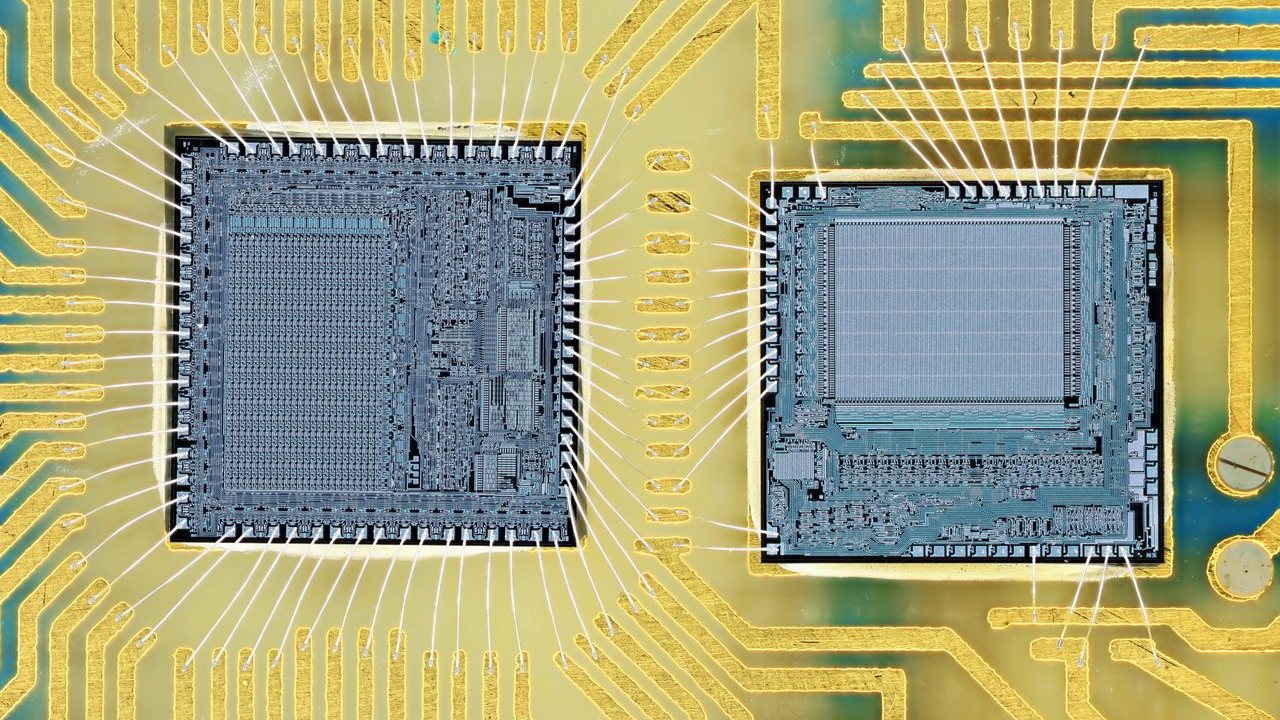
Marvell has moved its 7nm optical DSP into volume production, breaking into a high-speed segment Broadcom has effectively owned. With Cisco's Acacia in the mix, the AI back-end interconnect market now has three credible US suppliers—and that reshuffles power across the entire optics stack.
The immediate winners are hyperscalers. Broadcom's pricing leverage has been a hidden tax on every 800G and 1.6T transceiver shipped into AI clusters. A genuine second source compresses DSP margins, accelerates the roadmap, and gives Microsoft, Meta, Amazon, and Google a negotiating wedge. Expect transceiver bill-of-materials economics to shift in buyers' favor through 2026—precisely as 1.6T deployments scale alongside Nvidia's GB200/GB300 fabric build-outs.
The deeper signal is thermal. As DSP power envelopes climb toward 30W at 1.6T, the design constraint migrates from signal processing to heat dissipation and packaging. That elevates the strategic value of component suppliers—Sumitomo Electric, Furukawa, Fujikura, Coherent, Lumentum—who control InP/EML lasers, fiber-attach, and high-density connectors. Pure component vendors should push upward into sub-assembly integration; the margin pool is migrating to whoever owns the thermal and optical-coupling problem, not the discrete part.
The existential variable is co-packaged optics. Both Marvell and Broadcom are integrating optical engines directly onto switch ASICs. If CPO matures, the standalone transceiver market—today a multibillion-dollar layer—shrinks structurally. Suppliers betting on pluggable longevity face a cliff; the hedge is silicon-photonics fiber-attach, external laser sources, and multicore fiber, which must be productized by 2026, not researched indefinitely.
For investors: this is a classic commoditization-of-the-incumbent trade. Watch Broadcom's optical DSP gross margin commentary for the first crack, and reweight toward laser/packaging specialists and inspection-tool vendors (Lasertec, Disco) whose demand decouples from memory and logic cycles. The strategic lesson for any sovereign or carrier strategy is blunt: AI competitiveness now depends as much on owning the optical interconnect layer as on owning the compute.




