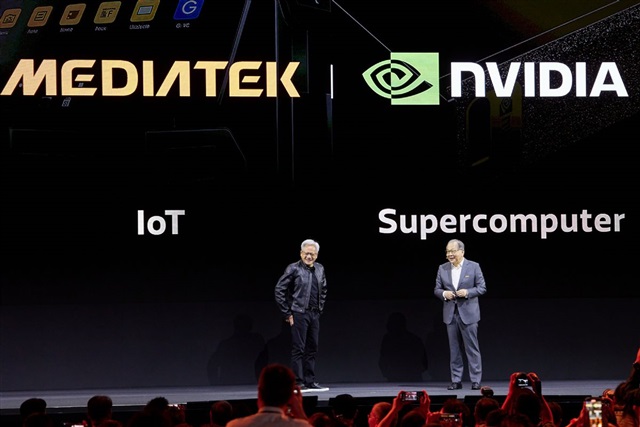
Marvell has agreed to acquire optical-components maker Lumentum for roughly $115 billion, with Nvidia among the shared investors. Read alongside the deepening contest between MediaTek, Broadcom, and Marvell for custom AI ASIC business through 2028, the deal marks a clear shift in where the money and the risk now sit. Winning a design socket at a hyperscaler is no longer the finish line. The real contest is securing wafers, advanced packaging, substrates, high-bandwidth memory, and now the optical interconnect that moves data between GPU clusters.
That last piece is why the Lumentum bid matters globally. As training and inference clusters scale into the hundreds of thousands of accelerators, bandwidth between chips and racks becomes the binding constraint, and optical links are the component under the most strain. By pulling optical sourcing in-house, Marvell is trying to own a bottleneck rather than buy around it. Nvidia's presence as a shared investor signals that the accelerator leaders want influence over interconnect supply too, which tightens the whole ecosystem and raises the bar for anyone selling merchant silicon into AI datacenters.
The strategic takeaway for executives is that vertical control is replacing the fab-light model that served chip designers for two decades. Companies that merely design strong parts but depend on open-market access to packaging, HBM, and optics will face longer lead times and worse pricing than rivals who have locked in capacity. Expect more consolidation around the physical layer of AI infrastructure, and expect customers to weigh supply security as heavily as benchmark performance.
For Japan, the opportunity is concentrated in the materials and components layer rather than in chip design. Japanese suppliers hold strong positions in IC substrates, packaging materials, photoresists, and precision equipment, exactly the inputs these three ASIC players are now scrambling to secure. A supply chain that prizes guaranteed access rather than lowest cost favors reliable Japanese vendors, and could pull more long-term offtake agreements and co-investment into the country. The risk is dependence: if Marvell, Broadcom, and MediaTek lock up allocation, Japanese material makers gain stable demand but cede pricing leverage to a handful of buyers.
For Japanese enterprises and SIers, the second-order effect is datacenter economics. Tighter control of optics and packaging by US chip leaders means the cost and availability of AI compute capacity in Japan will be shaped upstream, well before any GPU reaches a local cloud region. Integrators planning on-premise or sovereign AI buildouts should treat interconnect and memory supply as a procurement risk in its own right, and build vendor diversity and realistic lead-time assumptions into roadmaps now rather than after capacity tightens.




